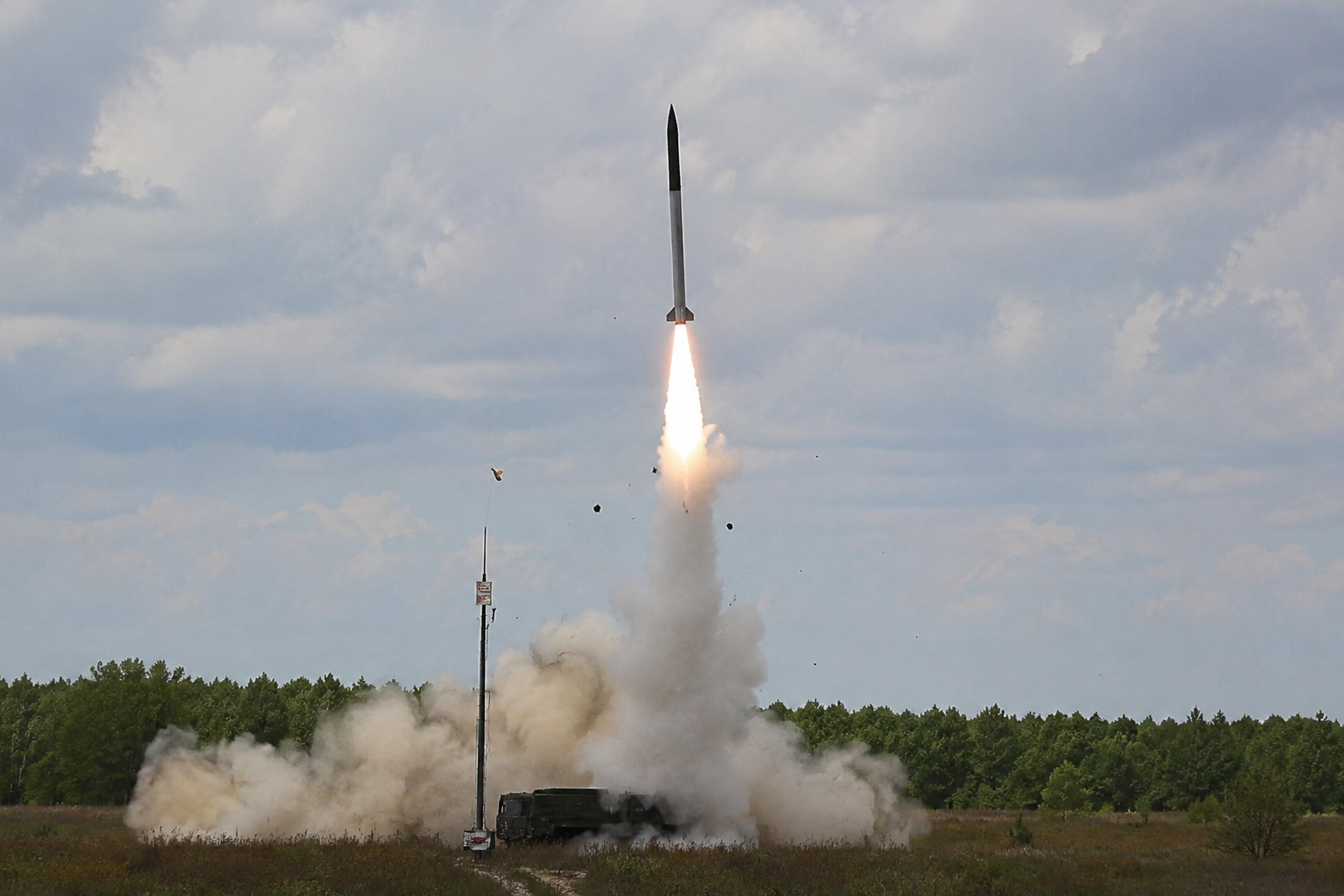
Ukrainian defence manufacturer Fire Point has conducted a controlled flight test of its FP-7.X missile, a development the company says will form the basis of the future Freyja anti-ballistic interceptor system.
The test marks another step in Ukraine’s effort to build domestic and European-supported alternatives to scarce Western air-defence interceptors, particularly at a time when Russian ballistic missile attacks continue to place heavy pressure on Ukraine’s layered air-defence network.
According to Fire Point CEO Iryna Terekh, the FP-7.X performed a fully controlled manoeuvring flight. The missile is described as an interceptor variant of Fire Point’s FP-7 ballistic missile, which remains under development and is also intended to have a ground-strike role.
The future Freyja system is being presented as a potential lower-cost alternative to the U.S.-made Patriot system. Fire Point has previously said it is in talks with European companies on a new air-defence system capable of engaging supersonic ballistic missiles, with a target of bringing such a capability forward by the end of next year.
The significance of the test lies not only in the missile itself, but in the strategic gap it seeks to address. Ukraine has repeatedly warned of a shortage of Patriot interceptor missiles, which remain among the most reliable tools available to Kyiv against ballistic threats. At the same time, Russia continues to use ballistic and high-speed missiles to overwhelm and exhaust Ukrainian defences.
A successful anti-ballistic system, however, is far more complex than a missile launch. The missile is only one element. The decisive parts include radar coverage, target tracking, fire-control algorithms, missile guidance, command-and-control links and the ability to intercept fast manoeuvring targets under real combat conditions.
That is why the FP-7.X test should be read carefully: it is a meaningful development milestone, not proof of an operational system. But it shows the direction of travel. Ukraine is trying to move from emergency dependence on imported interceptors toward a more sovereign, scalable and potentially exportable air-defence industrial base.
For Europe, the programme could also be important. If Fire Point and its partners can develop a credible, lower-cost counter-ballistic solution, it would address one of the most urgent capability gaps exposed by the war: the need for more interceptors, at lower cost, produced at higher volume, and integrated into modern air-defence networks.
The Freyja concept therefore belongs to a broader shift in European defence thinking. Air defence is no longer only about buying a small number of exquisite systems. It is about building depth, magazine capacity, industrial resilience and layered protection against drones, cruise missiles and ballistic threats.
Fire Point’s test does not change the balance overnight. But it signals that Ukraine’s wartime defence industry is no longer focused only on drones and deep-strike systems. It is now moving into one of the most difficult and strategically valuable domains in modern warfare: counter-ballistic missile defence.
Sources: Ukrainska Pravda, Le Monde
About the Author