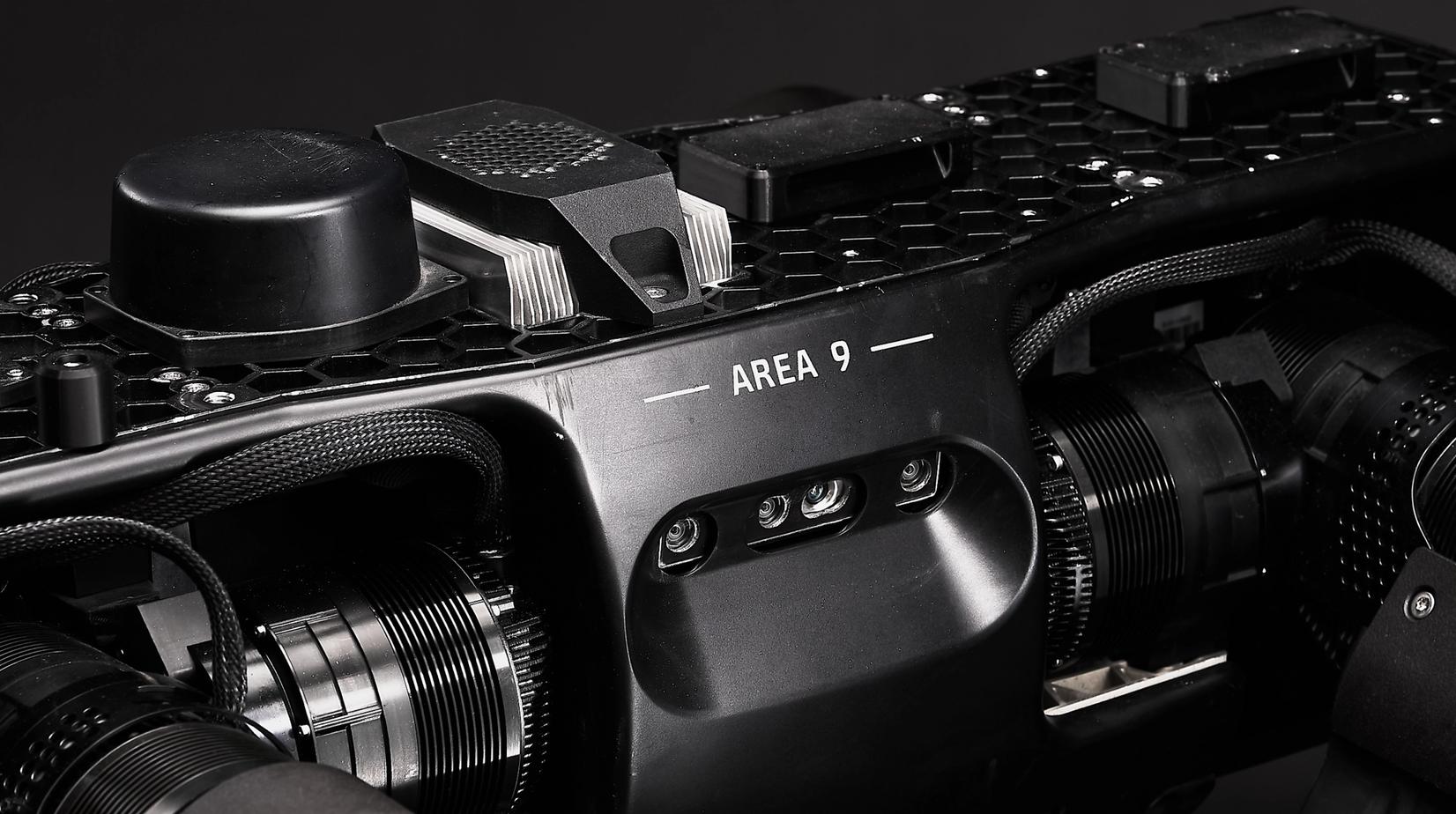
European defence AI company Helsing has unveiled Area 9, a new advanced research division, and launched RX-1, its first robotics research platform designed and manufactured entirely in Europe.
The move marks another step in Helsing’s rapid evolution from a software-focused defence AI company into a broader European defence technology player working across autonomy, drones, robotics and space-based reconnaissance.
RX-1 is not being presented as an operational combat robot. Its significance is different. It is a research platform built to accelerate European work on AI-enabled autonomy, robotics, machine perception and human-machine teaming. Helsing says the platform will be made available to selected academic and research institutions, including ETH Zurich and France’s INRIA.
That distinction matters. The future of defence robotics will not be shaped only by finished vehicles or weapons systems. It will be shaped by the research infrastructure behind them: test platforms, software stacks, autonomy models, perception systems, simulation environments and the ability to move quickly from laboratory work to field experimentation.
With Area 9, Helsing is creating an internal research structure dedicated to advanced robotics and AI. With RX-1, it is also trying to build a European ecosystem around that research. The message is clear: Europe should not depend entirely on non-European robotics platforms or AI stacks when developing the next generation of autonomous defence systems.
The launch comes at a time when the war in Ukraine has transformed the global understanding of drones, autonomy and battlefield software. Unmanned systems are no longer niche assets. They are becoming consumable, networked, software-defined tools used for reconnaissance, targeting, strike, electronic warfare and force protection.
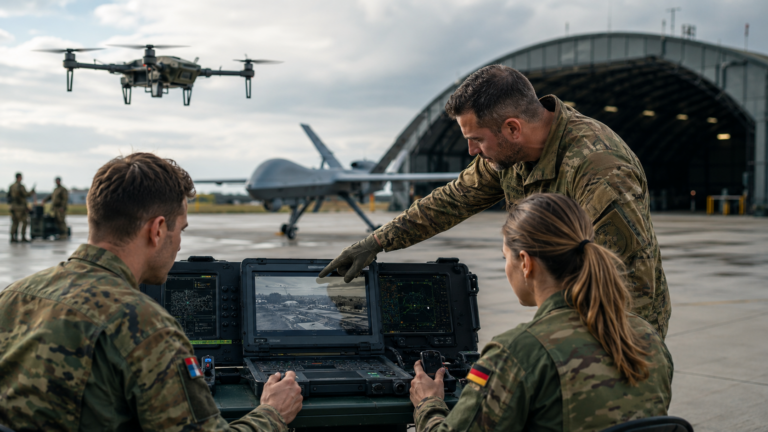
Helsing has already positioned itself at the centre of this shift. Its HX-2 strike drone is described by the company as a software-defined, mass-producible system capable of operating at beyond-line-of-sight range, with onboard AI intended to help it search for, re-identify and engage targets even under electronic warfare conditions. Helsing says a human operator remains in or on the loop for critical decisions.
The company is also expanding upward into space. In May, Helsing and German space group OHB announced the creation of KIRK, a joint venture focused on a space-based tactical surveillance, reconnaissance and targeting system. The project is designed to support faster battlefield awareness and targeting from orbit — a capability gap Europe has increasingly recognised since Russia’s invasion of Ukraine.
Taken together, RX-1, HX-2 and KIRK show a clear strategic direction. Helsing is building across three layers of future warfare: autonomous systems on the ground and in the air, AI-enabled strike and reconnaissance, and space-based tactical sensing.
For Europe, the significance goes beyond one company. Helsing’s latest move reflects a broader industrial shift from traditional platform-centric defence towards software-defined systems, autonomy and scalable production. It also shows how start-ups and defence technology companies are beginning to challenge the slower development cycles of legacy primes.
There are still major questions. Defence robotics must prove reliability, safety, resilience against electronic warfare, integration with military command structures and compliance with political and legal requirements. Research platforms do not automatically become fielded systems. And operational performance will matter more than announcements.
But Helsing’s Area 9 and RX-1 launch is still important. It signals that Europe’s defence technology sector is no longer trying only to catch up in drones. It is trying to shape the underlying robotics and AI infrastructure that will define the next generation of military systems.
About the Author