Airbus Defence has rejected the idea that Europe’s Future Combat Air System is heading for complete failure, even as the Franco-German-Spanish fighter programme remains locked in a deep industrial and political crisis.
The message from Airbus is clear: even if the fighter aircraft element remains disputed, the wider FCAS architecture should not be written off. At least some of the programme’s most important enabling elements — including the networking system for weapons and unmanned platforms — are expected to continue.
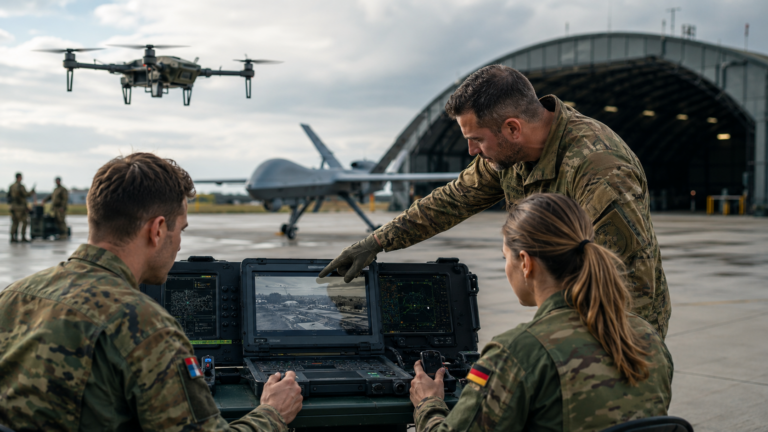
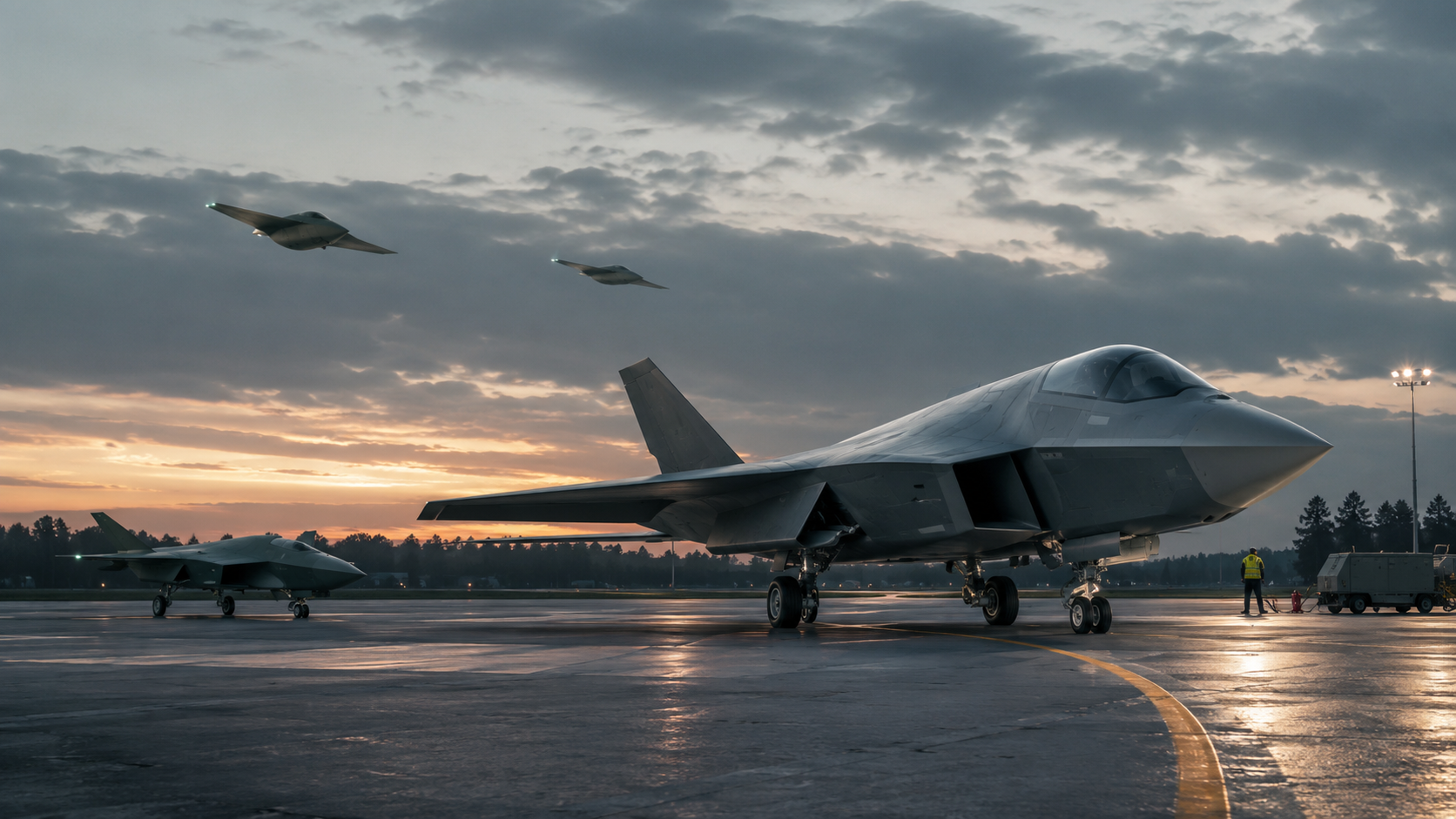
That distinction matters. FCAS is often described as a future fighter project, but the programme was designed to be much more than a single aircraft. Its original ambition is a system-of-systems: a next-generation combat aircraft, remote carriers, unmanned platforms, sensors, weapons, secure communications and a combat cloud connecting them into one operational network.
The current crisis centres on the fighter itself. France’s Dassault Aviation and Airbus, representing German and Spanish industrial interests, have been struggling over leadership, workshare and control of the next development phase. Dassault has insisted on a clear prime contractor role for the next-generation fighter, while Airbus has repeatedly argued that the programme must reflect a balanced European industrial partnership.
This dispute has placed the manned fighter component under serious strain. But Airbus Defence chief Michael Schoellhorn has now sought to draw a line between the fighter aircraft and the rest of the FCAS ecosystem. His position suggests that the programme could survive in a reduced or restructured form, with the combat cloud, weapons networking and drone-related elements moving forward even if the fighter track is delayed, split or redesigned.
For Europe, this is strategically important. The future of air combat will not be defined only by who builds the next aircraft. It will be defined by the ability to connect aircraft, drones, weapons and sensors in real time. In that sense, the combat cloud and networking layer may be just as decisive as the fighter itself.
The Airbus message also reflects a broader industrial reality. Europe is running out of time to align political ambition with programme governance. FCAS was intended to demonstrate European strategic autonomy in high-end air combat, but the project has repeatedly exposed the difficulty of reconciling national sovereignty, industrial interests and military requirements within one single flagship programme.
If the fighter component continues to stall, Europe may face several possible outcomes: a delayed FCAS, a split architecture with different manned platforms, or a continuation of shared digital and unmanned systems around separate national aircraft. None of these outcomes would match the original political vision. But they would be very different from a full collapse.
The key question is whether governments can now decide what must remain common and what can be separated. A unified European sixth-generation fighter would still carry strong political and operational value. But the minimum strategic requirement may increasingly be interoperability: a shared combat cloud, common networking standards, collaborative drones and weapons integration that can function across different aircraft fleets.
For the aerospace and defence industry, the signal is mixed. The fighter programme remains uncertain, and that uncertainty affects long-term investment, engineering teams and supply chains. At the same time, the drone, mission-system, communications, sensor-fusion and combat-cloud parts of FCAS may become even more central if the manned aircraft debate remains unresolved.
In practical terms, Airbus is telling Europe not to confuse the crisis of one programme pillar with the death of the entire concept. The future fighter may still be politically contested. But the need for networked air combat, collaborative unmanned systems and a European digital combat architecture is not going away.
Sources
Reuters, Financial Times, Le Monde, social media/open source
About the Author