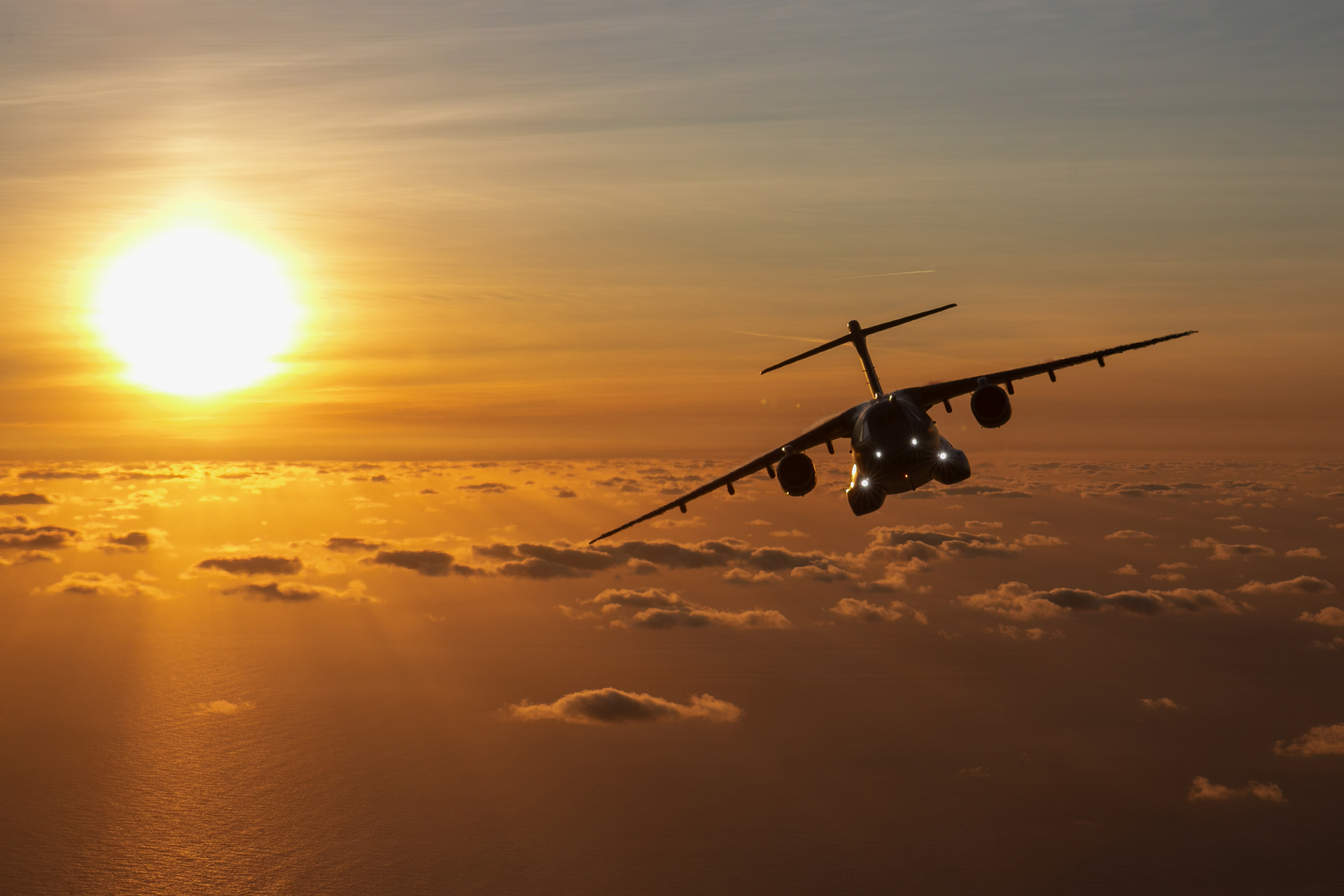
Embraer’s C-390 Millennium is becoming one of the most closely watched military airlift programmes in the global aerospace market, with recent orders, European industrial partnerships and Middle Eastern expansion strengthening the aircraft’s position against legacy transport fleets.
The Brazilian manufacturer has moved the C-390 from a national defence programme into a growing international platform. What began as Brazil’s answer to a new generation of tactical airlift is now developing into a wider NATO, European and Middle Eastern campaign.
The latest signal came from the United Arab Emirates, where Tawazun awarded Embraer a contract for 10 C-390 Millennium aircraft, with options for 10 more. Embraer describes the deal as the first C-390 selection in the Middle East, giving the programme a major foothold in a region where air mobility, humanitarian response, interoperability and long-range operational reach are central defence priorities.
This is not only an aircraft sale. It is a strategic entry point. Embraer has also signed an exclusive strategic partnership with UAE-based Generation 5 Holding to support the C-390 programme in the Emirates. That local partnership approach reflects a broader trend in defence procurement: customers increasingly expect industrial cooperation, support infrastructure and long-term capability development, not only platform delivery.
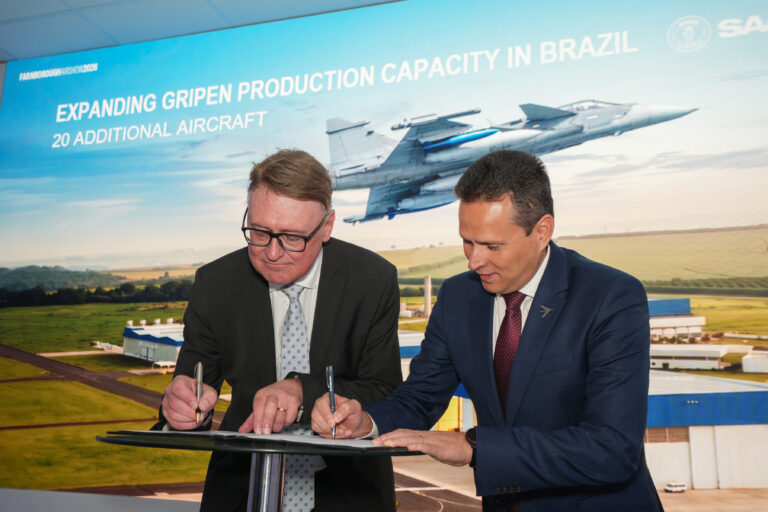
In Europe, the C-390 has gained momentum among NATO members and partners replacing ageing tactical transport fleets. Sweden has ordered four C-390s as part of a European collaborative procurement structure with the Netherlands and Austria, which together ordered nine aircraft in 2024. The Swedish contract also includes options that could support further European acquisitions.
For NATO, this matters. Air mobility is no longer a secondary capability. It is a core element of deterrence, reinforcement and resilience. The ability to move troops, equipment, cargo and medical evacuation modules quickly across Europe is becoming more important as NATO strengthens its defence posture and European countries invest in operational readiness.
The Netherlands-Austria joint order is particularly important because it shows the C-390 moving beyond individual national procurement. It points toward a European ecosystem around training, maintenance, lifecycle support and interoperability. Sweden’s later decision strengthens that pattern and gives Embraer a larger platform for regional sustainment and common support.
The Czech Republic adds another important layer. Prague has ordered two C-390 aircraft for the Czech Air Force, but the programme also has a strong Czech industrial dimension. Aero Vodochody has been a strategic partner and supplier for the C-390 since the early stages of the programme, producing parts of the rear fuselage, paratrooper and crew doors, emergency doors and hatches, the cargo ramp and fixed leading edge.
That makes the C-390 relevant not only as a procurement story, but also as an industrial story for Central Europe. Embraer has also signed cooperation agreements with Aero Vodochody, LOM Praha and Czech academic institutions, aiming to expand local industrial participation, maintenance know-how and future aerospace cooperation.
Greece represents another important support angle. Embraer and Hellenic Aerospace Industry have advanced their cooperation to develop maintenance, repair and overhaul capabilities for the C-390 in Greece. This could become a significant part of the aircraft’s European support footprint, especially if more countries in the region move toward the platform.
Technically, Embraer positions the C-390 as a modern multi-mission aircraft designed for transport, troop and cargo airdrop, medical evacuation, search and rescue, firefighting, humanitarian operations and missions from temporary or unpaved runways. The aircraft has a maximum payload of 26 tons and a top speed of 470 knots. In the KC-390 configuration, it can also perform air-to-air refuelling, both as a tanker and as a receiver.
The operational data is also central to Embraer’s argument. The company says the global C-390 fleet has accumulated more than 15,000 flight hours, with a mission capability rate of 93% and mission completion rates above 99%. For air forces comparing new procurement options, availability and mission reliability are often as important as aircraft performance.
The result is a programme with growing strategic weight. Embraer is no longer only selling an aircraft. It is building a military airlift ecosystem: aircraft, training, MRO, local industrial partnerships, NATO interoperability and regional support.
For the global transport aircraft market, that is the real story. The C-390 is challenging a segment historically dominated by legacy platforms, especially the C-130 family. Its success will depend on delivery discipline, operational performance, customer confidence and Embraer’s ability to scale support as the fleet grows.
But the direction is clear. The C-390 has become one of the few military aircraft programmes with visible momentum across Europe, the Middle East and other export markets. At a time when air forces are reassessing mobility, resilience and readiness, Embraer has turned the Millennium into a serious contender for the next generation of tactical airlift.
By: Katerina Urbanova
About the Author