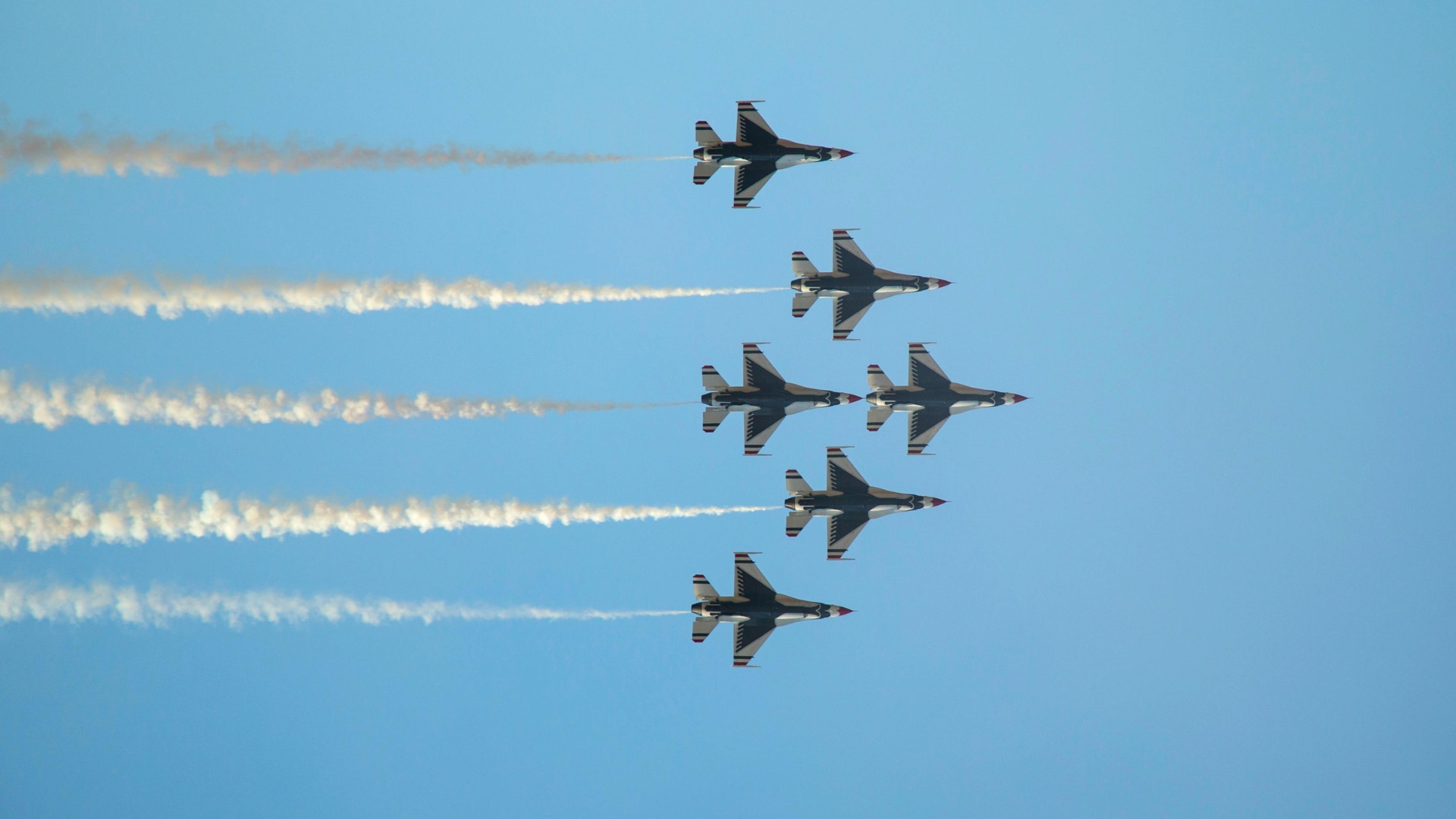
From Collaborative Combat Aircraft and crewed-uncrewed teaming to electronic warfare, data connectivity and the future of fighter training, the International Fighter Conference 2026 comes to Munich at a moment when combat aviation is undergoing one of its most significant transformations in decades. Aerospace Central Europe is proud to once again support the event as a media partner.
From 3–5 November, more than 600 senior military leaders, air chiefs, programme directors and industry representatives from over 40 nations are expected to gather at the International Fighter Conference (IFC) 2026 in Munich. Now in its 26th year, the conference has developed into one of the most important international forums dedicated specifically to combat aviation.
This year’s theme: “Building Combat Mass: CCAs, Crewed-Uncrewed Teaming, and the Future Fighter Force” reflects a fundamental change in the way air forces are approaching future airpower.
The question is no longer simply which fighter aircraft comes next. Increasingly, it is how crewed fighters, autonomous systems, sensors, weapons, electronic warfare assets and command networks can operate as one connected combat system — and how that system can generate sufficient mass to survive and prevail in a heavily contested environment.
From the fighter platform to the combat ecosystem
Recent conflicts have made the limitations of traditional platform-centric thinking increasingly visible. Dense integrated air defences, electronic warfare, drones, long-range weapons and rapidly changing tactical environments are forcing air forces to rethink both force structure and operational concepts.
The International Fighter Aircraft Global Market Report 2026–2031, released ahead of IFC, describes a shift towards combat systems built around resilience, dispersion and sustained operations. Survivable aircraft remain essential, but they increasingly need to operate alongside long-range effects, secure networks, electronic warfare capabilities and uncrewed systems.
That helps explain why Collaborative Combat Aircraft (CCA) and crewed-uncrewed teaming have moved so quickly towards the centre of the combat-air debate.
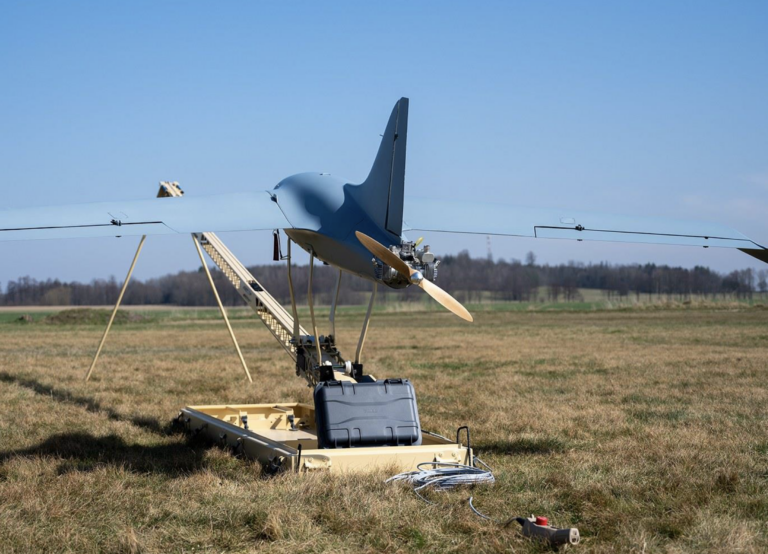
The objective is not simply to add drones alongside fighters. It is to create scalable combat mass: additional sensors, weapons, electronic warfare capacity and risk-tolerant platforms that can extend the reach and survivability of expensive crewed aircraft.
The United States is already moving CCA from concept towards operational capability, while European next-generation programmes are pursuing similar concepts through remote carriers and other uncrewed adjuncts. The underlying principle is increasingly shared: future fighter forces will consist of systems of systems rather than isolated aircraft.
Data may matter as much as aircraft performance
Another important shift runs throughout both the IFC programme and the accompanying market analysis: superiority in the air will increasingly depend on what happens beyond the aircraft itself.
Secure communications, sensor fusion, mission data, AI-enabled decision support and the ability to exchange targeting information across platforms and national forces are becoming central elements of combat effectiveness.
A fighter capable of detecting a threat but unable to distribute that information quickly enough across the force may offer considerably less operational value than an aircraft fully integrated into a broader combat network. This is particularly important for NATO, where future operations will almost inevitably involve different aircraft types, different national command systems and distributed forces operating together.
Interoperability therefore moves from being desirable to being operationally essential.
This also places electronic warfare firmly back at the heart of fighter development. Control of the electromagnetic environment increasingly determines whether sensors can function, networks can communicate and weapons can reach their targets. The IFC discussions around EW, avionics, C2 and mission systems therefore go far beyond individual pieces of equipment: they address the architecture on which future combat aviation will depend.
A $324 billion transformation
The scale of the transition is equally significant from an industrial perspective.
Across the countries assessed in the IFC market report, fighter-aircraft spending between 2026 and 2031 is forecast at approximately $324.5 billion. Fifth-generation aircraft account for the largest share, at around $150.2 billion, followed by fourth- and 4.5-generation fighters at $116.9 billion. Sixth-generation programmes represent almost $39.8 billion, while the emerging loyal-wingman segment is estimated at approximately $17.7 billion.
Those numbers also underline an important reality: the fourth and fifth generations are not about to disappear.
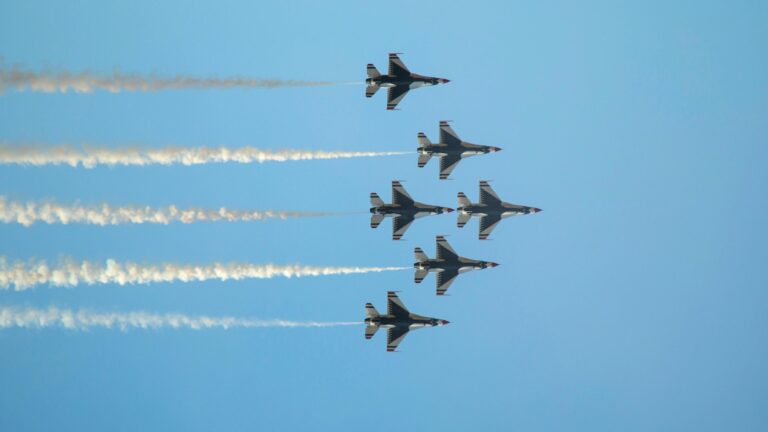
While the debate naturally focuses on F-47, GCAP, FCAS and other future concepts, existing fighter fleets will remain the backbone of many air forces for decades. Modernisation, new sensors, electronic warfare, weapons integration, open architectures and improved connectivity will therefore be just as important as the development of entirely new aircraft.
The future fighter force is likely to be mixed by definition — combining different aircraft generations with autonomous platforms and increasingly software-defined capabilities.
Training for a force that does not yet exist
There is another challenge that receives less attention but may prove equally decisive: how to train for this new environment.
Future fighter crews will need to manage far more than the traditional aircraft-versus-aircraft engagement. They will operate in complex sensor and data environments while coordinating autonomous systems, interpreting information from multiple domains and making decisions under intense electronic attack.
The market report consequently identifies Live-Virtual-Constructive training, advanced simulation and synthetic battlespaces as increasingly important. The economics reinforce the operational argument: as aircraft become more sophisticated and flying hours more expensive, many of the most demanding scenarios cannot realistically be generated through live flying alone.
IFC 2026 therefore arrives at an interesting point in the evolution of combat aviation. The industry is simultaneously sustaining fourth-generation fleets, expanding fifth-generation forces, developing sixth-generation aircraft and introducing an entirely new category of collaborative autonomous systems.
The challenge is no longer simply to build the best fighter.
It is to connect platforms, people, sensors and weapons into a force that can generate combat mass, survive in contested airspace and continue operating at scale.
Senior representatives expected in Munich include NATO DSACEUR Air Chief Marshal Sir Johnny Stringer, U.S. Air Combat Command Commander General Adrian Spain, German Air Force Chief of Staff Lieutenant General Holger Neumann, Royal Netherlands Air Force Commander Lieutenant General André Steur, Polish Air Force Inspector Major General Tomasz Jatczak and senior representatives of the U.S., British, Italian, Canadian and other allied air forces.
Aerospace Central Europe is proud to be a media partner of the International Fighter Conference 2026 and will be in Munich to follow the discussions, technologies and people shaping the next generation of combat airpower.
We look forward to meeting our readers, partners and friends from across the international aerospace and defence community in Munich — and invite you to join us at IFC 2026 from 3–5 November.
International Fighter Conference 2026
3–5 November 2026 | Eisbach Studios, Munich, Germany
About the Author