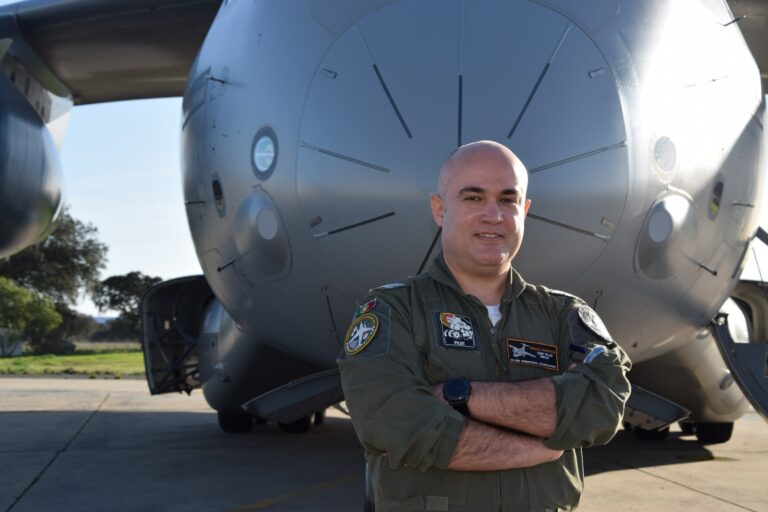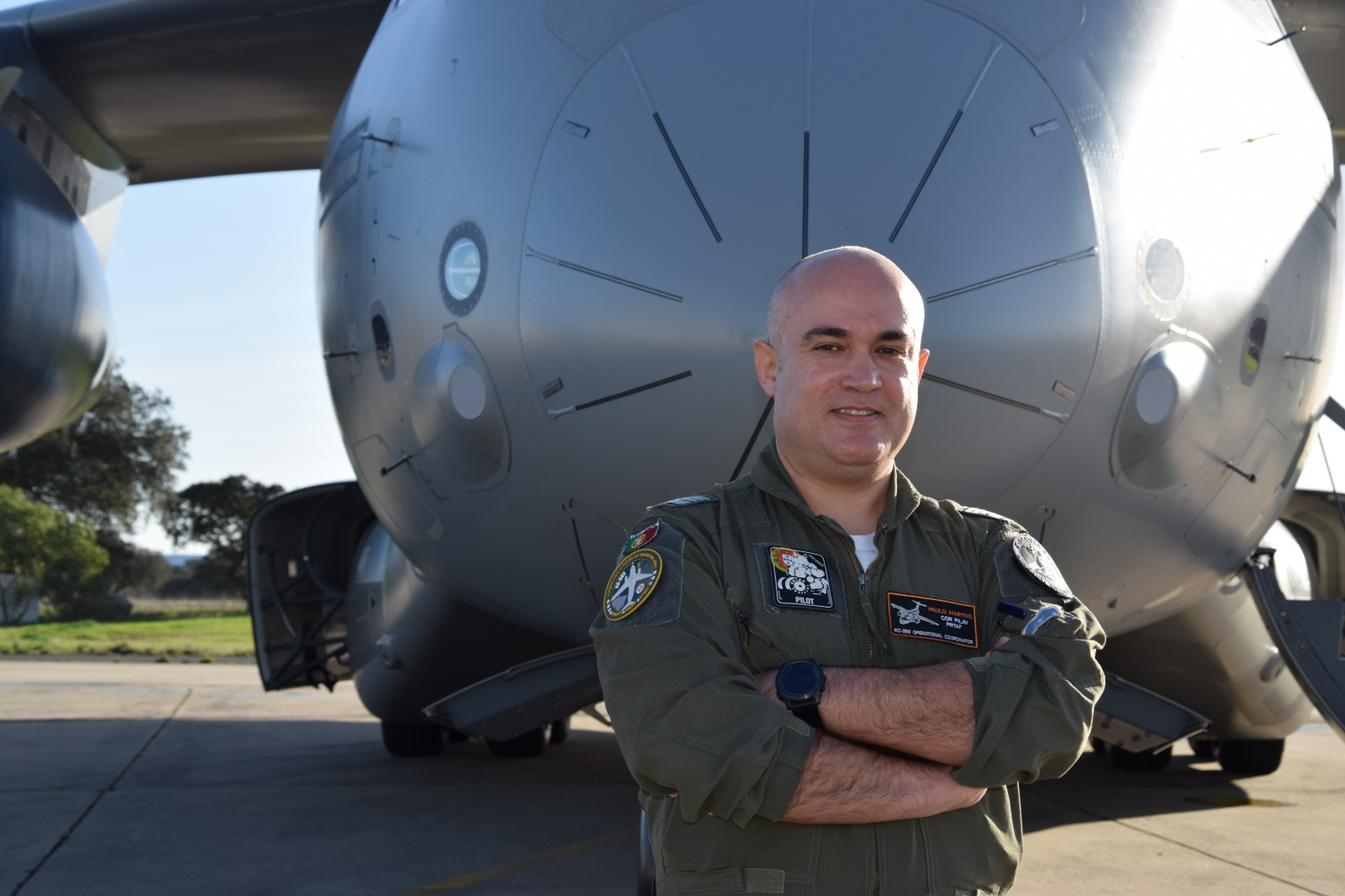
Colonel Paulo "HULK" Martins
With more than 4,400 flight hours accumulated since the introduction of the KC-390 Millennium, the Portuguese Air Force is gaining valuable operational experience with its new transport aircraft. At the Future Air Force Conference 2026 in Prague, Colonel Paulo “HULK” Martins offered an insightful account of Portugal’s transition to the KC-390 and explained why the development of a multinational operator community could become an important factor in strengthening European military air mobility.
The introduction of a new military aircraft is always a significant undertaking, particularly when it involves replacing a platform that has served for decades and establishing an entirely new operational and training environment. Aircraft performance, payload and range are naturally among the first characteristics to attract attention, but they represent only part of a much larger picture. Ultimately, what matters is how successfully an air force can translate the capabilities of its aircraft into reliable and sustainable operational performance.
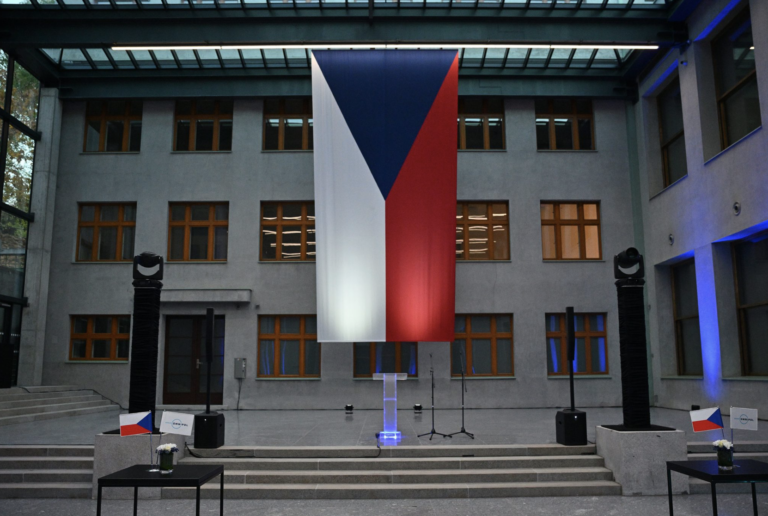
This was one of the central messages delivered by Colonel Paulo “HULK” Martins, Chief of Operations Division of the Portuguese Air Force, during the Future Air Force Conference (FAFC), held in Prague from 20 to 22 October 2026. His presentation, Building a Multinational KC-390 Community: Interoperability, Training and Operational Readiness, provided a particularly interesting perspective on Portugal’s experience with the Embraer KC-390 Millennium and the opportunities emerging as other European nations introduce the same aircraft into their fleets.
Rather than concentrating exclusively on the technical characteristics of the KC-390, Martins approached the subject from an operational perspective. His presentation addressed the practical challenges of introducing a new aircraft type, the importance of training and sustainment, and the growing potential for cooperation between national air forces operating a common platform. It was an approach that made the presentation relevant far beyond the KC-390 programme itself, touching upon some of the fundamental questions facing European military aviation today.
Three Years of Operational Experience
Portugal became the first operator to introduce the KC-390 into operational service in October 2023. The aircraft represents a substantial step in the modernisation of the Portuguese Air Force’s transport capabilities, which have historically relied on platforms including the Lockheed Martin C-130H Hercules and the Airbus C-295M. The transition to a modern jet-powered military transport aircraft has brought new capabilities, but it has also required the gradual development of an operational framework capable of supporting their effective employment.
As Martins explained in Prague, the programme has progressed through a series of important milestones. The first KC-390 entered service in October 2023, with the initial period already including medical evacuation capability. The arrival of the second aircraft in 2024 allowed the Portuguese Air Force to expand its activities, including airdrop and logistical missions. During 2025, the third aircraft joined the fleet, while the introduction of the Full Flight Mission Simulator marked another important step in establishing the training infrastructure required for the new platform.
The programme continued to develop in 2026 with the arrival of a fourth aircraft and further work on air-to-air refuelling capabilities and electronic warfare operational test and evaluation. By October 2026, the Portuguese Air Force reported that its KC-390 fleet had accumulated more than 4,400 flight hours. That figure is significant not simply as an indication of aircraft utilisation, but because it reflects three years of operational experience, training, capability development and the gradual expansion of the missions performed by the fleet.
For other nations preparing to introduce the KC-390, Portugal’s experience offers an opportunity to learn from an operator that has already progressed through several stages of the transition process. The value of those lessons lies not only in understanding the aircraft, but also in recognising the organisational, technical and operational requirements associated with bringing a new fleet into service.
Operational Readiness Is More Than Aircraft Availability
One of the strongest elements of Martins’ presentation was his emphasis on operational readiness as a comprehensive system rather than a simple measure of aircraft availability. The Portuguese Air Force identifies five interconnected components that must function together: aircraft, people, training, sustainment and procedures. Each contributes to the ability to generate operational capability, and shortcomings in any one of them can affect the effectiveness of the entire system.
The aircraft and its mission systems provide the technical foundation, but qualified personnel are essential to making those capabilities available. Training ensures that aircrews, maintenance personnel and instructors possess the necessary competencies, while sustainment provides the maintenance, logistical support and resources required for continued operations. Equally important are the procedures that govern how missions are prepared, coordinated and executed, particularly when operations involve other military organisations or international partners.
This may sound like an obvious principle, but it is an important distinction in an environment where discussions about military aircraft programmes frequently concentrate on deliveries, technical specifications and the introduction of new equipment. A new aircraft does not automatically represent a fully developed operational capability. That capability must be established progressively, supported by personnel, infrastructure, experience and reliable processes.
Portugal’s transition to the KC-390 illustrates precisely this point. The introduction of the aircraft has been accompanied by the development of training programmes, mission qualifications, maintenance competencies and operational procedures. As additional aircraft have entered service, the Portuguese Air Force has been able to expand its experience and progressively develop further mission capabilities. It is this combination of aircraft and supporting systems that ultimately determines the value of the investment.
Training: The Foundation of a Successful Transition
Training was naturally one of the central subjects of Martins’ presentation, and it is also an area in which Portugal’s experience may prove particularly valuable to other European operators. The KC-390 requires a structured approach to preparing several different groups of personnel, each with its own responsibilities and qualification requirements.
For pilots, the training pathway includes ground school, aircraft systems and procedures, simulator instruction, basic flight training and subsequently more advanced operational qualifications. Loadmasters require specialised instruction in cargo handling, aircraft systems and ramp operations, while maintenance personnel must obtain the appropriate technical qualifications and practical experience to support the aircraft. The development of qualified instructors is another essential part of the process, ensuring that training standards can be maintained as the fleet and its operational responsibilities expand.
An important milestone was the introduction of the KC-390 Full Flight Mission Simulator in 2025. Synthetic training provides the opportunity to practise normal procedures, complex operational scenarios and emergency situations in a controlled environment, reducing the need to reproduce every training requirement in the aircraft itself. At the same time, simulator training must remain closely connected to actual flying operations and the operational tasks that crews will be expected to perform.
Martins also introduced the concept of a KC-390 Training Centre of Excellence, combining synthetic training and live aircraft-based activities within a broader training framework. The concept provides a potential basis for cooperation between operators, allowing them to benefit from established infrastructure, shared experience and increasingly harmonised training methods.
Such cooperation becomes particularly relevant when several relatively small national fleets are operating the same aircraft type. Developing and maintaining every specialised training capability independently can require considerable resources. Where operational requirements and national regulations permit, cooperation offers opportunities to use those resources more efficiently while strengthening common standards and practical interoperability.
The Portuguese approach recognises that training is not merely a necessary step before operational service. It is a continuous process that must evolve alongside the aircraft, its mission systems and the demands placed upon its crews.
Making Full Use of a Multirole Aircraft
The KC-390 Millennium was developed as a modern multirole military transport aircraft, capable of supporting a range of operational tasks. These include tactical airlift, transportation of personnel and equipment, airdrop operations, medical evacuation, humanitarian missions and air-to-air refuelling. Its versatility is one of the platform’s principal characteristics, but Martins’ presentation made an important distinction between possessing a technical capability and being operationally ready to employ it.
Every mission type requires specific training, qualifications, procedures and supporting arrangements. An air force may operate an aircraft technically capable of performing aerial refuelling, for example, but that does not automatically mean that the capability can be employed across the full range of potential operational scenarios. The same principle applies to tactical transport, airdrop missions and other specialised tasks.
Martins therefore distinguished between qualification and operational readiness. Qualification demonstrates that personnel or units have achieved defined standards, whereas operational readiness requires the broader ability to perform a mission reliably, with the necessary aircraft, personnel, support and procedures available.
This distinction is particularly important in the context of multinational operations. Even when participating countries operate identical aircraft, differences in national procedures, training standards and operational qualifications can influence the extent to which they are able to work together. Consequently, the development of common or compatible procedures can be just as valuable as the technical commonality of the aircraft themselves.
For the growing KC-390 community, the challenge will be to turn the versatility of the aircraft into a practical operational advantage, both nationally and through cooperation with other users.
Air-to-Air Refuelling and the Development of New Capabilities
One of the areas in which Portugal has continued to develop its KC-390 capabilities is air-to-air refuelling. The aircraft’s ability to undertake tanker missions adds an important dimension to its operational role, particularly for air forces seeking greater flexibility from their transport fleets.
During his presentation, Martins outlined ongoing activities involving high-speed and low-speed drogue refuelling configurations, as well as the development of receiver aircraft clearances. These activities require careful coordination, since aerial refuelling involves more than the physical compatibility of aircraft and equipment. Flight characteristics, operating limitations, procedures, safety requirements and crew qualifications must all be considered before a receiver aircraft can be cleared for particular operations.
Portugal’s approach includes cooperation with interested partners to develop receiver clearances within defined operational scopes and limitations. This provides another example of an area in which international collaboration can be beneficial, particularly as additional European air forces introduce the KC-390.
The development of compatible procedures and the exchange of experience can contribute to future multinational operations, although individual air forces must continue to meet their own certification and operational requirements. It is therefore a process that depends on careful technical evaluation, practical testing and progressive capability development rather than simply the introduction of additional equipment.
The broader significance is that the KC-390 community has the potential to develop cooperation across several mission areas. Transport aviation remains its foundation, but aerial refuelling and other specialised capabilities offer further opportunities to strengthen the operational flexibility of participating air forces.
International Exercises and Operational Testing
Operational experience cannot be developed through training infrastructure alone. Participation in multinational exercises provides an essential opportunity to test procedures, develop tactical competencies and gain experience operating alongside other military organisations.
Martins highlighted several international activities in which the Portuguese KC-390 programme has been involved, including CRUZEX in Brazil, the NATO Tiger Meet, the European Tactical Airlift Programme Course, Falcon Leap in the Netherlands and activities conducted in the United States.
These engagements expose crews and support personnel to different operating environments, mission requirements and multinational procedures. They also provide opportunities for operational test and evaluation, parachute operations and the progressive development of compatibility with other aircraft and systems.
For military air mobility, such exercises have particular importance. Transport aircraft frequently operate in support of wider joint or multinational missions, where coordination with other units can be critical to success. Experience gained through exercises helps identify procedural differences, improve communication and establish the working relationships needed for effective cooperation.
A common aircraft platform can certainly simplify some aspects of this process, but it does not eliminate the need for practical training. Interoperability must be demonstrated and maintained through experience, particularly when participating nations have different operational backgrounds and requirements.
Portugal’s growing participation in international activities is therefore relevant not only to its own fleet development, but also to the wider community of KC-390 operators that may benefit from these lessons in the years ahead.
Building a European KC-390 Community
The development of a multinational KC-390 community was the central theme of Martins’ presentation and perhaps its most interesting strategic dimension. As the number of European operators increases, Portugal sees opportunities to establish closer cooperation in areas where national air forces face comparable challenges and requirements.
According to the presentation, Portugal is already cooperating with the Netherlands, Hungary and Austria on training-related activities, while additional arrangements remain under discussion. Cooperation with Sweden in the field of electronic warfare also demonstrates that the scope of these relationships is extending beyond the initial introduction of the aircraft.
These developments are particularly relevant because European air forces have often operated relatively small transport fleets under separate national arrangements, even when using similar aircraft. A growing group of KC-390 operators creates opportunities to exchange operational experience, coordinate selected training activities, develop compatible procedures and potentially reduce unnecessary duplication in supporting infrastructure.
The advantages are not limited to efficiency. Experience gained by one operator in a particular mission area may prove useful to others preparing to introduce the same capability. Lessons from training, maintenance, operational testing and multinational exercises can contribute to the development of more mature procedures across the community.
At the same time, Martins’ approach recognises the importance of national responsibilities and operational requirements. Cooperation between operators does not imply that every participating air force must adopt identical procedures or develop exactly the same capabilities. National requirements, available resources and operational priorities will continue to influence how individual fleets are employed.
The objective is therefore not to create a single multinational organisation responsible for KC-390 operations, but to develop a community in which cooperation strengthens the capabilities of individual members. It is a practical approach based on shared interests, common experience and the opportunities created by operating the same aircraft type.
From Common Aircraft to Collective Capability
The importance of such cooperation becomes clearer when viewed within the wider context of European defence aviation. Several countries are modernising their transport fleets while simultaneously facing increased demands for operational readiness, deployability and interoperability.
Acquiring a common aircraft type can provide a useful technical foundation, but the real benefits of multinational cooperation develop over time. Shared training, compatible procedures, practical exercises and the exchange of operational experience all contribute to making national capabilities more effective when employed together.
Martins’ presentation described this progression from platform commonality towards collective readiness. The aircraft itself represents only the starting point. The subsequent development of training, operational procedures and mutual understanding determines how effectively operators can cooperate.
This is particularly relevant for European air mobility, where transport aircraft are required to support operations that frequently extend beyond national borders. Whether transporting military equipment, supporting deployments, conducting medical evacuation or participating in humanitarian missions, the ability to cooperate effectively with international partners is a substantial operational advantage.
The growing KC-390 community therefore has an opportunity to build interoperability from an early stage, rather than attempting to establish it only after national capabilities have matured independently.
Portugal’s experience places it in a useful position within this process. Having introduced the aircraft in 2023 and accumulated more than 4,400 flight hours by October 2026, the Portuguese Air Force can contribute practical lessons from its transition, training activities and continued development of mission capabilities.
For other operators, access to that experience may support more effective planning and reduce some of the uncertainties associated with introducing a new aircraft type.
An Interesting Perspective on the Future of European Air Mobility
What made Colonel Martins’ contribution at FAFC 2026 particularly worthwhile was its combination of practical operational experience and a realistic vision for future cooperation. The presentation did not attempt to portray the acquisition of a modern aircraft as the solution to every challenge facing military air mobility. Instead, it demonstrated how much work is required after the first aircraft arrives and how important the supporting organisation becomes in determining the success of the entire programme.
The Portuguese Air Force’s experience with the KC-390 is still developing. New mission capabilities are being introduced, operational experience continues to accumulate and cooperation with other European operators is gradually taking shape. These are processes that require time, resources and sustained commitment, but they also offer opportunities that extend beyond Portugal’s national requirements.
For European military aviation, the emergence of a community built around a common transport aircraft is an encouraging development. It provides an opportunity to strengthen interoperability through practical cooperation and to make better use of the experience and resources available across participating nations.
Whether this potential is fully realised will depend on the willingness of individual operators to continue working together, share relevant lessons and develop common approaches where they provide a genuine operational benefit.
The KC-390 Millennium is undoubtedly an important modernisation programme for Portugal and its growing international customer base. Yet the perspective presented by Colonel Paulo Martins in Prague suggested that its long-term significance for European air mobility may be determined just as much by the relationships developing between its operators as by the capabilities of the aircraft itself.
For a military aviation community increasingly focused on readiness, sustainability and cooperation, that is a message well worth taking away from this year’s Future Air Force Conference.
Read more:
By: Katerina Urbanova
Photo Credit: Colonel Paulo “HULK” Martins
Edited: AI-assisted tools were used to support the preparation and editing of this report, with final content reviewed and editorially approved by Aerospace Central Europe.
About the Author