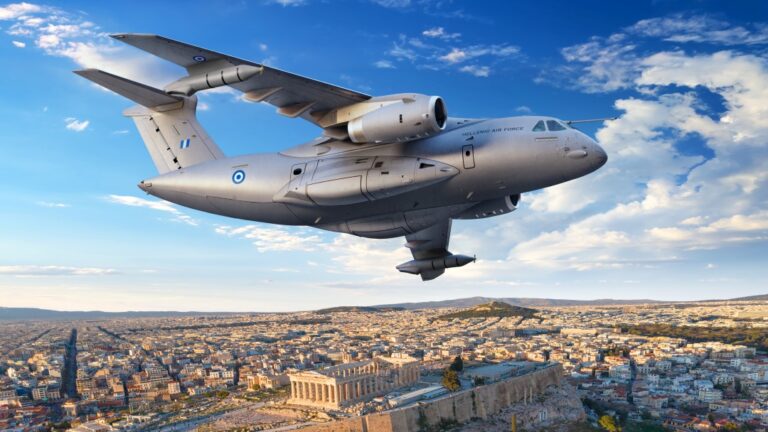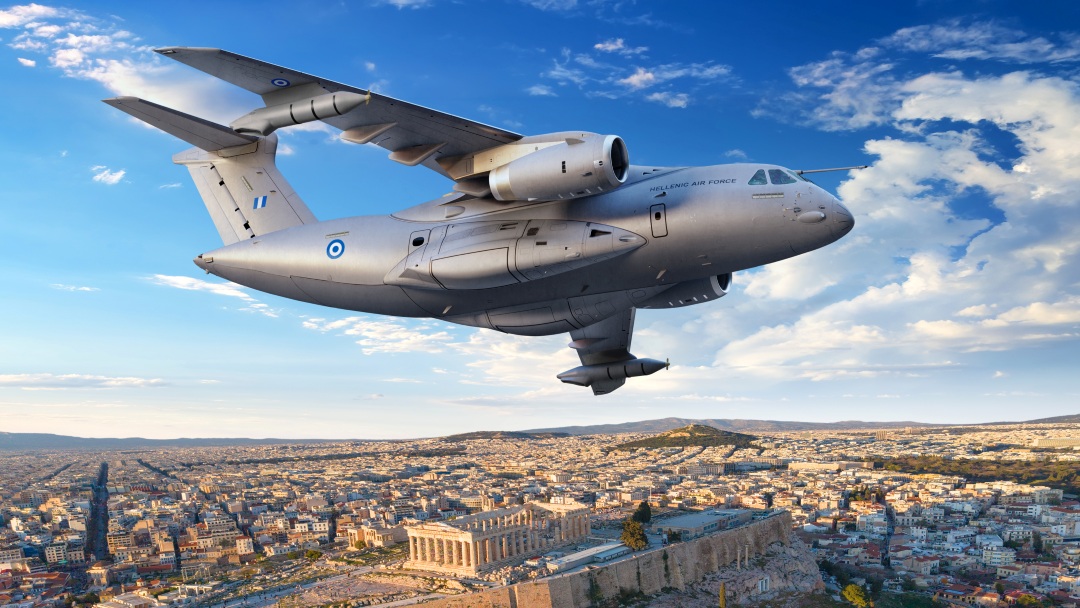
Greece has signed for three Embraer KC-390 Millennium multi-mission aircraft, with options for three more, becoming the seventh European nation to select the Brazilian-built platform. The first aircraft is scheduled for delivery to the Hellenic Air Force in 2027.
The agreement, announced on 2 November, was concluded through a government-to-government arrangement between Greece and Portugal. It represents another significant European success for the KC-390 and further expands a customer base that is increasingly developing into a distinct European operational community.
Under the contract, the Hellenic Ministry of National Defence will initially acquire three aircraft, with options covering another three. For Greece, the KC-390 will introduce a modern jet-powered airlift capability combined with air-to-air refuelling, giving the Hellenic Air Force a platform able to support both national requirements and multinational NATO operations.
The first Greek aircraft is expected in 2027. Embraer says the programme will also allow Greece to benefit from European synergies in training, support and logistics – an increasingly important aspect of the KC-390’s success on the continent.
A rapidly expanding European fleet
Greece becomes the seventh European country to select the KC-390, following Portugal, Hungary, the Netherlands, Austria, the Czech Republic and Sweden. The growing number of operators is creating opportunities that go well beyond individual aircraft acquisitions, including common training, logistics, maintenance and operational experience.
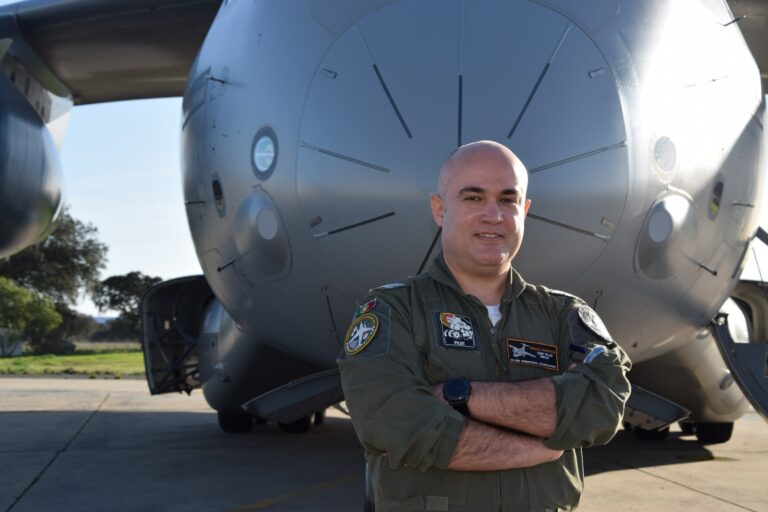
For Greece, Portugal plays a particularly important role. Greek Defence Minister Nikos Dendias visited Portugal in May 2026, including Air Base No. 11 and the Portuguese Air Force’s 506 Squadron, where he was briefed on the operational capabilities of the KC-390. The two countries have since developed the acquisition through their bilateral defence relationship.
The Portuguese Air Force is one of the most experienced European operators of the aircraft and has become an important reference point for countries introducing the type into service.
Embraer Defense & Security President and CEO Bosco da Costa Junior described the Greek decision as further evidence of confidence in the aircraft among NATO countries.
“This choice underscores the trust and confidence that leading NATO members place in our aircraft,” he said.
More than an aircraft acquisition
The Greek programme also has an important industrial dimension.
Earlier this year, Dendias said that Greece expected a minimum domestic industrial participation of 25 percent in the programme. He also highlighted the ability to perform the complete maintenance of both the aircraft and its engines in Greece, using existing capabilities as well as capacity to be developed together with the manufacturers and Portuguese partners.
That could make the programme particularly significant for the Greek defence-industrial ecosystem. For Athens, increasing domestic participation, support capacity and technological sovereignty has become an important part of its wider defence modernisation strategy.
Operational availability was another factor highlighted by the Greek defence ministry. Dendias previously pointed to the KC-390’s shorter maintenance cycle compared with aircraft currently operated by the Hellenic Air Force, arguing that three modern aircraft could therefore provide proportionally greater availability.
The KC-390 can carry up to 26 tonnes of payload and reach speeds of approximately 470 knots. Its mission set includes troop and cargo transport, airdrop, medical evacuation, search and rescue, humanitarian operations and firefighting. With its rapidly installable air-to-air refuelling equipment, the aircraft can operate both as a tanker and as a receiver.
Another step toward a European KC-390 ecosystem
The Greek decision is therefore significant beyond the size of the initial order.
With seven European customers now committed to the platform, the KC-390 is developing the critical mass needed for deeper cooperation between operators. Commonality in training, support, logistics and operational procedures could become an increasingly important part of the aircraft’s proposition, particularly for NATO countries seeking greater interoperability and availability.
Greece’s entry also strengthens the geographic footprint of the programme on NATO’s southern flank, while adding another air force with demanding requirements for tactical airlift, long-range transport and aerial refuelling.
Three aircraft are now contracted. Three more remain an option.
But strategically, the more important number may be seven: the number of European nations that have now chosen the KC-390 Millennium – and the foundation of what is rapidly becoming a substantial European operator community.
About the Author