International Fighter Conference 2026 in Munich brings together competing approaches to collaborative combat aircraft, revealing how air forces and industry are preparing for a new era of airpower.
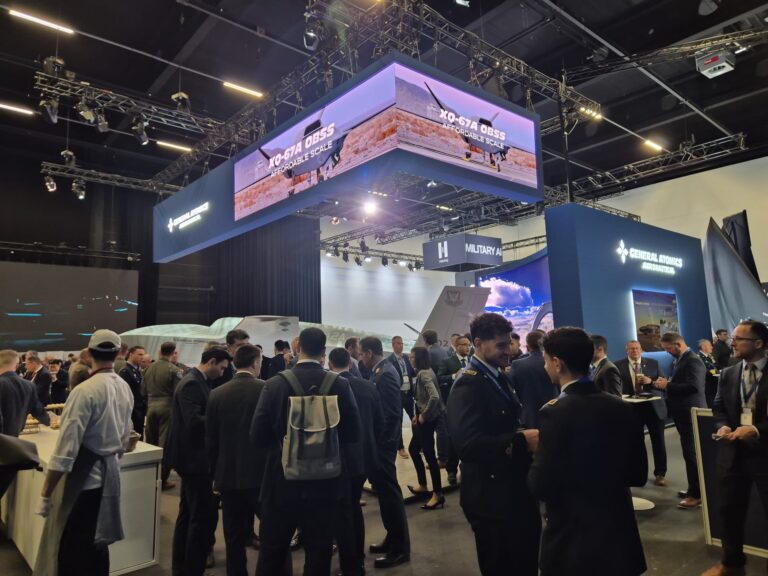
Munich, 4 November 2026 – The future of combat aviation is taking shape on the exhibition floor of the International Fighter Conference (IFC) 2026. Alongside discussions on sixth-generation fighter programmes, electronic warfare and operational readiness, a remarkable collection of uncrewed combat aircraft concepts highlights one of the most significant transformations currently underway in military aviation.
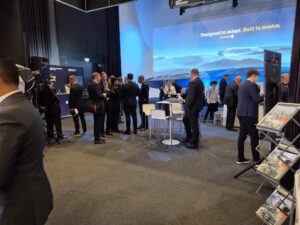
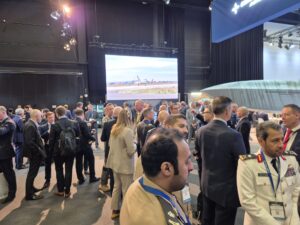
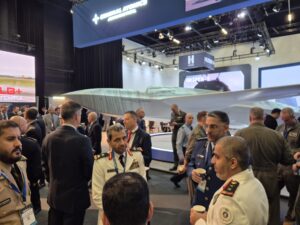
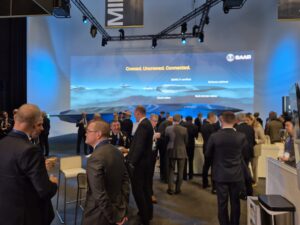

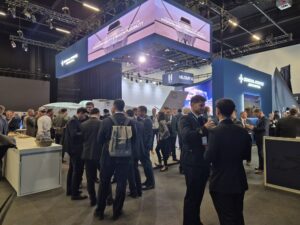
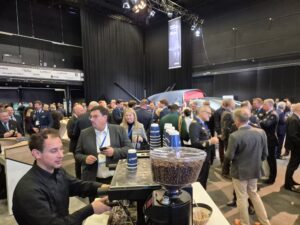
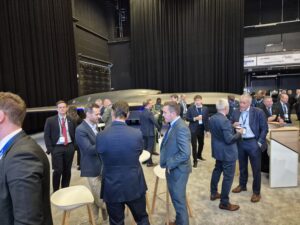
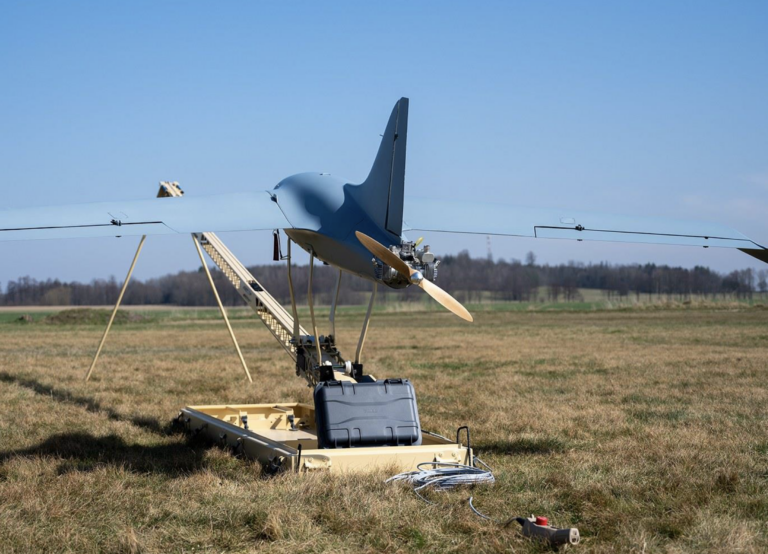
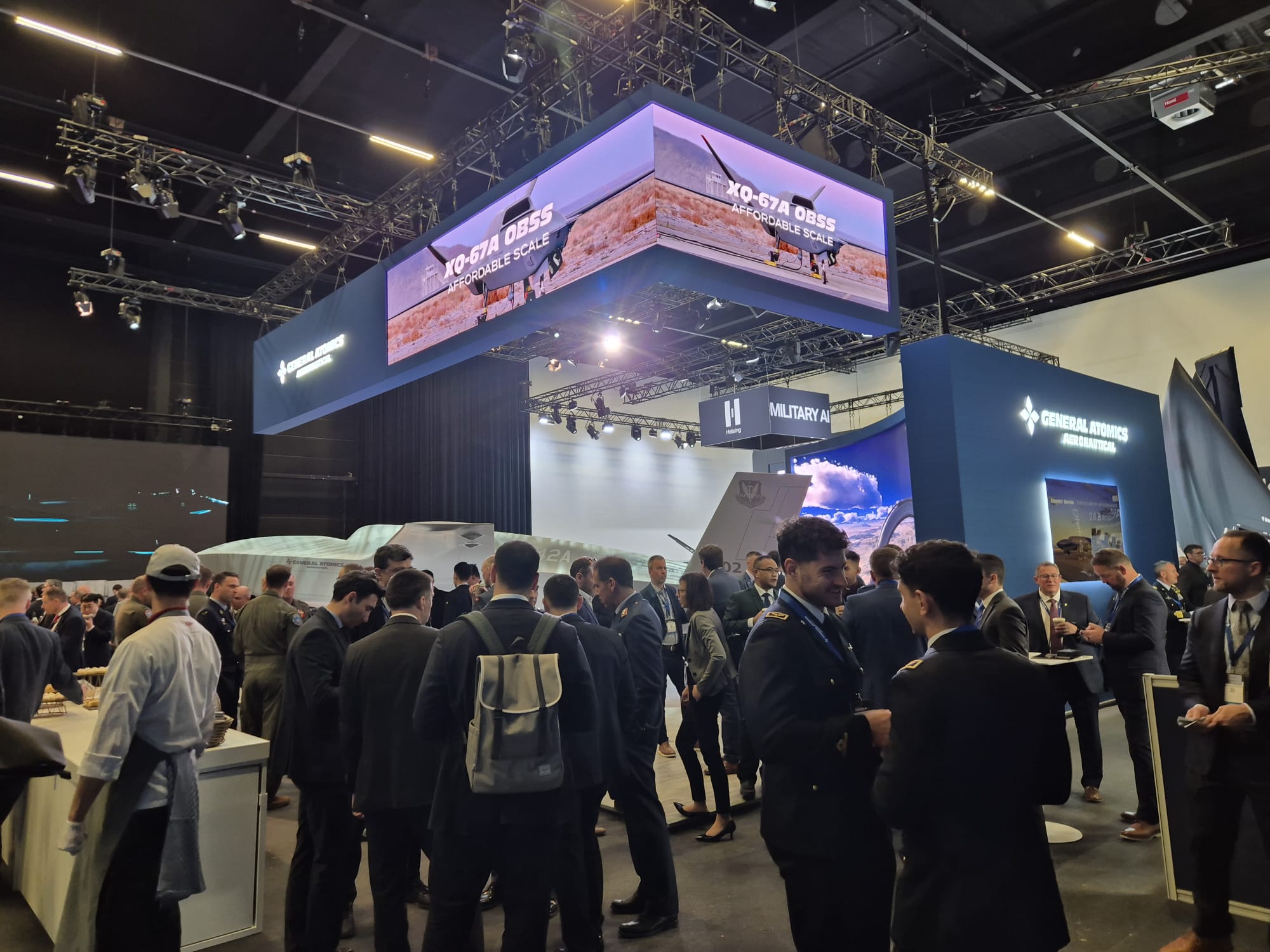
General Atomics, Shield AI, Helsing, Airbus and Lockheed Martin are presenting different approaches to Collaborative Combat Aircraft (CCA), a category of uncrewed aircraft intended to complement manned fighters, extend their operational reach and increase the number of platforms available for combat operations.
The diversity of the aircraft on display illustrates that the industry has yet to converge on a single solution. Some manufacturers are prioritising rapid deployment and affordable production, while others are developing more specialised platforms for penetrating contested airspace, electronic warfare or runway-independent operations.
What unites these programmes is a growing recognition that future air superiority will depend not only on the capabilities of individual fighter aircraft, but also on the number, adaptability and resilience of the systems operating alongside them.
General Atomics: Building the Industrial Foundation for Combat Mass
General Atomics Aeronautical Systems brings considerable experience in uncrewed aviation to the emerging CCA market. Its FQ-42 Vengeance, developed for the US Air Force, represents a move beyond traditional intelligence, surveillance and reconnaissance platforms towards autonomous combat aircraft capable of operating in contested environments.
The aircraft has already progressed into flight testing and evaluation, including operations at Creech Air Force Base in Nevada.
An equally important development is the company’s partnership with Spirit Defense, a Boeing company, to support fuselage design and production. By expanding its industrial capacity beyond its established manufacturing operations, General Atomics is addressing one of the fundamental challenges facing CCA programmes: producing aircraft in sufficient numbers to make a meaningful operational difference.
Its broader Gambit family also reflects a modular approach, with configurations envisaged for electronic warfare, suppression and destruction of enemy air defences, and precision strike.
For European air forces, General Atomics is exploring opportunities for local industrial participation and the integration of nationally developed mission systems and payloads.
Shield AI: Challenging the Dependence on Runways
Shield AI approaches the problem from a different direction. Its X-BAT autonomous fighter is designed around vertical take-off and landing, potentially allowing combat aircraft to operate from ships, islands and dispersed locations without conventional runways.
The significance of this concept extends beyond aircraft design. Airbases and their supporting infrastructure are increasingly vulnerable to long-range precision weapons and unmanned attacks. A combat aircraft capable of operating without a runway could offer greater flexibility in regions where established airbase infrastructure is limited or exposed.
Powered by the GE Aerospace F110 engine, X-BAT is being developed with internal weapons carriage, a planned combat radius of 1,000 nautical miles and Shield AI’s Hivemind autonomy system.
The programme is supported by announced public and private financial commitments totalling $400 million. Development milestones include engine testing, thrust-vectoring nozzle integration and aerodynamic testing of the internal weapons bay.
Shield AI is also building the industrial infrastructure needed to support the aircraft. In the United States, designated facilities will handle flight testing, production and sustainment, while European cooperation agreements include potential industrial participation in Poland and Greece.
These arrangements demonstrate how autonomous aircraft programmes are becoming closely connected to national industrial strategies. Their eventual commercial and operational success will depend not only on technical performance but also on production capacity, local support and customer confidence.
Airbus: A European Path Towards Operational CCA
Airbus is pursuing a phased approach to uncrewed collaborative combat aircraft, combining an existing flight-proven platform with a European mission system while developing a larger aircraft for the following decade.
The U740 Valkyrie, based on the Kratos XQ-58, forms the near-term element of this strategy. In October, Airbus and Kratos successfully completed its first European flight, including a rocket-assisted launch and manoeuvres at speeds reaching Mach 0.8.
Airbus intends to integrate its Multiplatform Autonomous Reconfigurable and Secure (MARS) mission system, which includes AI-supported autonomy and coordination capabilities. The company’s objective is to offer an operational CCA solution to the German Air Force by 2029.
The longer-term element is the U760 Ravenstorm, a larger European platform intended to perform air-to-air, air-to-ground and electronic warfare missions.
This two-stage strategy reflects a broader European dilemma. Air forces urgently require additional combat capacity, yet developing entirely new aircraft and their supporting infrastructure can take many years. Combining an existing airframe with European-controlled mission software offers a potential means of accelerating capability development without abandoning long-term technological sovereignty.
The distinction between aircraft manufacturing and control over mission software, data and autonomy is becoming increasingly important in European defence procurement.
Helsing: Autonomous Combat Aircraft Built Around Mission Specialisation
Germany-based Helsing is developing its CA-1 Europa as a family of autonomous combat aircraft, drawing on the aerospace manufacturing capabilities of Grob Aircraft.
The programme includes the CA-1KA, intended for kinetic attack missions, and the CA-1EA, designed for electronic attack.
The electronic warfare variant is particularly relevant to future operations against integrated air defence systems. Rather than relying exclusively on expensive manned aircraft to penetrate or suppress hostile defences, autonomous platforms could support larger formations through electronic disruption and other non-kinetic effects.
Both CA-1 variants are intended to share the same underlying aircraft architecture, propulsion, autonomy software and ground infrastructure, with their mission equipment adapted to different operational requirements.
Helsing is targeting initial operational capability for the kinetic attack variant in 2029, followed by the electronic attack version in 2031.
The programme illustrates the increasing convergence of conventional aerospace manufacturing and defence-focused artificial intelligence development. Nevertheless, its planned milestones remain to be demonstrated through flight testing, qualification and operational evaluation.
Lockheed Martin: Integrating Autonomous Aircraft into Established Fighter Fleets
Lockheed Martin’s Skunk Works is advancing its Vectis uncrewed combat aircraft, with the first flight planned for 2027.
The company has expanded the programme to include four additional aircraft, supporting continued development and testing of the design.
Vectis is intended to operate in conjunction with manned aircraft, including the F-35, and to provide a flexible platform capable of adapting to different mission requirements.
For Lockheed Martin, the challenge is not simply to develop another autonomous aircraft, but to integrate it into an established combat aviation ecosystem built around advanced sensors, secure communications and networked operations.
The value of such integration could be considerable. Uncrewed aircraft may allow fifth-generation fighters to extend their sensor coverage, distribute weapons and undertake higher-risk missions while reducing exposure of manned platforms.
However, practical employment will depend on reliable communications, human-machine interaction, mission planning and the ability to operate effectively when networks are disrupted.
Saab: Autonomy May Matter More Than the Airframe
While much of the attention in Munich is focused on aircraft designs, Saab’s work highlights another central question: who controls the intelligence that makes those aircraft operationally useful?
The Swedish manufacturer has developed its own family of AI agents and demonstrated their ability to control a Gripen E during beyond-visual-range combat scenarios.
These technologies are being developed for potential use both as cockpit decision-support systems and in future uncrewed aircraft.
Saab’s approach highlights a distinction that is likely to become increasingly important: the airframe is only one component of a collaborative combat system. Mission autonomy, tactical decision-making, sensor fusion and the ability to coordinate multiple aircraft may ultimately determine its operational effectiveness.
The company’s ongoing work on future fighter concepts, supported by the Swedish Defence Materiel Administration, also includes manned and unmanned demonstrators and associated technologies.
From Individual Platforms to Integrated Combat Systems
The developments presented and discussed at IFC 2026 point towards a fundamental change in the way air forces consider combat capability.
For decades, the performance of fighter aircraft has been measured primarily through speed, manoeuvrability, sensors, weapons and survivability. These characteristics remain essential, but future combat effectiveness will increasingly depend on how aircraft operate together.
CCA could enable air forces to distribute sensors and weapons across larger formations, complicate enemy targeting and conduct missions that would otherwise place highly valuable manned aircraft at unacceptable risk.
Yet important questions remain unresolved.
How much autonomy should be delegated to individual aircraft? How will pilots control several uncrewed systems simultaneously? What happens when communications or satellite navigation become unavailable? And perhaps most importantly, can manufacturers deliver the required numbers of affordable and reliable aircraft within realistic budgets and timescales?
The different programmes represented in Munich offer competing answers.
General Atomics is emphasising production scale and modularity. Shield AI is pursuing runway independence and autonomous operations. Airbus is combining near-term capability development with European mission-system sovereignty. Helsing is exploring specialised autonomous aircraft for kinetic and electronic attack. Lockheed Martin is concentrating on integration with established fighter ecosystems, while Saab is advancing the underlying autonomy technology.
None of these approaches can yet be regarded as a universal solution.
What is becoming increasingly clear, however, is that the next generation of air combat will not be defined by a single aircraft type.
The decisive advantage may belong to the air force capable of combining sophisticated manned fighters, adaptable uncrewed platforms, trusted autonomy and a production system able to sustain combat operations at scale.
That is the broader challenge at the heart of International Fighter Conference 2026 – and one that will shape the future of combat aviation well beyond the current generation of fighter aircraft.
Aerospace Central Europe is an official media partner of International Fighter Conference 2026 in Munich.
About the Author