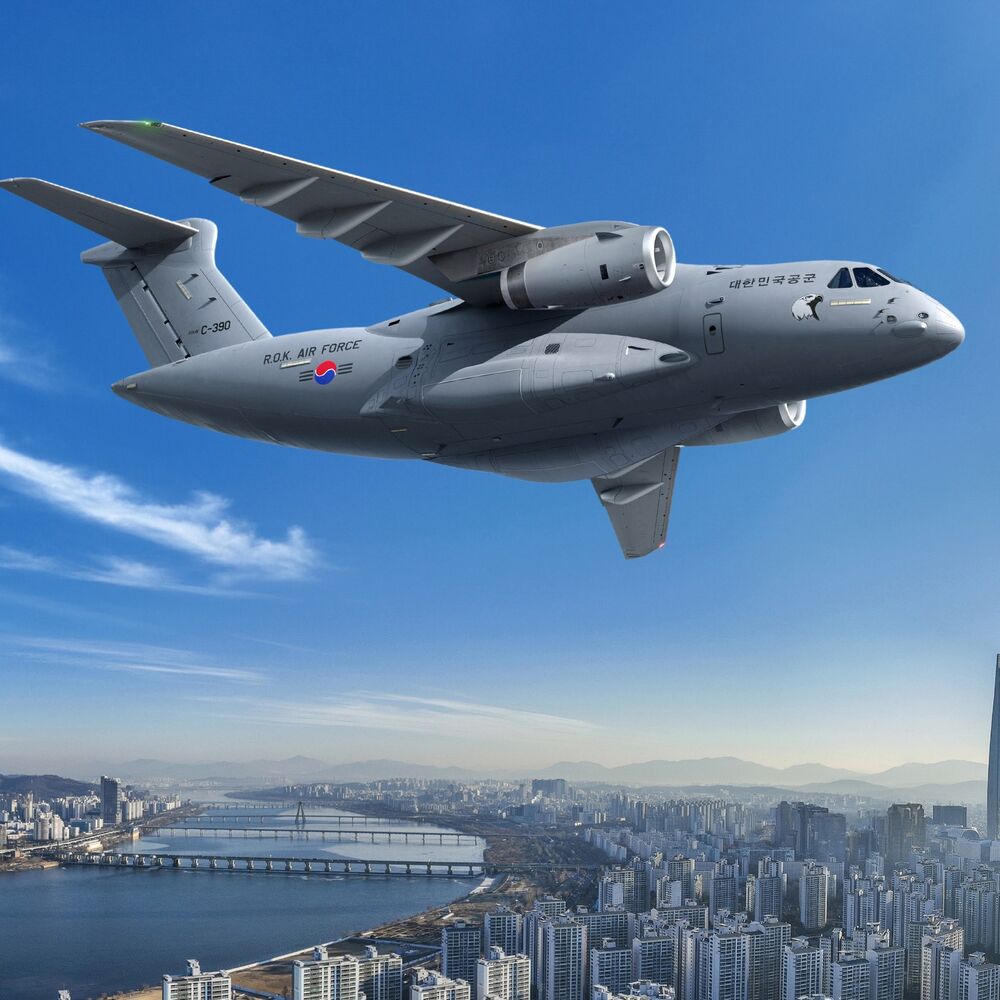
The arrival of South Korea’s first C-390 Millennium marks an important milestone in Embraer’s international defence expansion. Yet the significance of the programme extends well beyond the acquisition of three military transport aircraft. It reflects a growing relationship between two technologically advanced aerospace industries and illustrates how industrial cooperation is increasingly shaping military aircraft procurement.
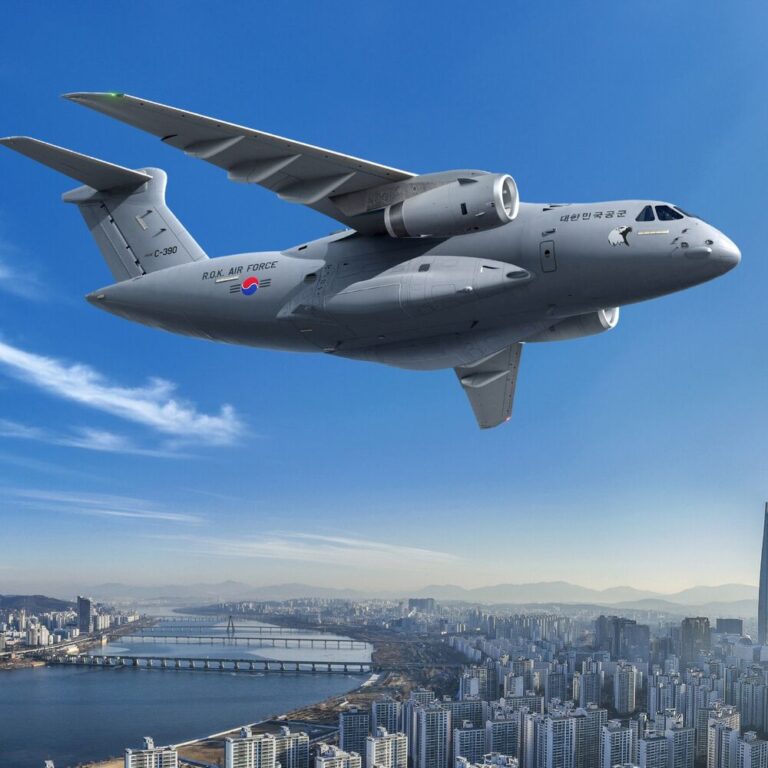
The first Embraer C-390 Millennium destined for the Republic of Korea Air Force (ROKAF) arrived at Seoul Air Base in Seongnam on 23 November 2026, according to initial reporting by Korea Economic TV, subsequently corroborated by South Korea’s Yonhap News Agency.
The aircraft is the first of three ordered under South Korea’s Large Transport Aircraft II (LTA-II) programme. Following its arrival, it is expected to undergo acceptance procedures ahead of its formal handover to the Korean Air Force.
South Korea selected the C-390 in December 2023 following a competitive procurement process involving established military transport platforms. Nearly three years later, the aircraft’s arrival represents the transition from procurement to the introduction of a new airlift capability.
A strategically important market
For Embraer, South Korea represents a particularly significant customer. The country combines sophisticated military requirements with an advanced domestic aerospace industry and a well-established defence relationship with the United States.
The selection of a Brazilian-designed military transport aircraft therefore demonstrates that procurement decisions within such an environment can accommodate new suppliers when their platforms, support arrangements and industrial proposals meet national requirements.
The C-390 brings a combination of jet-powered performance, a maximum payload of 26 tonnes and a maximum cruise speed of 470 knots, according to Embraer. Its multi-mission architecture supports military transport, medical evacuation, humanitarian assistance and aerial refuelling, depending on configuration and mission equipment.
For an air force operating across the geographically extensive Indo-Pacific region, the ability to move personnel, equipment and supplies efficiently has relevance extending beyond conventional military logistics. Disaster response, international deployments and humanitarian operations all place demands on transport fleets that must balance speed, payload, availability and operational flexibility.
Industrial cooperation beyond the aircraft
One of the more significant aspects of the Korean acquisition is the industrial framework accompanying it.
Embraer’s original agreement included local manufacturing opportunities for Korean aerospace companies and plans to develop domestic maintenance, repair and overhaul capabilities. Korean companies ASTG, EM Korea and Kencoa Aerospace have been identified by Embraer as industrial partners in the programme.
This relationship builds on existing cooperation between Embraer and South Korean suppliers dating back to the development of its E-Jets E2 commercial aircraft family. In October 2025, Embraer and South Korea’s Defense Acquisition Program Administration (DAPA) also signed a memorandum of understanding exploring broader cooperation in the defence sector.
On 23 November 2026, the same day the first Korean C-390 arrived in Seongnam, representatives of DAPA and Brazil’s Ministry of Defence held the inaugural meeting of their joint defence industry committee in Brasília.
According to the South Korean government, the two countries signed a letter of intent to strengthen cooperation, including establishing a framework for government-to-government contracts, identifying joint projects and expanding collaboration in defence science and technology.
While the aircraft acquisition and the bilateral committee are distinct developments, together they illustrate the widening scope of the relationship between Brazil and South Korea.
For Embraer, this creates opportunities to develop industrial relationships that extend beyond individual aircraft sales. For South Korea, participation in an international aircraft programme offers its domestic suppliers additional access to global aerospace supply chains.
From national procurement to an international ecosystem
The Korean programme also offers interesting parallels with developments in Central Europe.
In July 2026, the Czech Air Force received its first C-390 Millennium, joining a growing international community of operators. The Czech Republic’s involvement in the programme, however, predates its acquisition of the aircraft. Aero Vodochody has long been an industrial partner, manufacturing major aerostructures and other components for the platform.
In September, Embraer formally delivered the first C-390 to Uzbekistan. On 2 November, Greece signed a contract for three KC-390 Millennium aircraft, with options for three additional units, through a government-to-government agreement with Portugal.
These developments reveal an increasingly international programme supported by a combination of aircraft procurement, industrial participation and regional sustainment arrangements.
A growing international fleet can create opportunities for shared training, maintenance expertise, spare-parts support and the exchange of operational experience. The extent of those benefits will depend on how effectively manufacturers, national authorities and operators coordinate their requirements over the aircraft’s service life.
This is particularly important for smaller air forces, for which maintaining a limited fleet of sophisticated transport aircraft can present considerable logistical and organisational challenges.
The next phase of Embraer’s defence expansion
The military transport aircraft market is characterised by long service lives, demanding certification requirements and established relationships between manufacturers and armed forces. Building a sustainable position in this market requires considerably more than securing initial orders.
As the C-390 enters additional national fleets, Embraer’s expanding industrial and support network becomes increasingly important. The programme’s long-term value will be shaped by operational experience, fleet availability, customer support and the ability to sustain aircraft across different geographical regions.
South Korea’s acquisition is particularly relevant in this context. It brings the Millennium into one of East Asia’s most technologically sophisticated defence environments while strengthening the industrial relationship between two countries with considerable aerospace manufacturing and export ambitions.
The arrival of the first aircraft in Seongnam is therefore an important milestone not only for the Republic of Korea Air Force, but also for the continued international development of a Brazilian aerospace programme that is becoming an increasingly established component of the global military airlift market.
About the Author