Department of the Air Force Secretary Troy Meink
The United States has publicly confirmed that the Space Force is operating space control weapons in orbit, marking a significant step in the increasingly explicit recognition of space as an operational warfighting domain.
U.S. Secretary of the Air Force Troy Meink disclosed the capability during the Air & Space Forces Association’s 2026 Air, Space & Cyber Conference at National Harbor, Maryland. According to Meink, the United States now has on-orbit space control weapons intended to protect the Joint Force against hostile action. No details were provided regarding the number of systems, their technical characteristics or the specific effects they are designed to deliver.
The significance of the announcement lies as much in its wording as in the technology itself. The United States has long operated military spacecraft and developed counterspace capabilities, but senior defence officials have traditionally been cautious about publicly discussing weapons deployed directly in orbit. Meink’s statement represents the most explicit acknowledgement to date that operational U.S. space-control systems are already present there.
From space support to space combat power
The announcement reflects a broader change in the role assigned to military space capabilities. Satellite communications, positioning and navigation, missile warning and intelligence have for decades been critical enablers of operations on Earth. Increasingly, however, U.S. Space Force doctrine and force development are also focused on protecting those systems and maintaining freedom of action in a contested space environment.
Meink described the current security environment as one in which rapidly evolving technologies, artificial intelligence and increasingly capable adversaries are shortening development and operational timelines. The Department of the Air Force therefore intends to increase combat capability while simultaneously accelerating procurement and reducing the cost of fielding new systems.
The message was reinforced one day later by Chief of Space Operations Gen. Douglas Schiess. In his first major conference address as the Space Force’s senior uniformed leader, Schiess stated that Guardians are already operating on-orbit weapons capable of defending the Joint Force against space-enabled attacks. He presented strengthening the service’s combat capability as one of his principal priorities.
Importantly, neither Meink nor Schiess identified what those orbital weapons actually are. The term space control can encompass a broad spectrum of capabilities, including systems designed to protect friendly spacecraft, interfere with hostile space services or otherwise prevent an adversary from using space capabilities effectively. The public statements do not establish whether the newly acknowledged systems are kinetic, electronic, directed-energy or based on another technology.
A broader transformation of the force
The orbital capability is part of a much wider modernization effort across both the U.S. Air Force and Space Force.
Meink highlighted the move toward proliferated satellite constellations, faster acquisition and new space-based sensor networks. He said the Space-Based Interceptor programme had progressed from its initial contract to flight-ready hardware in less than a year, while the Air Moving Target Indication satellite constellation is beginning to move toward deployment.
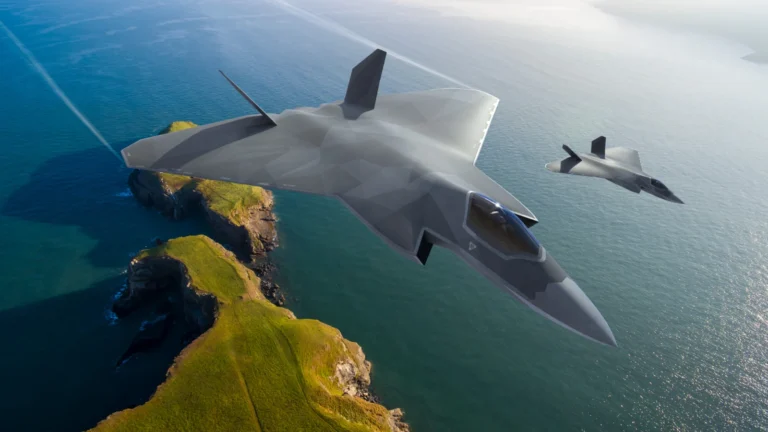
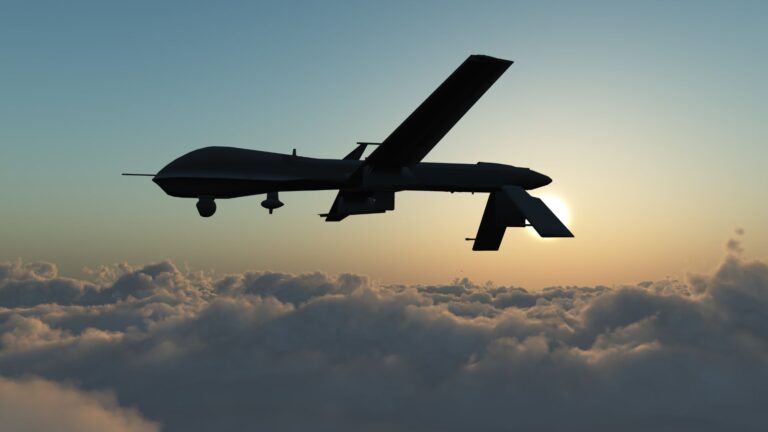
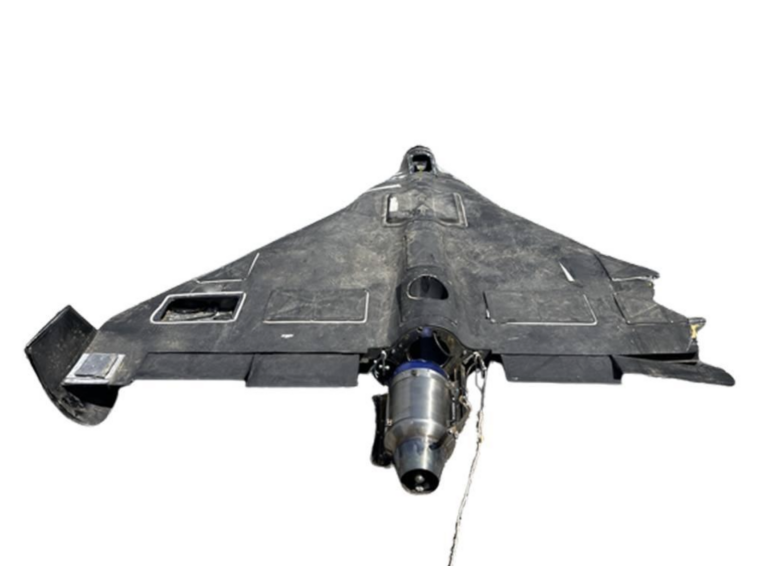
A similar shift is underway in the air domain. The Department of the Air Force plans to combine crewed aircraft with much larger numbers of autonomous platforms. Meink said the service aims to operate at least 500 Collaborative Combat Aircraft by 2032, while a separate Mass Modular Aircraft programme is intended to provide lower-cost, attritable long-range combat capability at scale.
Taken together, these programmes point toward a future force built around distributed sensors, autonomous systems, resilient networks and increasingly close integration between air and space operations.
Why it matters beyond the United States
The implications extend well beyond the U.S. military. NATO and allied operations are increasingly dependent on space-based communications, navigation, intelligence and warning services, making the resilience of the space layer directly relevant to forces operating in Europe.
That connection was underlined only days before Meink’s announcement when the United States and ten international partners — including the Czech Republic, Belgium, Denmark, the Netherlands, Norway, Poland and the United Kingdom — confirmed additional multinational participation in the Wideband Global SATCOM programme. The partners are contributing to WGS-12, expanding a satellite communications architecture used to support secure military command and control.
The latest disclosures therefore illustrate a broader development in military aerospace: space is no longer discussed solely as an enabling environment above the battlefield. It is increasingly being organised, equipped and defended as an operational domain in its own right.
For industry, armed forces and allied governments, the question is consequently shifting from whether military operations will depend on contested space infrastructure to how those capabilities can remain available when an adversary actively attempts to disrupt them.
Source: U.S. Space Force / Secretary of the Air Force Public Affairs, Air & Space Forces Association 2026 Air, Space & Cyber Conference.
About the Author