RAF Targets 30% Increase in A400M Availability Under £190 Million Airbus Support Deal
As the Royal Air Force seeks to increase the number of fully mission-capable Atlas aircraft from ten to thirteen per day, the agreement highlights a broader challenge facing military airlift operators: translating fleet size into dependable operational capability.
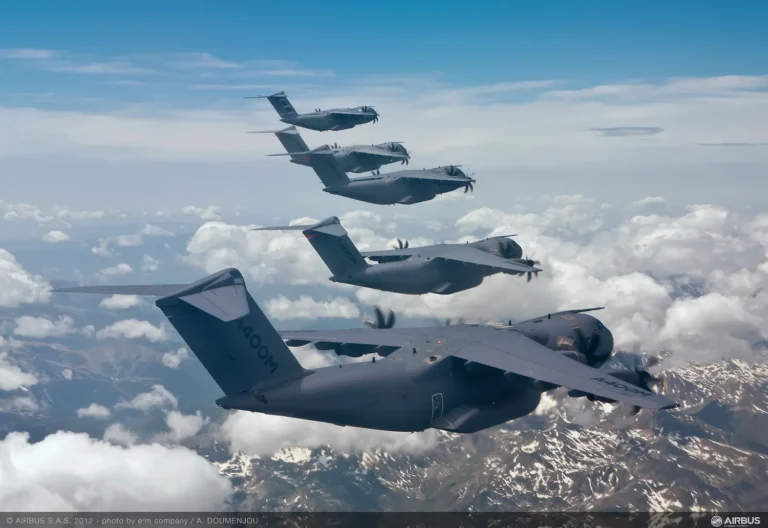
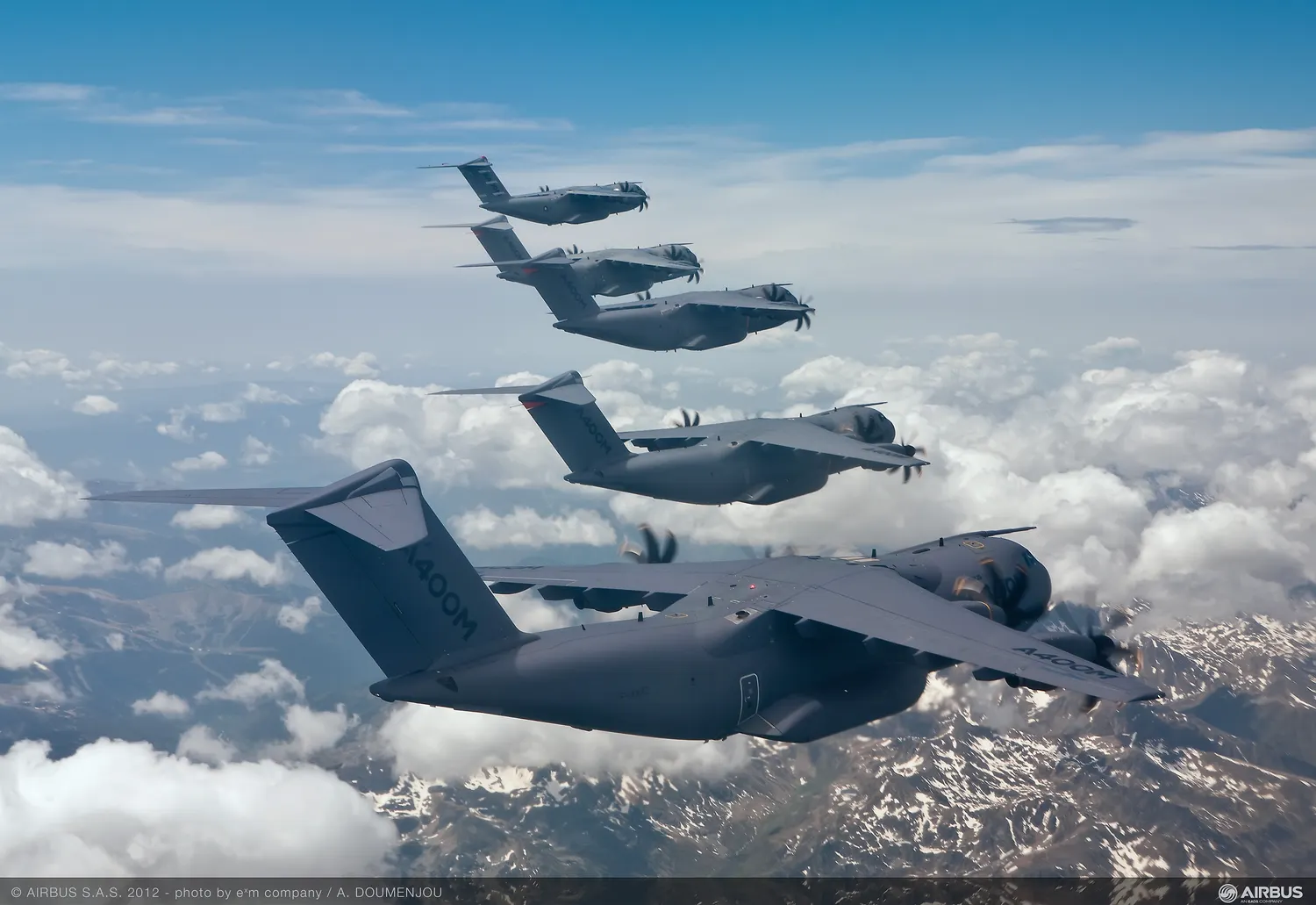
Suggested lead image: RAF A400M Atlas. Use an official RAF or UK Ministry of Defence photograph after checking its publication and licensing conditions.
The United Kingdom has extended its support agreement with Airbus for the Royal Air Force’s A400M Atlas fleet, committing £190 million to improve operational availability and sustain essential military airlift capabilities. Announced on 1 October 2026, the agreement aims to increase the number of fully mission-capable aircraft available each day from ten to thirteen by the end of 2027. Beyond the immediate operational benefits, the contract raises a wider question for military aviation: how should air forces measure the effectiveness of their transport fleets?
RAF Seeks More Mission-Capable Aircraft from Its Existing Fleet
The 31-month extension of the A400M Medium-Term Contract will maintain Airbus support services at RAF Brize Norton until April 2029.
The agreement covers maintenance, repair and operational support through Airbus’ UK Support Centre and sustains more than 350 skilled jobs, including Airbus employees and subcontractor personnel.
The central objective is measurable: increasing the number of fully mission-capable A400M aircraft available on an average day from ten to thirteen.
For a fleet of 22 aircraft, three additional fully mission-capable platforms represent a substantial improvement in immediately available airlift capacity.
The Ministry of Defence describes the planned increase as a 30% improvement in availability. Importantly, this refers to the increase from ten to thirteen available aircraft, rather than a 30-percentage-point improvement in fleet-wide availability.
The target also remains a future objective, not an already achieved operational result.
Why Three Additional Aircraft Matter
The A400M Atlas occupies an important position in the RAF’s air mobility structure, combining tactical transport capabilities with the ability to move substantial loads over long distances.
Its operational roles include troop transport, military equipment deployment, humanitarian assistance and support for international operations.
The aircraft’s ability to operate from relatively austere airfields also gives it a different mission profile from larger strategic transports designed primarily around established airport infrastructure.
For the RAF, increasing daily availability therefore means more than simply improving a maintenance statistic.
Additional mission-capable aircraft can provide commanders with greater flexibility to accommodate simultaneous deployments, training requirements, operational commitments and unforeseen contingencies.
However, the number of fully mission-capable aircraft is only one indicator of overall airlift capability. Payload, range, aircraft utilisation, crew availability, maintenance turnaround and mission-specific equipment all influence what a fleet can actually deliver.
A fleet with a relatively high readiness rate may still face operational limitations if it cannot generate sufficient flying hours or support demanding deployment schedules.
Aircraft Availability Is Becoming a Strategic Procurement Issue
Military transport aircraft are frequently evaluated during procurement competitions according to payload, range, operating costs, acquisition price and interoperability.
Yet long-term operational performance depends heavily on sustainment.
Spare parts availability, maintenance planning, repair capacity, engineering support and supply-chain resilience all determine how many aircraft remain available throughout their service lives.
The RAF’s new agreement illustrates how substantial investment continues long after aircraft have entered operational service.
The £190 million extension is not an aircraft acquisition programme. It is an investment intended to extract greater operational capability from an existing fleet.
This distinction matters for European air forces considering new transport aircraft.
The relevant procurement question is not simply how many aircraft a country can afford to purchase, but how many it can reliably make available throughout decades of service.
What Other Military Transport Fleets Tell Us
The RAF’s availability target also provides an opportunity to examine the wider military airlift sector.
Publicly reported readiness figures for other transport aircraft demonstrate that availability is an important concern across different platforms and operators.
However, comparisons require considerable caution because air forces and manufacturers do not always publish identical performance indicators.
The US Air Force, for example, reports mission capable rates, measuring the proportion of time an aircraft can perform at least one of its assigned missions. A fully mission-capable aircraft, by contrast, can perform all its assigned missions.
These are related but distinct indicators.
Published military transport readiness figures
| Aircraft | Figure | Reporting basis |
| RAF A400M | 10 → 13 | Fully mission-capable aircraft per day; 2027 target |
| Embraer C-390 | 90–93% | Manufacturer-reported mission-capable figures, 2025–2026 |
| USAF C-130J | 72% | Mission capable rate, 2024 |
| USAF C-17A | 76% | Mission capable rate, 2024 |
The figures reflect different reporting periods, operators and definitions. They should not be interpreted as a direct ranking of aircraft reliability. USAF 2024 figures: Air & Space Forces Magazine.
C-390 figures are manufacturer-reported and should be independently verified before direct comparison.
The US Air Force’s published figures show that even established military transport platforms do not maintain constant availability.
In 2024, the C-130J Super Hercules recorded a mission capable rate of approximately 72%, while the C-17A Globemaster III achieved approximately 76%.
These figures reflect operational fleets with their own utilisation patterns, maintenance requirements and mission demands. They cannot be directly equated with the RAF’s daily fully mission-capable aircraft count.
Embraer’s C-390 Highlights the Importance of Sustainment Performance
Another relevant example is the Embraer C-390 Millennium, which is gaining traction among European military transport operators.
Embraer has reported mission-capable rates of approximately 90–93% for the C-390 fleet, alongside mission completion figures exceeding 98%.
These are encouraging manufacturer-reported indicators, although they require appropriate context.
The C-390 fleet is considerably younger than many established transport fleets, and its operating environments, fleet size, maintenance arrangements and reporting methodology differ from those of the RAF and US Air Force.
The C-390 and A400M also occupy partly different operational segments, particularly regarding payload capacity and the transport of outsized equipment.
Consequently, their published availability figures cannot establish that one aircraft is inherently more reliable than the other.
Nevertheless, the C-390 provides a useful example of how manufacturers increasingly emphasise operational readiness and lifecycle support alongside traditional aircraft performance characteristics.
In June 2026, Embraer announced a long-term logistics support agreement with the Brazilian Air Force covering its KC-390 fleet, reinforcing the importance of maintenance, engineering support and spare parts availability in sustaining operational performance.
For European operators introducing the C-390, maintaining those reported readiness levels as fleets grow and aircraft accumulate flying hours will be an important measure of long-term programme success.
The Challenge for European Military Airlift
European air forces are entering a period in which operational readiness, force mobility and rapid deployment capability are becoming increasingly important.
NATO’s evolving defence requirements place additional demands on the ability to transport personnel, equipment and supplies across the Alliance’s territory and beyond.
Meeting those requirements involves more than purchasing modern aircraft.
It requires dependable maintenance infrastructure, qualified personnel, spare parts, effective support contracts and the ability to sustain operations under demanding conditions.
The RAF’s decision to extend its Airbus support agreement reflects this broader reality.
For aircraft manufacturers, demonstrating lifecycle performance will remain an increasingly important element of competition. For military customers, transparent and consistently defined readiness metrics can provide valuable evidence when evaluating long-term fleet investments.
What Comes Next?
The immediate benchmark for the RAF will be whether the extended Airbus support arrangement delivers the planned increase from ten to thirteen fully mission-capable A400M aircraft per day by the end of 2027.
That improvement would strengthen the UK’s ability to generate airlift capacity from its existing fleet without purchasing additional aircraft.
More broadly, the programme highlights a question relevant to every military transport operator.
Aircraft specifications define what a platform is designed to accomplish. Operational availability determines how often that capability can actually be delivered.
For military airlift, the true measure of fleet strength is not simply how many aircraft an air force owns, but how much transport capability it can reliably generate when required.
Sources
UK Ministry of Defence — £190 million A400M support extension, 1 October 2026
Royal Air Force — Securing the Future of the UK Atlas Fleet
Air & Space Forces Magazine — 2025 Almanac, USAF readiness data
Embraer — 2025 Annual Report, SEC filing
This article was prepared with AI-assisted research and editing under human editorial supervision.
About the Author