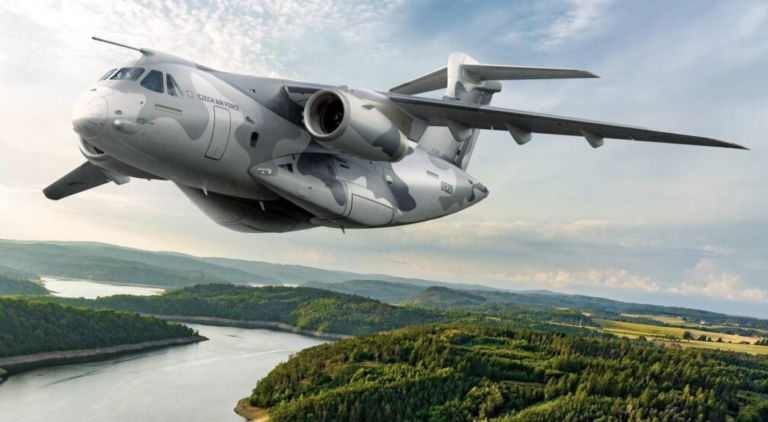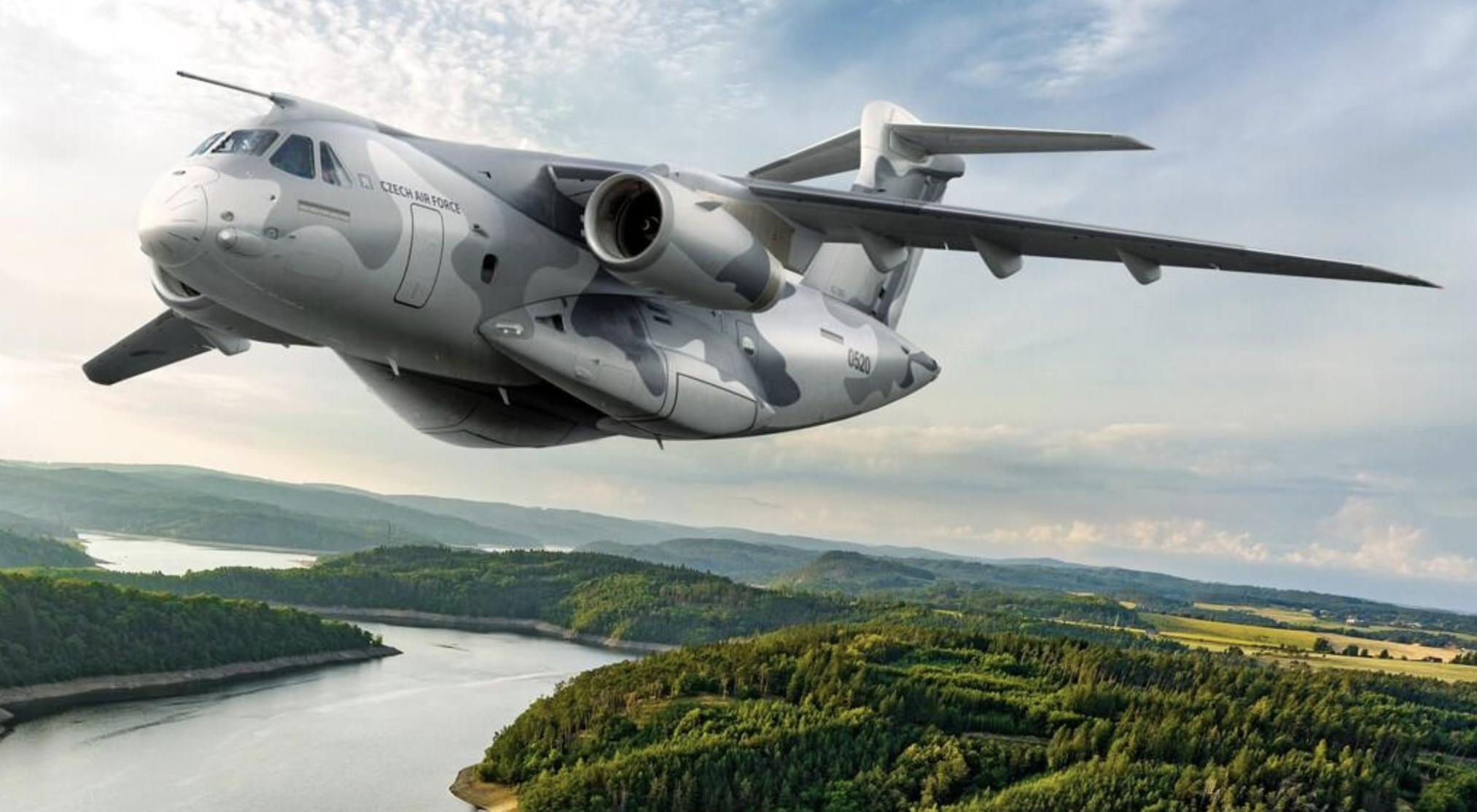
The Czech Air Force’s newly acquired Embraer C-390 Millennium has completed its first cargo mission, transporting Czech-made military equipment to Montenegro. The operation marks an early operational milestone for the aircraft and highlights expanding defence cooperation between two NATO allies.
The Czech Air Force has completed the first cargo mission of its newly acquired Embraer C-390 Millennium, delivering military equipment from Czech manufacturers to Montenegro. The aircraft landed at the military section of Podgorica Airport on 2 October 2026, carrying the first shipment of small arms purchased by Montenegro under a bilateral defence cooperation agreement.
The mission represents an important milestone in the introduction of the C-390 into Czech military service. It also demonstrates how the country’s expanding air transport capabilities can support defence cooperation and the international activities of its domestic defence industry.
The delivery was welcomed by Czech Ambassador to Montenegro Janina Hřebíčková and Marko Marković, State Secretary at Montenegro’s Ministry of Defence.
First Cargo Mission Following Delivery in July
The Czech Republic officially received its first Embraer C-390 Millennium on 16 July 2026 at the 24th Air Transportation Base in Prague-Kbely.
The aircraft is the first of two C-390s ordered from Brazilian manufacturer Embraer under a contract signed on 25 October 2024. The second aircraft is scheduled for delivery in December 2027.
The procurement, valued at CZK 11.3 billion excluding VAT, includes aircraft, associated equipment, initial spare parts, training and support for military acceptance testing.
The C-390 introduces a significant increase in the Czech Air Force’s airlift capabilities. Powered by two jet engines, the aircraft can transport up to 26 tonnes of cargo, including military vehicles, palletised equipment and personnel.
Its capabilities include transporting up to 80 passengers or 64 fully equipped paratroopers, as well as conducting airdrop, aeromedical evacuation and special operations support missions.
The Czech configuration also includes capabilities for aerial refuelling and firefighting. A Modular Airborne Fire Fighting System (MAFFS II) can carry up to 12,000 litres of water, while additional mission equipment supports search-and-rescue operations.
According to the Czech Ministry of Defence, the aircraft can transport a 14-tonne payload over approximately 5,000 kilometres.
The mission to Montenegro therefore provides an early practical example of the aircraft’s intended role: rapidly transporting personnel and equipment in support of Czech national requirements and allied operations.
Czech Weapons for Montenegro’s Military Modernisation
The cargo transported to Podgorica formed the first instalment of a broader programme to modernise Montenegro’s armed forces with Czech-manufactured weapons and ammunition.
The programme includes thousands of CZ BREN 3 assault rifles, alongside pistols, submachine guns, sniper rifles and small-calibre ammunition supplied by companies within Colt CZ Group, including Česká zbrojovka and Sellier & Bellot.
According to the Czech Ministry of Defence, the first shipment comprised several hundred weapons, with further deliveries scheduled before the end of 2026.
Montenegro is also the first foreign armed force to introduce the CZ BREN 3, the latest generation of Česká zbrojovka’s modular assault rifle family, into service.
The initial batch of weapons was officially presented in Danilovgrad on 7 October, marking another step in the modernisation of Montenegro’s infantry equipment.
The procurement is being implemented under the bilateral defence cooperation agreement signed by the Czech Republic and Montenegro on 19 May 2026, followed by an implementing arrangement signed on 24 July.
The government-to-government framework involves the Czech Ministry of Defence’s Agency for Intergovernmental Defence Cooperation (AMOS), state-owned LOM Praha and the Czech Export Bank.
The arrangement illustrates a broader approach to defence exports in which government institutions help facilitate procurement, financing and industrial cooperation between allied countries.
Montenegro Signals Interest in Further Czech Defence Cooperation
The first delivery has already been followed by discussions concerning additional defence cooperation.
On 13 October, Montenegro’s Minister of Defence, Dragan Krapović, met outgoing Czech Ambassador Janina Hřebíčková and highlighted the modernisation of Montenegro’s armed forces using Czech defence industry products as a priority within bilateral cooperation.
According to Montenegro’s public broadcaster RTCG, Krapović welcomed the recent delivery of military equipment, describing it as an important contribution to the capabilities and operational readiness of the country’s armed forces.
He also expressed the expectation that the shipment would support further modernisation projects.
The Czech Ministry of Defence had previously confirmed that discussions concerning a second government-to-government arrangement were already underway, with additional working-level meetings planned for mid-October.
No additional procurement contract was announced following the 13 October meeting.
More Than a Transport Flight
Although the flight to Montenegro was a relatively straightforward cargo transport mission, its wider significance extends beyond the delivery itself.
For the Czech Air Force, it marks the transition of a newly acquired aircraft from initial introduction towards practical operational employment.
For Montenegro, it represents a tangible step in modernising its armed forces through cooperation with a NATO ally.
For the Czech defence industry, the operation demonstrates how military transport capabilities, domestic manufacturing and government-supported export arrangements can reinforce one another.
The C-390 is also gaining importance within the European military transport market, having been selected by several NATO members seeking to modernise their tactical and medium airlift fleets.
As the Czech Republic continues introducing the aircraft into service, further missions will provide opportunities to develop operational experience and demonstrate its wider capabilities.
The first cargo flight to Montenegro may have been modest in scale compared with the aircraft’s maximum transport capacity, but it represents a meaningful beginning for the Czech Air Force’s newest transport platform.
Sources: Czech Ministry of Defence
Photo credit: Embraer
This article was prepared with AI-assisted editorial support.
About the Author