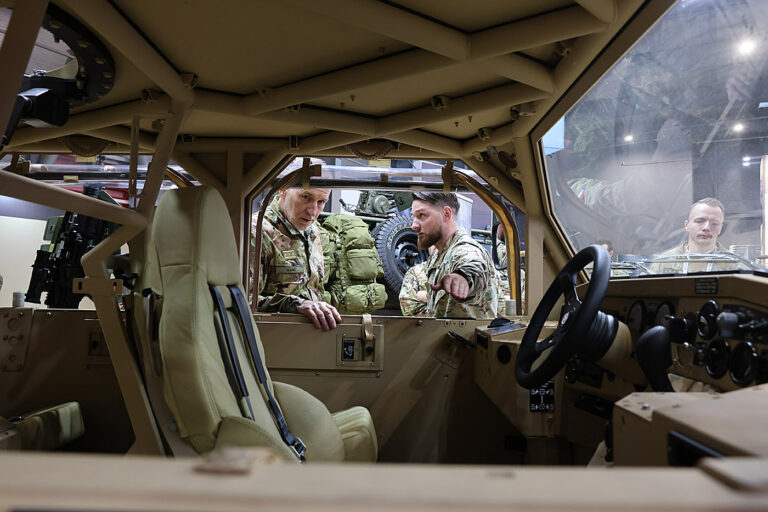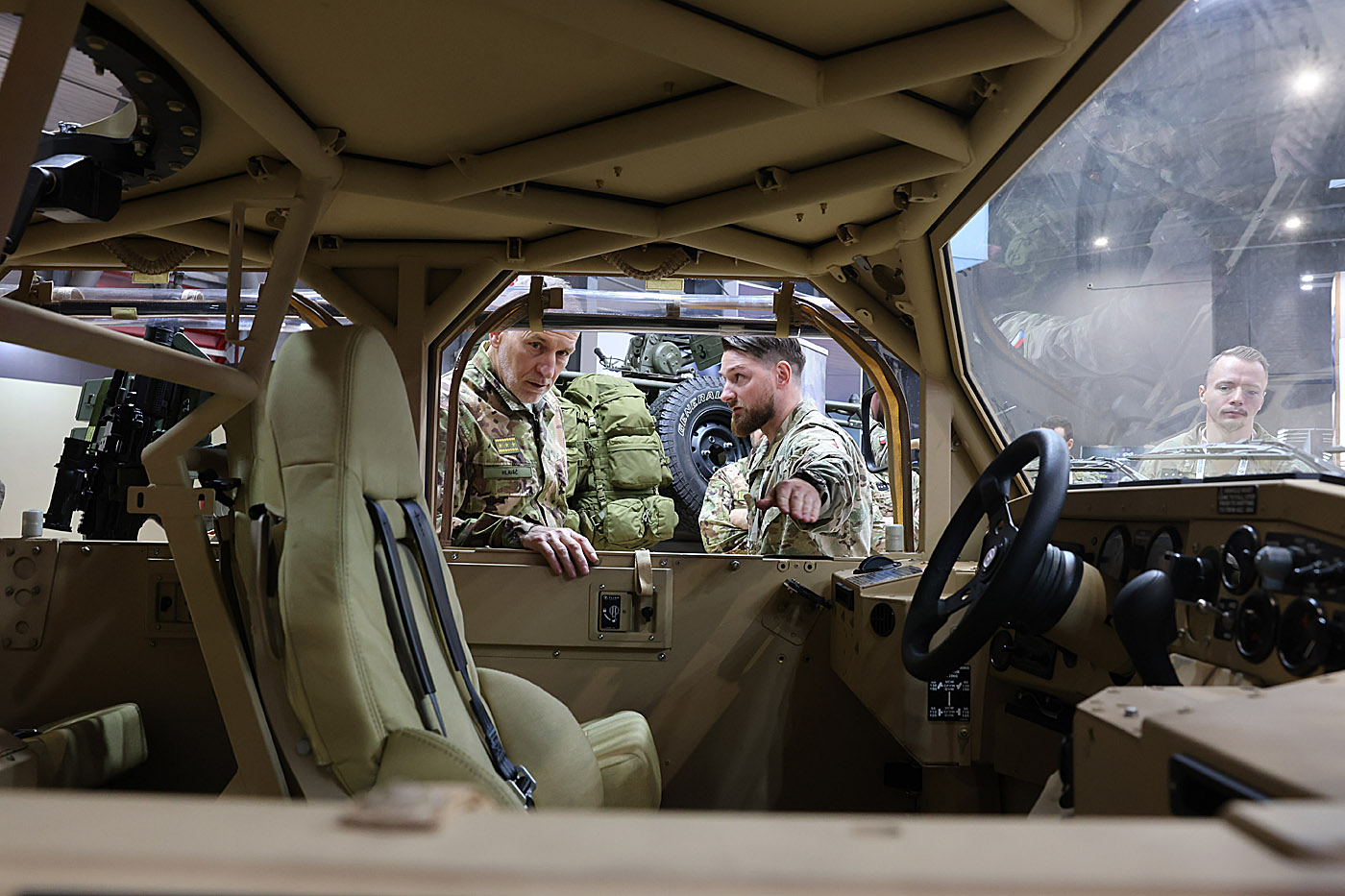
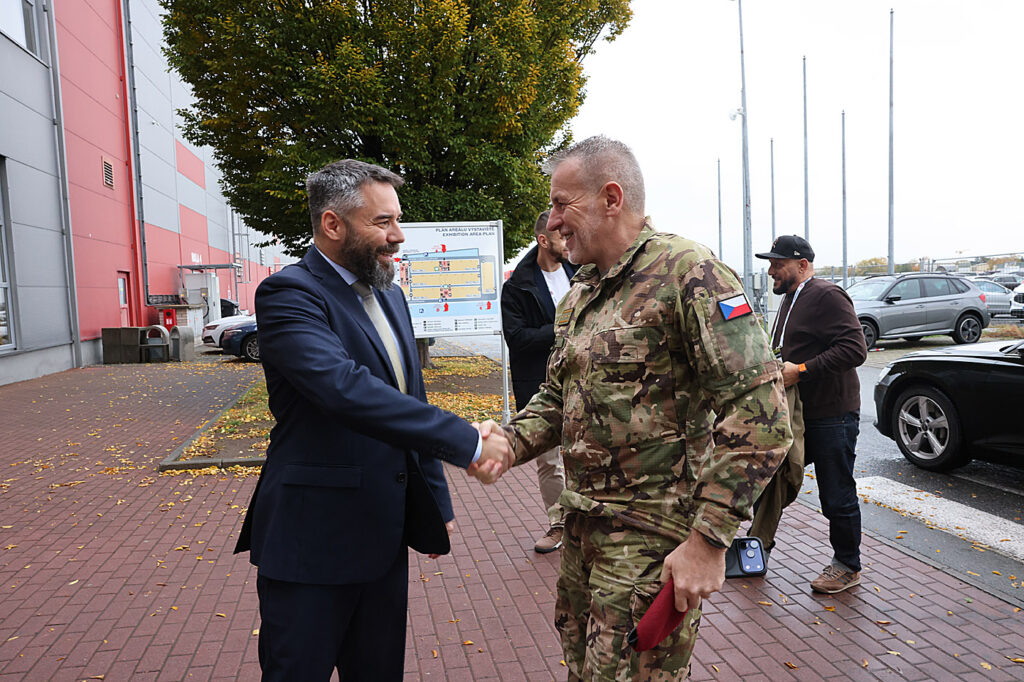
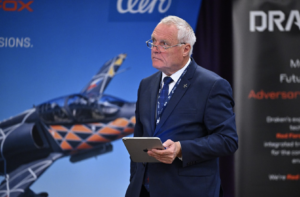
Lieutenant General Miroslav Hlaváč, Chief of the General Staff of the Czech Armed Forces at FF26
New platforms, industrial partnerships and operational lessons lead the largest edition of the exhibition to date
Prague 22 October 2026
World premieres in amphibious mobility, UAV-based air defence and military logistics are giving Future Forces Exhibition & Forum 2026 a strong industrial focus. As the exhibition continues at PVA EXPO PRAHA, political leaders, military delegations and technology developers are meeting around a shared challenge: turning investment and innovation into capabilities that armed forces and security services can use.
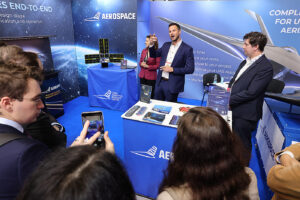
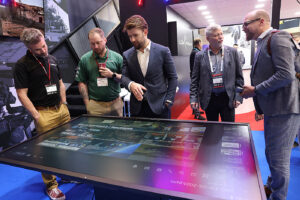
For Aerospace Central Europe, a media partner of Future Forces, this year’s event offers a broad view of the defence sector’s priorities. Large industrial groups are presenting new platforms alongside smaller companies working on autonomy, sensors, software and counter-drone protection. The conference programme connects those technologies with questions of readiness, interoperability, industrial capacity and national resilience.
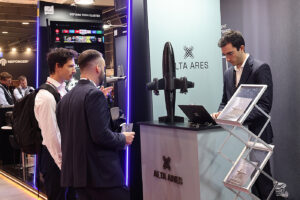
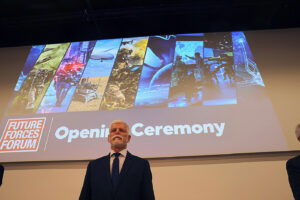
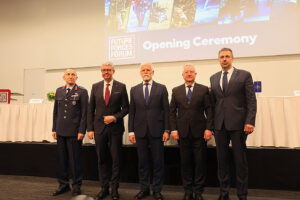
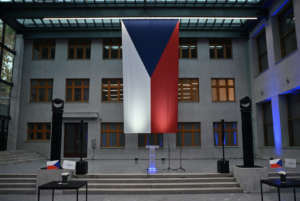
The exhibition runs from 21 to 23 October within a wider week of activities beginning on 19 October. According to the organisers’ latest working figures, it brings together more than 530 exhibitors from 38 countries, occupying over 23,000 square metres across seven exhibition halls and outdoor areas. More than 45 expert panels and events are listed in the programme. The organisers’ pre-event forecast was for over 9,000 professional visitors and more than 1,000 official delegates and VIP guests, with international participation from over 70 countries.
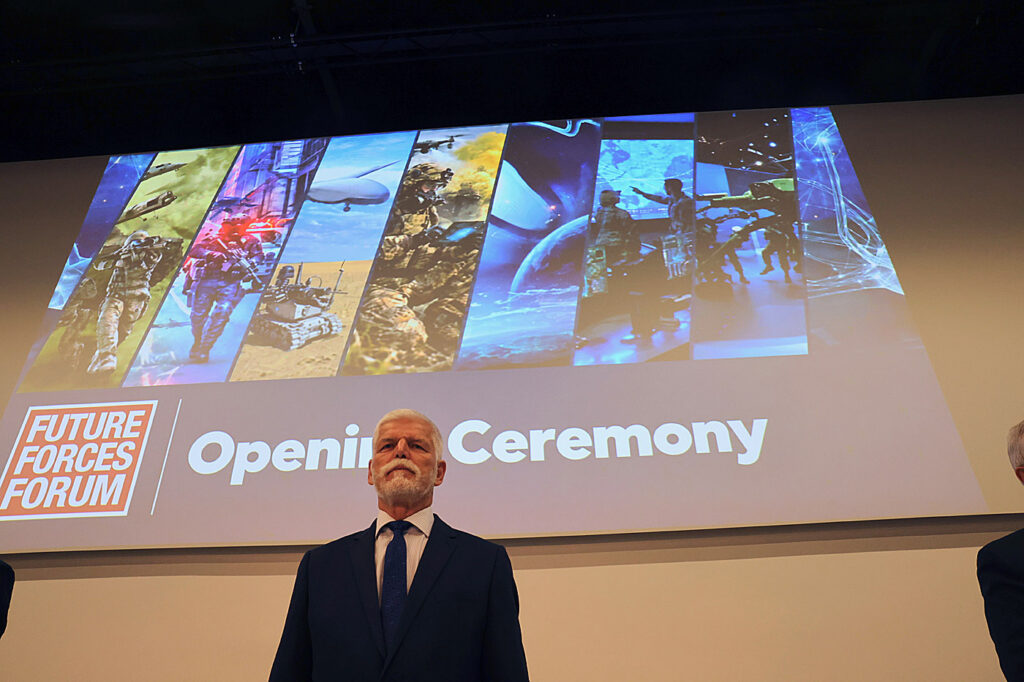
Political leadership and international delegations
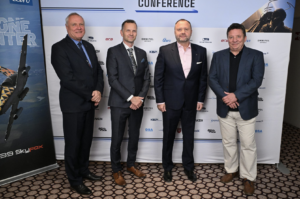
Czech President Petr Pavel opened the exhibition on 21 October and toured the displays. The opening programme also brought together Jaromír Zůna, Deputy Prime Minister and Minister of Defence; Karel Havlíček, First Deputy Prime Minister and Minister of Industry and Trade; Major General Hayrettin Koca, Vice Chief of Staff at NATO Allied Command Transformation; and Daniel Kočí, Managing Director of Future Forces Forum. The combination of political, military and industrial representation sets the context for an event concerned with both equipment and the means to acquire, manufacture and sustain it.
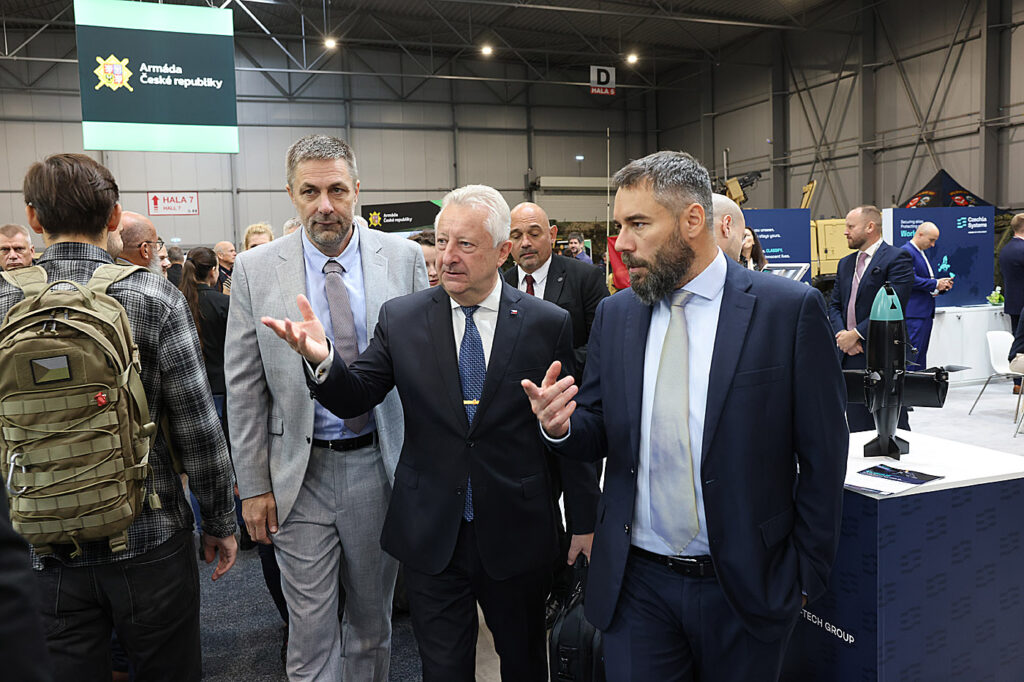
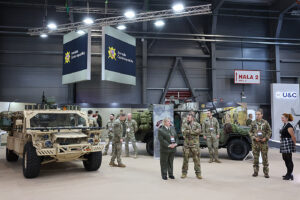
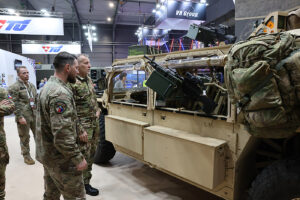
Visits continued on the second exhibition day. Lieutenant General Miroslav Hlaváč, Chief of the General Staff of the Czech Armed Forces, was welcomed by Adam Drnek. Defence Minister Zůna also toured the exhibition, accompanied by Drnek and Kočí. These visits bring the Czech Armed Forces’ leadership into direct contact with the companies and technologies represented across the exhibition.
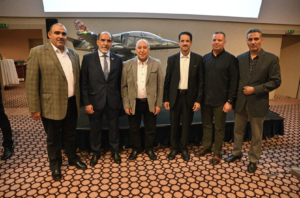
The organisers’ published official guest roster includes the defence ministers of Armenia, Suren Papikyan; Pakistan, Khawaja Muhammad Asif; Lebanon, Michel Menassa; and Mozambique, Cristóvão Artur Chume. Admiral Francisco Hernando Cubides Granados, Commander General of the Colombian Military Forces, is also listed. Senior government representation includes Karen Brutyan of Armenia, David Kupatadze of Georgia, Gankhuyag Davagdorj of Mongolia, Irineo C. Espino of the Philippines and Ana Burkovskienė of Lithuania. Czech representatives listed include Justice Minister Jeroným Tejc and Deputy Defence Ministers René Schreier and Radovan Vích.
European Commissioner for Defence and Space Andrius Kubilius placed European readiness and the lessons of Ukraine at the centre of his prepared keynote for the Future of Civil Security Conference. He identified three interconnected pillars of defence readiness: material capacity, including investment and industrial production; institutional organisation; and the political will to defend and deter. Ukraine’s military experience and defence industry, he argued, should be integrated more closely into Europe’s capabilities, strengthening the European pillar of NATO.
Civilian resilience was central to his message. Protecting energy networks, railways and factories, Kubilius stressed, is as important as defending borders. He called for joint planning and exercises involving civilian authorities, armed forces and infrastructure operators, alongside practical guidance enabling households to manage at least 72 hours of an emergency. He also highlighted the contribution of European space programmes and Prague-based EUSPA to crisis response. On industry, he urged Europe to overcome fragmented national defence markets and remove obstacles to military mobility, allowing companies to scale production and forces to deploy faster. His underlying argument was that stronger production, coordination and societal preparedness serve a common purpose: deterring aggression and preserving peace.
The international presence extends to six national pavilions representing Denmark, Hungary, India, the United Kingdom, Ukraine and Türkiye. Alongside the national displays, the NATO, NATO DIANA, EU, Innovation and Cyber pavilions provide meeting points for different parts of the defence and security community.
CSG introduces MEANDER for amphibious military transport
CSG, General Partner of Future Forces Forum, has brought one of the exhibition’s major world premieres to Prague: MEANDER, a tracked amphibious vehicle developed by Excalibur Army and New Space Technologies, a member of the KBP group. Presented in its basic transport configuration, the prototype is intended to move personnel, equipment and vehicles across land, water and difficult terrain.
According to CSG, MEANDER has a gross weight of up to 33 tonnes and a 13-tonne payload. A 440 kW, twelve-cylinder Tatra engine provides a maximum road speed of 48 km/h, with approximately 12 km/h available on water. Its deck can accommodate a medium-sized military truck, a standard 20-foot container or up to 12 stretchers; the manufacturer also lists capacity for up to 70 standing troops. An electrically operated rear ramp supports loading.
The project builds on NST’s KALAN amphibious platform and the cooperation formalised by the partners at Eurosatory earlier this year. Excalibur Army defines military and user requirements, while NST contributes engineering and production development. Further configurations, including variants carrying weapon systems, remain part of the vehicle’s development potential.
OMNIPOL connects aircraft sensors and communications
OMNIPOL Group, General Partner of Future Forces 2026, anchors a substantial aerospace and defence presence. Its portfolio brings together Aircraft Industries, ERA, MESIT and OMNIPOL Defence, while the group is also a co-owner and strategic partner of Aero Vodochody. Together, these businesses cover aircraft production, surveillance, tactical communications, avionics and system integration. OMNIPOL Airports adds airport and heliport infrastructure to the group’s exhibition presence.[1][8][9]
ERA’s EW-DEC is a prominent new product at the shared stand. The company describes Prague as its Czech premiere: the system had already been launched at EW Live in Estonia in September. EW-DEC is a configurable electromagnetic warfare decoy designed to transmit signals resembling those of real radar equipment, supporting deception and the protection of operational assets.
ERA says multiple transmitter units can be remotely controlled to create an artificial electronic order of battle. Applications include diverting hostile surveillance or attack resources, masking real radar activity, testing electronic support measures and training operators against representative radar threats. The company lists compact transmitter units weighing up to 25 kg. The training role makes EW-DEC relevant to the air power discussions taking place alongside the exhibition as well as to battlefield survivability.
MESIT is presenting tactical communications and technologies used in the Senator MRAP armoured vehicle at the joint OMNIPOL stand. Its contribution illustrates the integration work behind a platform: communications equipment and vehicle systems must function together in the operational environment, and continue to do so through upgrades and maintenance.
The exhibition directory also lists Phoenix POD among the solutions represented by OMNIPOL Defence. Australian company SiNAB describes its Phoenix Mission System as modular and adaptable across aircraft, with applications spanning ISR, counter-UAS, targeting and tactical communications. This builds on a previously announced OMNIPOL–SiNAB cooperation agreement aimed at expanding the mission capabilities of aircraft including the L-39 Skyfox and L 410 NG; that agreement predates the current exhibition.
KBP presents GRYF as UAV based air defence
KBP International, Main Partner of Future Forces 2026, has used the exhibition for the world premiere of GRYF, identified in the official programme as a new UAV-based air defence system. It places an airborne approach to countering drones among the event’s principal launches, alongside ground-based sensors, electronic countermeasures and interceptors elsewhere on the exhibition floor.
The broader KBP portfolio includes unmanned aircraft, piston engines and propulsion systems, composite structures, and special tracked and amphibious vehicles. Its group combines research and development with prototyping, integration, testing and manufacturing, drawing on more than 30 years of experience in composite structures.
S Tech brings industrial capacity into the innovation discussion
S-Tech Ventures, now presented publicly as S-Tech Group, is the forum’s Strategic Partner and organiser of the Innovation Pavilion. Its presence addresses a problem that runs through the event: how to turn a useful technology into equipment that can be produced, integrated and adapted quickly enough to remain effective.
The group describes a vertically integrated approach covering components and motors, uncrewed platforms, autonomy, connectivity and command-and-control software. Its published portfolio includes Czechia Systems, Cyber Drone Solutions, ARDyx, Astravidya, Noontide Systems, componentas and ProLab Engineering. The emphasis is on retaining control of critical technologies and supply chains while incorporating operational feedback into further development.
Czechia Systems’ MURMUS offers a concrete example. The company describes a mobile counter-drone system combining sensors, command software, electronic countermeasures and interceptors. Radar, optical, radio and acoustic inputs contribute to the air picture, while engagement decisions remain with the operator. Its listed standard configuration comprises a command vehicle and two launch vehicles, with scope to connect additional systems.
The accompanying S-Tech Talks programme, titled Uncrewed Warfare — Unsolved Problems, connects industry with operational experience. The programme includes organisations such as Helsing, Occam Industries, TAF Industries, Defence Hub, CzechInvest and the Canadian Army Land Warfare Centre, together with Ukrainian military contributors. Ground robotics, critical software, European components and counter-drone protection are among its themes.
VOP CZ combines a tanker premiere with new industrial cooperation
VOP CZ’s CAP SHADOW Tanker is another of the programme’s world premieres. Built on a Tatra Force chassis with a KOBIT superstructure, the multifunctional tanker is intended to extend the logistics capabilities available to the Czech Armed Forces. VOP identifies its ability to refuel aircraft and helicopters as well as ground vehicles as a central improvement over the CAP-16M1 vehicles it follows.
The manufacturer states that an existing framework agreement could cover up to 47 tankers, and that the first prototype is undergoing verification tests. For an exhibition with a substantial aviation component, the platform is a useful reminder that air operations depend on mobile ground support as much as on aircraft and onboard systems.
VOP’s announcements also include cooperation with Australia’s EOS Defence Systems. EOS confirmed on 22 October that the companies signed a memorandum at Future Forces on 21 October to explore Czech wheeled armoured vehicle programmes and other defence projects in the Czech Republic and Europe. The agreement brings EOS remote weapon system expertise together with VOP’s vehicle production, integration and sustainment capabilities.
The partners will assess how their technologies and industrial capabilities could support Czech Army requirements and other programmes. EOS highlights VOP’s existing work with BAE Systems Hägglunds on CV90 and its strategic cooperation with Thales on Bushmaster as relevant industrial experience. Counter-UAS applications are among the roles EOS identifies for its remote weapon systems.
The Czech CV90 configuration makes its domestic debut
The Czech CV90 MkIV is a further highlight of the equipment display. The organisers describe this as the first presentation in the Czech Republic of the vehicle in Czech configuration, produced on the BAE Systems Hägglunds line in Sweden. The distinction is the national configuration, rather than the first appearance of the CV90 family.
The display connects a major Czech Army modernisation programme with the forum’s wider discussion of domestic industrial participation, integration and lifecycle support. BAE Systems is also the sponsor of the Future Forces 2026 VIP Lounge, while VOP’s involvement provides a direct link between the vehicle programme and Czech manufacturing capacity.
A modular cockpit demonstrator from SPEEL ScioTeq and C3RiOS
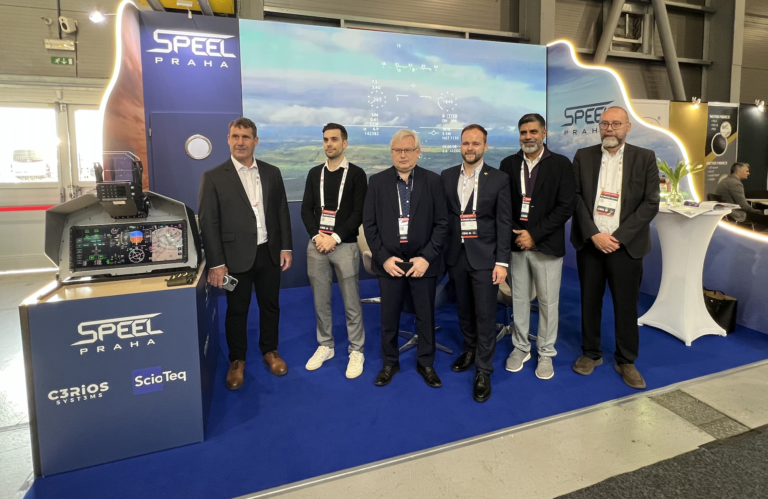
In aerospace, SPEEL PRAHA, ScioTeq and C3RiOS are presenting a modular avionics core at SPEEL’s stand in Hall 3. The demonstrator combines SPEEL’s PDU-159 head-up display with ScioTeq’s RDU-4208 large-area display and PU-5200 avionics computer, including the MOSArt Open Architecture Framework, and C3RiOS avionics applications and software.
The cockpit functions run on flight hardware using recorded data from an actual flight, with a PC supplying that data to the demonstrator. It provides a tangible example of how displays, computing and software can work together as an integrated starting point for a new aircraft programme or fleet upgrade.
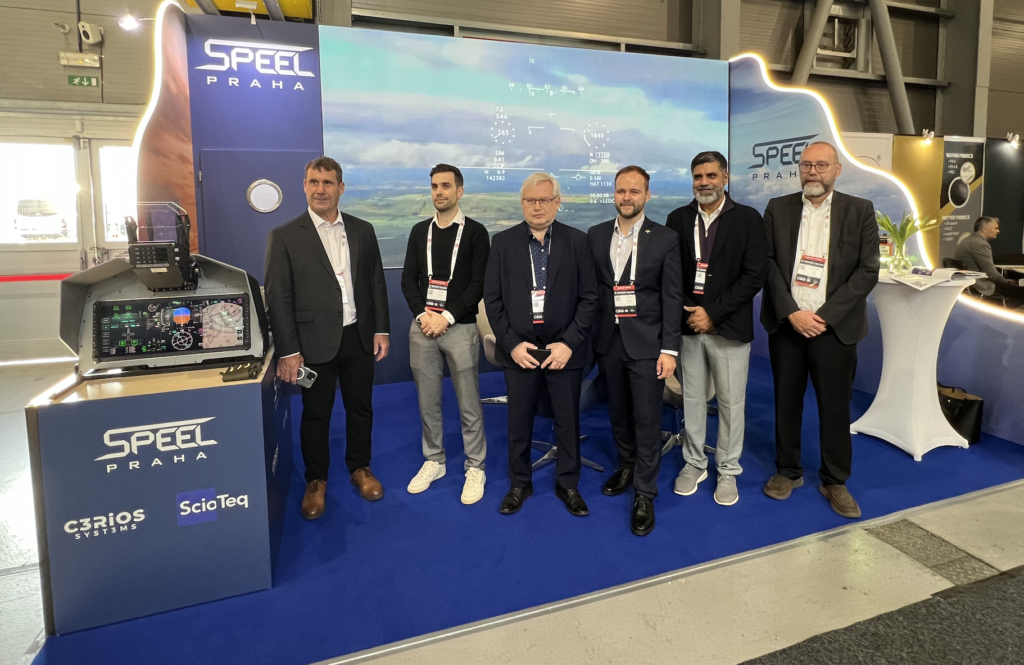
The partners’ stated aim is to simplify integration while preserving room for customer-specific mission functions. For trainers and light combat aircraft, C3RiOS identifies counter-UAS as one possible application that could be incorporated through mission pages within the existing cockpit interface. This is an adaptable architecture and demonstrator, with aircraft-specific integration and certification still dependent on the eventual programme.
Autonomy and counter drone protection across the exhibition
Other exhibitors are addressing the challenge of operating when communications or satellite navigation cannot be taken for granted. LPP’s presentation centres on Visual Navigation, which combines onboard sensor information, visual odometry and matching against map data to determine position without GNSS. Its announced display spans the MTS UAV family, Narwhal cruise missile, Nightray flying-wing UAS, JWI-4000 interceptor, Starfish platform and compact turbojet propulsion.
LPP lists ranges of up to 650 km for MTS and up to 772 km for Narwhal, depending on configuration. For the JWI-4000 counter-UAS system, it describes an architecture incorporating an interceptor, radar, communications, launch equipment and ground stations. The common development priority is maintaining useful autonomous operation in a contested electromagnetic environment.
Occam Industries, a Future Forces 2026 partner, approaches autonomy through software that can be added to existing platforms. Its OccamX is described as a computer-vision-enabled retrofit autopilot for FPV drones. The company’s exhibition profile emphasises using mass-manufactured airframes and existing supply chains, with bounded autonomy and responsibility retained in the chain of command.
GLOMEX Military Supplies and HSF have scheduled live demonstrations of UAV detection, identification and tracking across their stands in Halls 3 and 2. GLOMEX’s exhibition material describes a networked counter-UAS approach for critical infrastructure and sensitive sites, combining several layers of detection and tracking. The demonstrations bring the discussion from individual sensors to the practical task of following a threat through an integrated system.
At the ProLab Engineering exposition, VoidStrider is presenting development work on humanitarian demining and protection against FPV drones. Its announced presentation includes the HECTHOR unmanned ground vehicle, a protection concept, a sensor-tower concept, a mock-up and test footage. The format makes the development stage visible and connects military protection with the longer task of making mined land safe after conflict.
Communications and soldier equipment remain essential
Alongside the larger platforms, Bittium is presenting resilient tactical networking and secure mobile communications. Its announced portfolio ranges from software-defined radios to secure smartphones and hybrid networking for dismounted users, vehicles and uncrewed platforms. The focus is interoperability: keeping information available as it passes between different networks and operational domains.
Česká zbrojovka is exhibiting with sister companies Sellier & Bellot and 4M Systems. Its announced highlights include the modular CZ BREN 3 rifle platform, the CZ GL grenade launcher, selected BREN firearms fitted with SMARTSHOOTER SMASH fire control, and the Mk 47 automatic grenade launcher. The pistol display includes the new modular CZ DUTY. The combination of firearms, fire-control technology, ammunition and equipment adds another perspective to the forum’s discussion of the dismounted soldier.
TRL Defense links local production with satellite and drone intelligence
A further announcement published during the exhibition comes from TRL Defense, which brings together TRL Space’s satellite systems and TRL Drones’ unmanned platforms. Its proposed model combines local UAV production, technology transfer, customer-controlled satellite data and analysis of information from both sources.
The company cites Mapper, a reconnaissance drone incorporating 3D-printed components, as an example of a platform that can support faster manufacture and replacement of parts. TRACE Earth-observation satellites provide another part of the proposed intelligence chain: wider-area satellite coverage can be combined with more detailed observations from drones, with information processed in a common software environment. The announcement’s central proposition is greater customer control over production and data, rather than a stand-alone aircraft purchase.
ZAITRA’s SKAISEN addresses a related bottleneck by processing data closer to its point of collection. Its exhibition presentation describes AI-based software intended to analyse imagery on board satellites, filter unusable material and reduce the volume that must be downlinked before useful information reaches the user.
Air power readiness remains central to the wider programme
The Future Air Force Conference gives the wider Future Forces week a substantial aviation agenda. Taking place in Prague from 20 to 22 October, it focuses on air mobility and multirole platforms, advanced sensing and electronic warfare, armed UAV operations and training, and the ability to generate operational capability. The published themes also include crewed-uncrewed teaming, AI-enabled systems, interoperability and simulation.

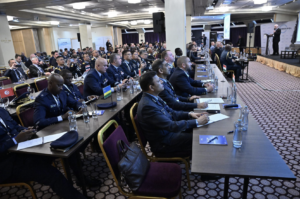
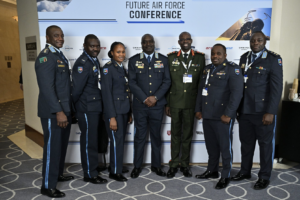

At the Future Air Force Conference, Ukrainian military researcher Vadym Slyusar highlighted the growing counter-drone role of Western-supplied fighters. He cited a Mirage 2000 that destroyed five drones in a single sortie on 4 October, describing such results as typical. Jet-powered Russian Geran drones, reaching speeds of up to 350 km/h, are making interception increasingly demanding and reinforcing the operational importance of European fighter deliveries.
For ACE’s aerospace readership, the connection between the conference and exhibition is particularly valuable. A modular cockpit, an electromagnetic decoy and an adaptable mission pod address different parts of the same operational problem: preparing crews and platforms to work effectively in an environment where sensing, connectivity and electronic threats are inseparable from flying the aircraft.
NATO work and specialist conferences connect the technologies
The expert programme provides the operational and policy context for the equipment displays. The Future Forces Conference’s Defence 2035+ panel brings NATO, European Commission, national defence and industry perspectives into the discussion of capability development. Its published participants include Hayrettin Koca, Andrew McMinn of the UK Ministry of Defence, Jakub Landovský of the Czech Ministry of Defence, Ari Jónsson of the NATO Innovation Fund, Nynke Tigchelaar of DG DEFIS and Martin Petersen Lennards of EY Denmark.
Future C2 is organised around the electromagnetic environment, covering doctrine, infrastructure resilience, ISTAR and support for electromagnetic operations. ERA, RAFAEL and PRAMACOM-HT are its industry partners. The Future Land Forces Panel addresses counter-UAV tactics and technologies, with support from TAF Industries, DRONBRIX and Czechia Systems. These programmes create a direct connection between the operational questions being discussed and the sensors, communications and counter-drone systems on show.
Closed NATO working sessions form another part of the week. The organisers identify work involving the Land Capability Group Dismounted Soldier Systems, the NSPA Dismounted Soldier Equipment User Group and the Joint CBRN Defence Capability Development Group’s Training and Exercise Panel. More than 300 delegates are associated with the three groups in the organisers’ published material. Their presence connects the forum with the detailed requirements, interoperability and standardisation work behind future procurement.
The programme extends into CBRN protection, military medicine, space, cybersecurity and civil resilience. The medical agenda addresses wartime treatment and Ukrainian experience, while the space conference considers operational services and the resilience of space systems. Future of Cyber combines expert sessions with practical formats such as a Live Hacking Zone, cyber-range activities and an escape room. IKARUS Security is its main partner, alongside TAKTIK, SANS, GORDIC, ISTROSEC, Axians, QIC Czech, CABOLO, MAXVALOR and ESET.
EY and Occam Industries are partners of Future Forces 2026, the University of Defence is its research and development partner, and W. L. Gore & Associates is a specialised partner. Together with the major industrial groups, specialist firms and institutional pavilions, they give the event a scope extending from components and research to operational systems and industrial policy.
The programme continues through Friday and into a public day
The professional exhibition continues until Friday 23 October. The following day, Saturday 24 October, the Defence and Security Day opens PVA EXPO PRAHA to the public from 09:00 to 15:30, with free admission. Its announced programme combines military and civilian equipment, demonstrations by security and emergency services, and talks on cybersecurity, online fraud, children’s safety and the effects of the digital environment.
Taken together, the announcements and programme suggest a clear direction for this year’s forum. Platform development is being discussed alongside the software, training, production capacity and support needed to make equipment useful over time. As Future Forces 2026 continues, its strongest industrial stories are those that show how those elements can be brought together — with the next steps in testing, integration and procurement still ahead.
By: Katerina Urbanová
Photo Credit: Luděk Krušinský, Kateřina Urbanová
About the Author