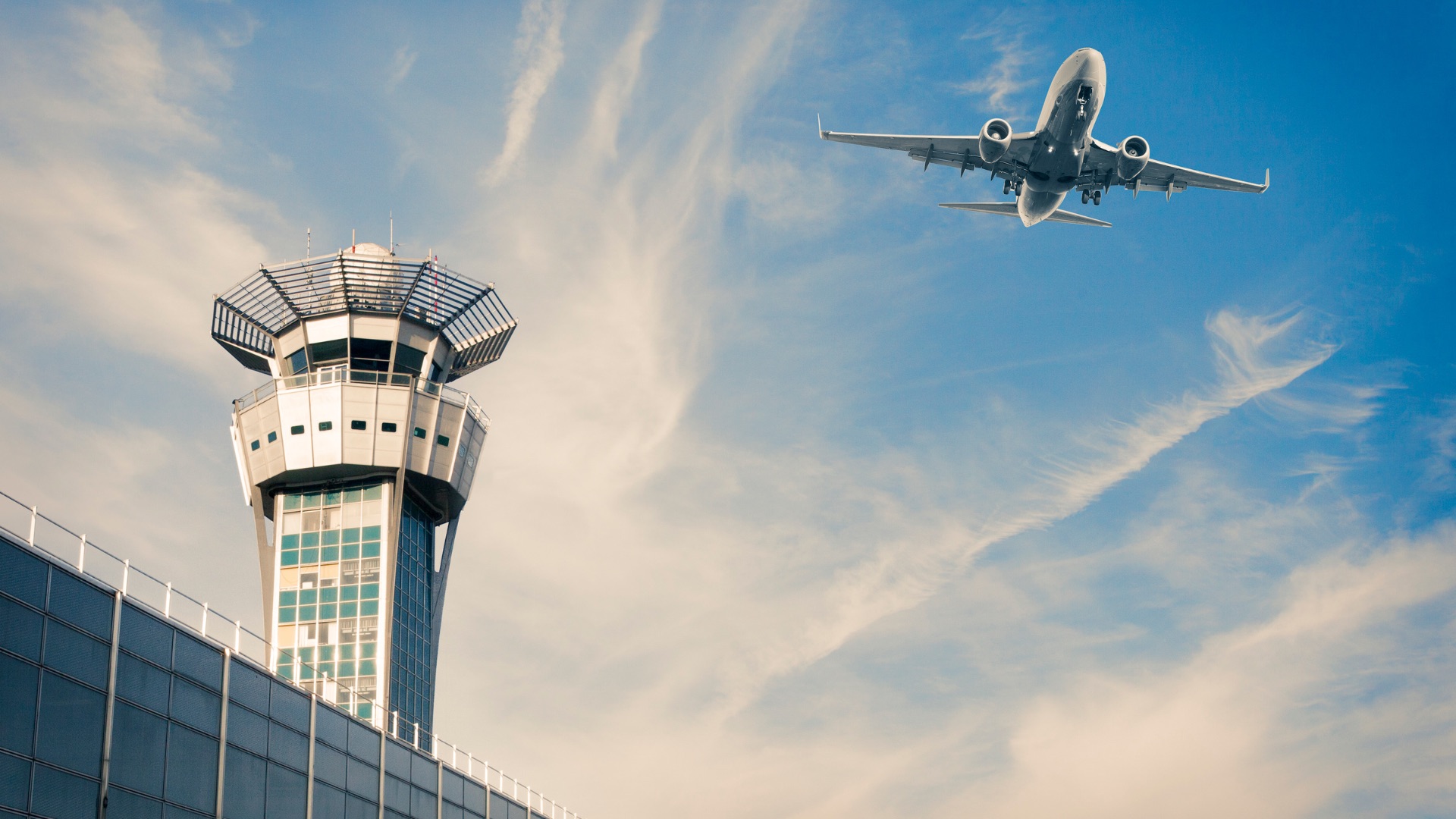
A nationwide FAA ground stop on 13 November brought US departures to a halt and triggered a temporary suspension of Europe-to-US flights. Although operations have resumed, the incident has exposed a critical vulnerability in American air traffic infrastructure — with consequences extending far beyond US airspace.
On Friday, 13 November 2026, the United States experienced one of the most significant disruptions to its aviation system in decades. A telecommunications failure affecting air traffic control facilities prompted the Federal Aviation Administration (FAA) to impose a nationwide ground stop, suspending departures from airports across the country.
The disruption quickly became international. At the FAA’s request, EUROCONTROL temporarily suspended US-bound departures from its 42 member states, extending the operational impact across the Atlantic.
The restrictions were lifted overnight, but the consequences continued into Saturday, with airlines facing widespread cancellations, delays and the challenge of repositioning aircraft and crews.
What Went Wrong?
According to US Transportation Secretary Sean Duffy, instability first appeared at approximately 3:36 p.m. Eastern Time, affecting communications and radar information at air traffic control facilities across the country.
The problem involved the ageing telecommunications infrastructure supporting the US air traffic control network.
Duffy explained that legacy switches and routers had become overloaded with data, generating inconsistencies in the information reaching controllers.
The affected infrastructure includes time-division multiplexing (TDM) technology, a legacy communications architecture still used to transmit operational information within the air traffic control system.
Importantly, the failure was not a complete loss of radar coverage or radio communication. Instead, intermittent instability made it impossible to guarantee the reliability of information throughout the network.
For an air traffic control system handling thousands of aircraft simultaneously, even partial uncertainty represents an unacceptable operational risk.
The FAA therefore initiated a nationwide ground stop as a precautionary safety measure.
At the time, more than 3,500 aircraft were airborne in US airspace. Aircraft already flying were allowed to continue under established procedures, while new departures were suspended.
Timeline: From Technical Failure to Transatlantic Disruption
All times in UTC; US Eastern Time was UTC−5.
| Date and time (UTC) | Development |
|---|---|
| 13 Nov, 20:36 | Instability detected in US ATC communications and radar-data systems |
| 20:54 | FAA issues nationwide ground stop, affecting departures across the United States |
| 21:20 | Nationwide airborne holding procedures announced |
| 22:00 | EUROCONTROL’s suspension window for US-bound departures from member states begins |
| 23:00 | FAA begins preparing a phased restoration of departures |
| 14 Nov, 01:15–01:16 | Nationwide US ground stop lifted |
| 05:00 | Originally announced end of EUROCONTROL’s transatlantic restriction window; the notice was subsequently withdrawn |
The FAA’s national restriction remained in effect for approximately four hours and twenty minutes.
Why Europe Was Affected
Although the original technical problem occurred within the United States, its consequences extended to transatlantic operations.
At the FAA’s request, EUROCONTROL issued a temporary restriction covering flights departing from its member states for US airports between 22:00 UTC on 13 November and 05:00 UTC on 14 November.
This represented a coordinated air traffic flow management response, rather than a closure of European airspace.
Allowing additional aircraft to cross the Atlantic while US air traffic control capabilities remained uncertain could have created further congestion, diversions and complications for arriving traffic.
Aircraft already en route were generally permitted to continue, while certain international departures from US airports were handled individually.
EUROCONTROL subsequently withdrew its restriction notice after the FAA restored operations.
For European airlines, however, lifting the restrictions did not immediately restore normal schedules.
Thousands of Flights Disrupted
Early figures from Flightradar24 indicated more than 4,700 cancellations and approximately 10,000 delays associated with US operations on Friday, with hundreds of additional flights already cancelled for Saturday.
Aviation analytics company Cirium estimated that approximately 11,000 departures carrying more than 1.5 million passengers had been scheduled from US airports after 4 p.m. Eastern Time on Friday.
These figures illustrate the scale of traffic exposed to the disruption, although they should not be interpreted as the final number of flights directly cancelled by the technical failure.
Airlines now face the familiar but complex challenge of operational recovery: aircraft displaced from their scheduled rotations, crews approaching duty-time limitations, disrupted passenger connections and congestion at major airports.
The effects may extend well beyond the relatively short duration of the original ground stop.
Cyberattack or Infrastructure Failure?
US Homeland Security Secretary Markwayne Mullin stated that authorities had found no indication of a cyberattack.
Officials also said the failure was not linked to the FAA’s recently introduced AI-supported Strategic Management of Airspace, Routes and Trajectories (SMART) system.
Instead, the initial explanation points to the interaction between modern operational demands and outdated communications technology.
However, the full technical investigation remains ongoing, and the precise sequence of failures has not yet been independently established.
A Warning for Global Aviation Infrastructure
The incident comes at a particularly sensitive moment for US air traffic modernisation.
The federal government has already committed $12.5 billion towards replacing ageing components, while the Department of Transportation has requested approximately $30 billion in additional funding to complete the programme.
The disruption demonstrates why modernisation cannot be assessed solely through capacity improvements or reduced delays.
The resilience of the underlying communications infrastructure is equally critical to the safety and continuity of flight operations.
The episode also highlights the interdependence of international air traffic management systems. A technical failure affecting domestic US infrastructure was sufficient to trigger operational restrictions thousands of kilometres away.
For European aviation stakeholders, this raises a broader question: how effectively can transatlantic operations absorb a sudden loss of capacity in one of the world’s most important aviation networks?
The FAA has restored departures, and EUROCONTROL’s temporary restrictions have been withdrawn. Nevertheless, the incident will likely intensify scrutiny of infrastructure resilience, system redundancy and the pace of modernisation across the global air traffic management sector.
The immediate crisis has ended. The structural challenge remains.
Sources
- Federal Aviation Administration – Official statement, 13 November 2026
- US Department of Transportation – Secretary Duffy’s briefing, 13 November 2026
- FAA Air Traffic Control System Command Center – Operational advisories, 13 November
- Associated Press – Nationwide ground stop and infrastructure failure, 14 November
- Euronews – Continued disruption, 14 November 2026
- DW – EUROCONTROL restrictions and FAA recovery
About the Author