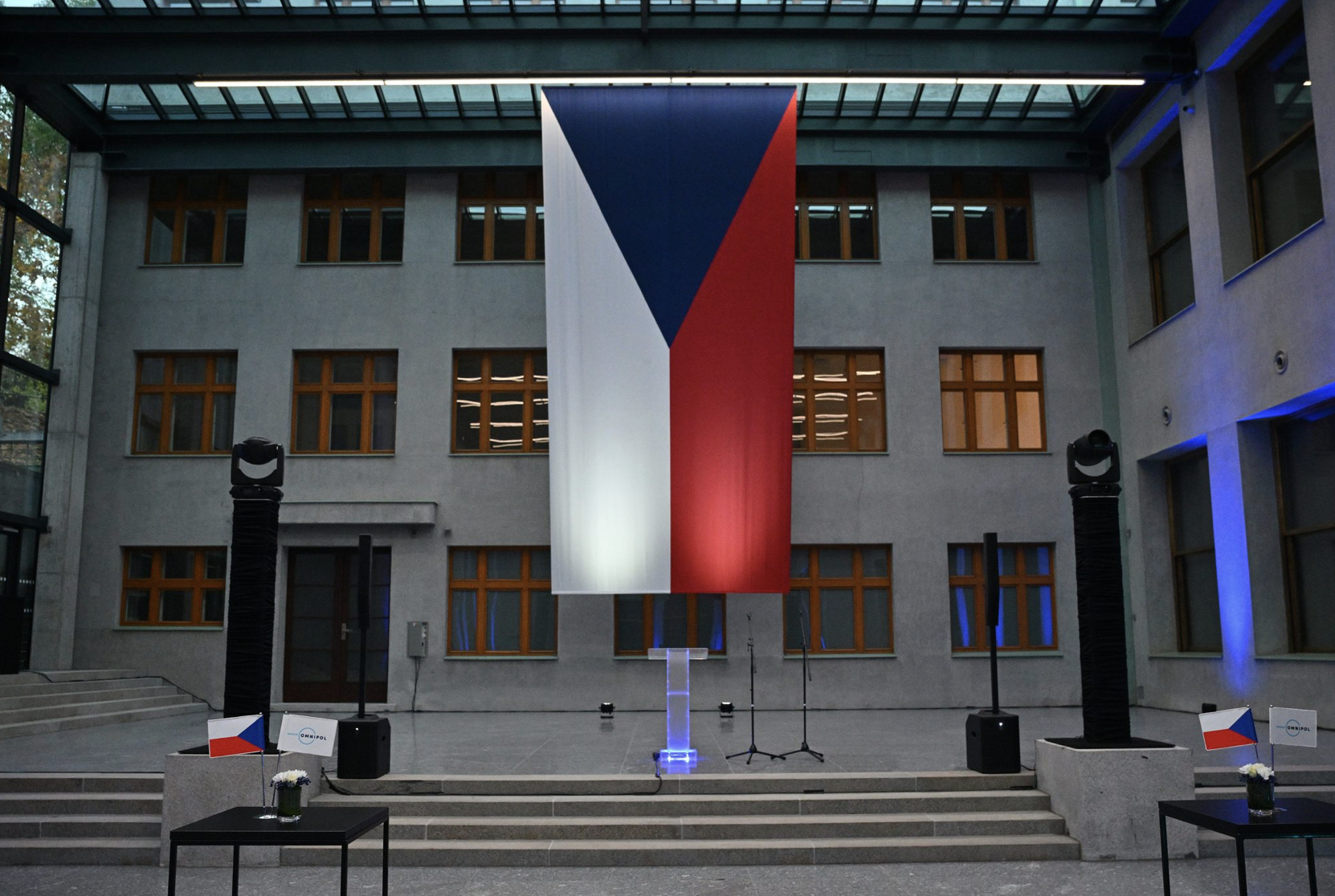
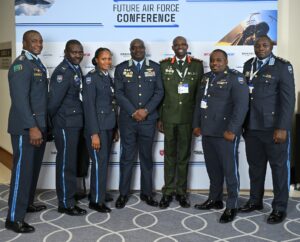
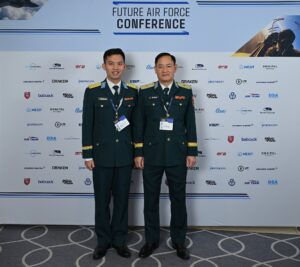
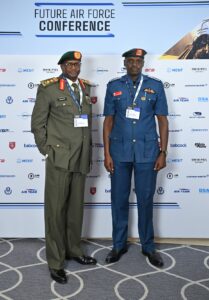
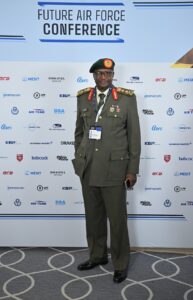
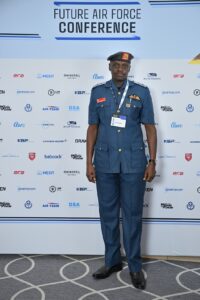
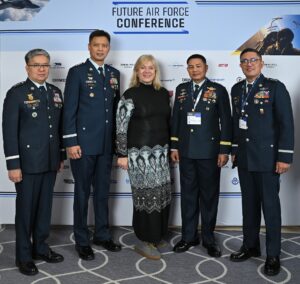
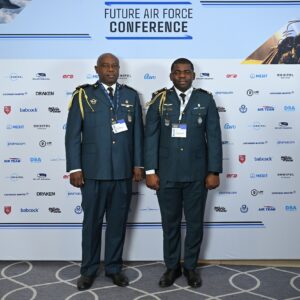
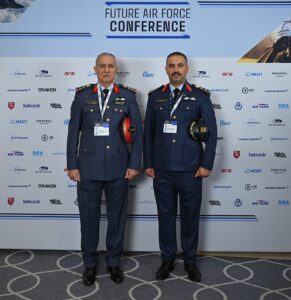
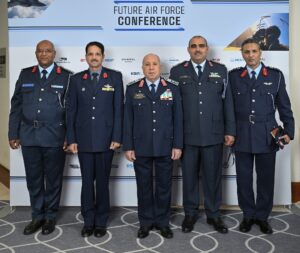
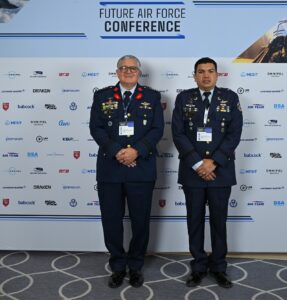
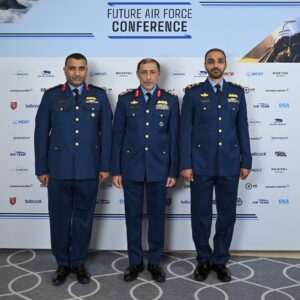
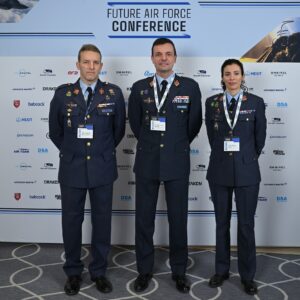
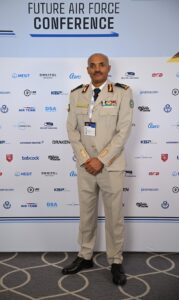
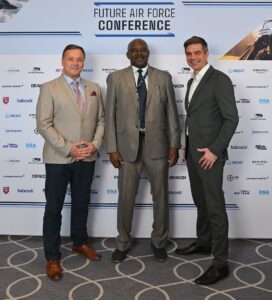
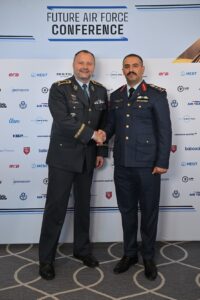
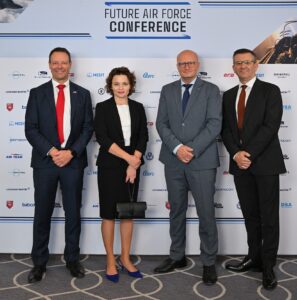
With military delegations from 42 nations and nine Air Force Commanders in attendance, the Future Air Force Conference 2026 brought an international air power community to Prague. Beyond its diplomatic significance, the conference offered a detailed examination of how operational experience, emerging technologies and multinational cooperation are reshaping military aviation.
Prague, 20–22 October 2026 — The future of military aviation is increasingly being determined by factors that extend far beyond aircraft performance. Survivability in contested airspace, electronic warfare, unmanned operations, affordable defensive capabilities and the ability to prepare personnel for rapidly changing operational conditions are becoming equally important.
These challenges formed the central themes of the Future Air Force Conference (FAFC) 2026, which brought together senior military representatives, operational specialists, defence industry leaders and researchers in the Czech capital.
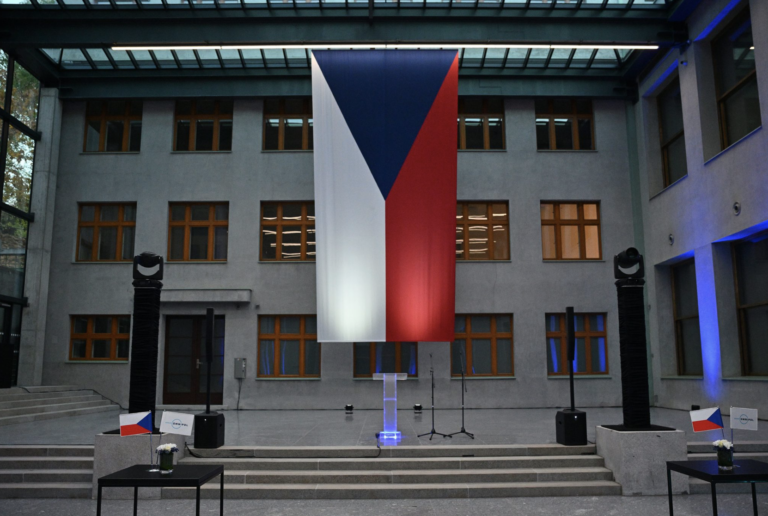
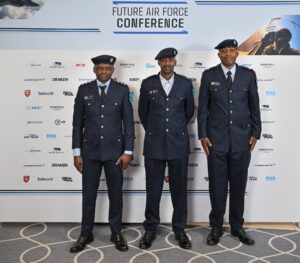
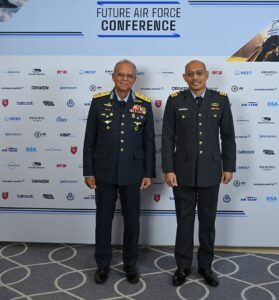
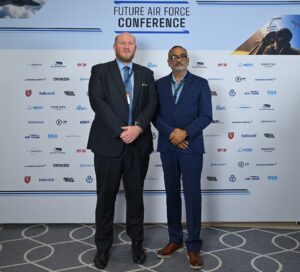
According to the organisers’ final figures, the conference welcomed delegations from 42 nations, including nine Air Force Commanders. The programme combined operational perspectives with industry presentations, expert discussions and opportunities for direct engagement between military users and technology providers.
A particularly important dimension of the conference was the relationship between lessons from ongoing conflicts and the development of future capabilities. Rather than discussing next-generation air power exclusively through the lens of new aircraft programmes, many sessions examined how existing forces can adapt more quickly and operate more effectively in increasingly hostile environments.
Ukraine: The Operational Reality Behind Future Requirements
The conference opened with a presentation by Ukrainian defence researcher Professor Vadym Slyusar, who addressed lessons learned from the war in Ukraine.
His contribution provided an operational foundation for discussions that continued throughout the conference: the changing relationship between crewed aircraft, unmanned systems, ground-based air defence and electronic warfare.
The Ukrainian experience demonstrates the extent to which air operations have become dependent on the ability to survive and operate within a complex threat environment. Aircraft must contend not only with traditional air defence systems but also with increasingly sophisticated electronic warfare, persistent surveillance and the growing employment of unmanned platforms.
Ukraine has also demonstrated the importance of adapting existing aircraft to new missions and available weapons. The continued operational use of legacy aircraft, alongside the integration of newer systems and tactics, illustrates how rapidly armed forces must innovate when procurement and force-generation cycles cannot match operational requirements.
For air forces modernising their fleets, this raises a central question: how can technological development, training and operational adaptation be accelerated without compromising safety, sustainability or effectiveness?
The answer increasingly depends on flexible platforms, adaptable mission systems and a continuous exchange between operational experience and capability development.
Air Mobility: From Transport Aircraft to Multirole Operational Assets
Air mobility formed an important part of the conference programme, reflecting its changing significance in modern military operations.
Tactical and strategic transport capabilities are essential not only for deploying personnel and equipment, but also for supporting dispersed operations, medical evacuation, humanitarian missions and the sustainment of forces operating across large geographical areas.
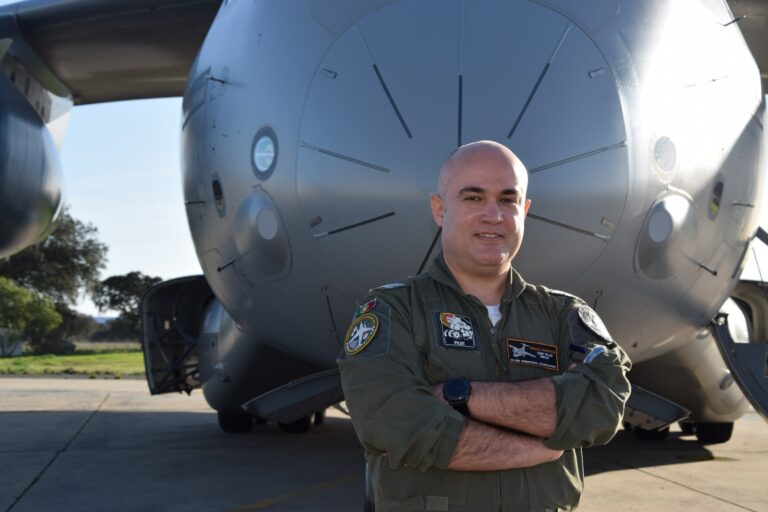
One of the notable presentations came from Colonel Paulo “HULK” Martins, Chief of Operations Division of the Portuguese Air Force, who addressed the development of a multinational KC-390 community.
Portugal’s experience illustrated the distinction between acquiring a new aircraft and developing a fully operational capability. The introduction of the KC-390 has required coordinated progress in crew training, maintenance, operational procedures, simulator infrastructure and multinational cooperation.
Martins placed particular emphasis on operational readiness as a comprehensive system involving people, aircraft, training, sustainment and procedures.
The Portuguese approach is also becoming increasingly relevant to other European operators of the Embraer aircraft. Shared training, operational testing and the development of common procedures offer opportunities to strengthen interoperability while reducing duplication.
His presentation pointed towards a broader European model in which common aircraft types could provide the basis for closer operational cooperation, rather than simply representing parallel national acquisitions.
The conference also highlighted the importance of smaller multirole platforms.
Tomáš Novák of Aircraft Industries presented the company’s approach to adaptable aircraft configurations, demonstrating how a single platform can support passenger transport, cargo operations, medical evacuation, maritime patrol and intelligence, surveillance and reconnaissance missions.
For operators with limited fleet sizes and budgets, the ability to reconfigure aircraft offers potential advantages in flexibility and lifecycle costs.
The wider discussion demonstrated that future air mobility will depend on both advanced transport aircraft and smaller, adaptable platforms capable of supporting diverse operational requirements.
Electronic Warfare: Preparing for a Contested Electromagnetic Environment
Electronic warfare emerged as one of the most consequential themes of the conference.
Modern air forces increasingly depend on communications, navigation, sensor networks and data exchange to achieve operational effectiveness. At the same time, these capabilities create vulnerabilities that potential adversaries can exploit.
Grant Page, Head of Electronic Warfare Academy at Draken Europe, addressed the essential role of electronic warfare training in an operational environment increasingly influenced by fifth-generation air combat capabilities.
The core challenge is the speed at which electromagnetic threats evolve. Training against static or predictable threat representations cannot adequately prepare aircrews for an environment in which adversary systems and tactics may change rapidly.
Realistic training must therefore incorporate complex electronic threats and force aircrews to recognise, understand and respond to degraded or contested conditions.
Draken’s presentation highlighted the role of dedicated adversary capabilities and specialist electronic warfare training in developing this preparedness.
The broader implication extends beyond combat aircraft. Electronic warfare affects transport aviation, helicopters, unmanned aircraft and virtually every military platform reliant on electromagnetic systems.
The ability to operate when communications, navigation or sensor performance is degraded is becoming a fundamental requirement across military aviation.
Beyond GPS: Navigation Resilience as an Operational Requirement
Another important area of discussion concerned the vulnerability of satellite-based navigation.
Lieutenant Colonel Semih Düzgünsivaci presented the challenges associated with reliance on Global Navigation Satellite Systems and examined the potential role of terrestrial navigation architectures.
GNSS provides essential positioning, navigation and timing services across military operations. However, jamming, spoofing and other forms of interference can reduce its reliability precisely when dependable navigation is most critical.
The presentation examined the need for scalable alternatives and supporting infrastructure, with interoperability, standardisation, technical resilience and international cooperation playing important roles.
Related challenges were addressed by Martina Tauberová of LPP Holding, whose presentation focused on autonomous navigation and operations in contested environments.
Drawing on lessons from Ukraine, LPP presented visual navigation as an alternative to dependence on continuous satellite positioning. The approach combines onboard imagery, terrain recognition, reference-map matching and inertial navigation to support autonomous operation.
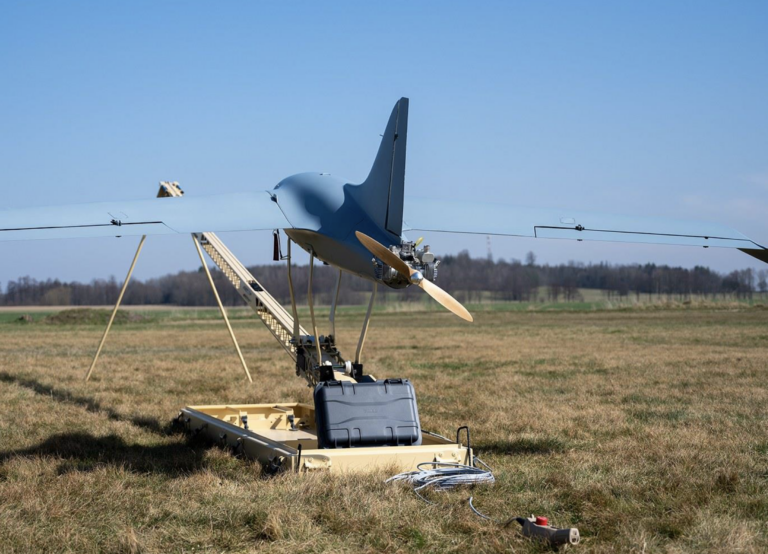
The company also outlined the relationship between autonomous strike capabilities and counter-unmanned aircraft systems, emphasising the need for resilience, scalability and affordability.
Together, these presentations illustrated an important shift in capability development: the ability to operate without assured access to satellite navigation and uninterrupted communications can no longer be treated as an exceptional requirement.
For military planners, resilience must increasingly be built into systems from the outset.
Unmanned Aircraft: From Standalone Platforms to Integrated Air Power
The growing role of unmanned aerial systems formed another major component of the FAFC programme.
Air Commodore Frederick Wigglesworth, Assistant Chief of Staff Operations of the Royal Air Force, addressed the integration of unmanned aerial systems into RAF air power.
His presentation examined the operational realities of employing unmanned aircraft, the changing relationship between crewed and uncrewed platforms and the influence of contemporary conflicts on future force development.
The discussion reflected a broader transformation in military aviation.
Unmanned systems are no longer limited to relatively specialised intelligence and surveillance missions. They increasingly contribute to reconnaissance, targeting, electronic warfare, strike operations and other mission sets that previously relied predominantly on crewed platforms.
However, integrating these capabilities presents challenges extending beyond the aircraft themselves.
Command and control, airspace management, communications resilience, operator training and integration with existing force structures all influence the operational value that unmanned systems can provide.
Future air power is therefore likely to depend increasingly on effective coordination between different categories of aircraft, sensors and decision-making systems.
The challenge is not simply to introduce more unmanned platforms, but to integrate them into coherent operational architectures.
Counter-UAS and Air Defence: The Economics of Protection
The rapid expansion of unmanned threats is also changing the requirements placed on ground-based air defence.
Traditional air defence systems have been developed primarily to engage aircraft, helicopters and missiles. Contemporary operations increasingly involve large numbers of comparatively inexpensive unmanned aircraft, creating challenges for detection, engagement and ammunition sustainability.
A central concern is the economic imbalance between low-cost threats and expensive interceptors.
Defending critical infrastructure against repeated attacks requires more than technologically sophisticated individual systems. It demands layered architectures in which sensors, command-and-control systems and effectors are selected according to the nature of each threat.
Artificial intelligence and automated processing can assist with detecting and classifying threats, but operational decision-making, airspace coordination and human oversight remain essential considerations.
The protection of air bases is particularly significant. Runways, maintenance facilities, aircraft shelters, logistics infrastructure and personnel represent critical assets whose loss or disruption can directly affect the ability to generate air operations.
Consequently, air-base defence is no longer merely a supporting security function. It is becoming a central component of air power readiness.
Helicopter Operations and the Changing Battlespace
Rotary-wing aviation was another relevant element of the broader discussions.
The operational environment for military helicopters is evolving as unmanned surveillance, precision weapons and short-range air defence systems become increasingly widespread.
These developments place greater emphasis on survivability, tactical flexibility, mission planning and the coordination of helicopters with other aircraft and ground forces.
The H-1 family, represented by the AH-1Z Viper and UH-1Y Venom, illustrated the potential advantages of commonality between complementary helicopter platforms.
Bell’s presentation highlighted common systems, maintenance arrangements, training and logistical support as important contributors to operational sustainability.
For military operators, such considerations can be as significant as the performance of individual aircraft. Common equipment and training can simplify fleet management and support more efficient use of personnel and resources.
The broader lesson is that helicopter capability must increasingly be evaluated in terms of operational employment, survivability and sustainability rather than platform characteristics alone.
Training and Readiness: Technology Is Only Part of the Equation
Across the different conference sessions, one recurring conclusion became evident: acquiring advanced military technology does not automatically generate operational capability.
Aircraft availability, qualified crews, effective maintenance, appropriate infrastructure, realistic training and established procedures must function together.
This principle is particularly relevant as military systems become more technically complex and increasingly interconnected.
Simulation, synthetic training and specialist instruction can help air forces prepare for scenarios that would be difficult, expensive or unsafe to reproduce through conventional flying alone.
However, the effectiveness of these approaches depends on their connection to actual operational requirements.
Electronic warfare training, multinational transport exercises, unmanned aircraft integration and joint air defence operations all require continuous adaptation to emerging threats.
Readiness is therefore not a fixed condition achieved upon delivery of new equipment. It is an ongoing process shaped by training, experience, sustainment and cooperation.

Industry and Military Users: Connecting Requirements with Capabilities
An important feature of FAFC 2026 was its connection to the wider Future Forces Forum exhibition.
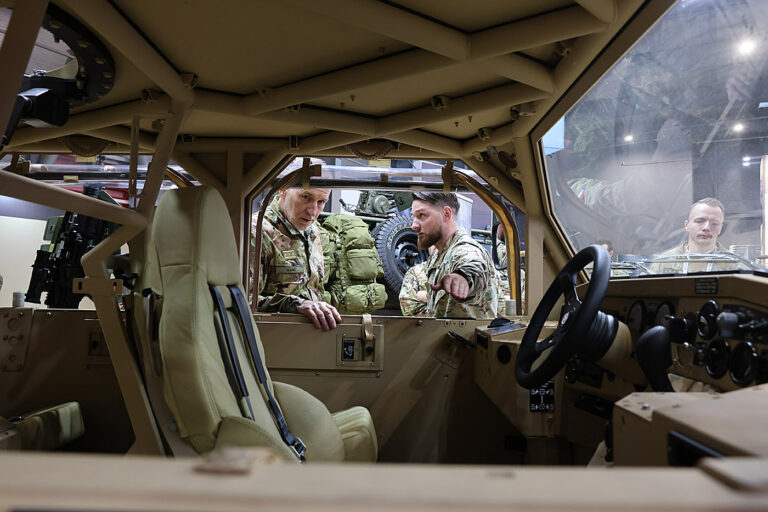
Conference delegates visited the exhibition on 21 October, providing opportunities to examine defence technologies and engage directly with industry representatives.
This relationship between conference discussions and industrial capabilities is particularly valuable at a time when armed forces must reconcile urgent operational requirements with longer-term procurement and development programmes.
Industry presentations covered diverse technologies and operational concepts, but the discussions consistently returned to several shared priorities: resilience, interoperability, adaptability, affordability and the speed at which new capabilities can be introduced.
A dedicated Industry Day following the conference further supported engagement between military representatives and industrial partners.
For manufacturers and technology developers, these exchanges provide opportunities to better understand operational requirements. For military users, they offer insight into technological solutions that may support future capability development.
The Future of Air Power Is a Question of Integration
The significance of FAFC 2026 lies not only in its international participation but also in the convergence of the challenges discussed.
Electronic warfare cannot be separated from aircraft survivability. Unmanned operations cannot be separated from command and control. Air mobility cannot be separated from sustainment and interoperability. Air defence cannot be separated from the economics of engaging emerging threats.
Modern air power depends on the integration of all these elements.
The conference demonstrated that the next phase of military aviation will not be defined exclusively by the introduction of more advanced aircraft.
It will depend equally on how effectively armed forces combine existing and emerging technologies, develop their personnel, adapt operational concepts and cooperate internationally.
With military delegations from 42 countries, Future Air Force Conference 2026 provided a substantial platform for advancing that discussion.
The central message from Prague was clear: future air power will be measured not only by the capabilities individual nations acquire, but by their ability to turn those capabilities into sustainable, resilient and interoperable operational effects.
AI-assisted tools were used to support the preparation and editing of this report, with final content reviewed and editorially approved by Aerospace Central Europe. ACE is a long-standing media partner of FAFC. Photo credit: FAFC.
About the Author