Modern military operations can no longer assume reliable satellite navigation, uninterrupted communications or unrestricted access to airspace. At the Future Air Force Conference 2026 in Prague, Martina Tauberová of Czech defence technology company LPP Holding presented an approach to autonomous unmanned systems shaped by lessons from the war in Ukraine. With operationally deployed platforms, a recent victory in the NATO Innovation Challenge and an expanding portfolio of autonomous technologies, the company offered an interesting perspective on how European defence capabilities are evolving.
The war in Ukraine has fundamentally changed the requirements placed on unmanned aircraft systems. Technologies that only a few years ago might have been considered specialised capabilities are now being developed and employed on a much larger scale, while electronic warfare, satellite navigation interference and the disruption of communications have become everyday operational challenges. For manufacturers, this has created an environment in which technological innovation must be accompanied by affordability, rapid production and the ability to adapt to emerging threats.
These developments formed the background to one of the notable industry presentations at the Future Air Force Conference (FAFC), held in Prague from 20 to 22 October 2026. Martina Tauberová, Head of Government & Strategic Relations at LPP Holding, addressed the growing importance of autonomy in contested airspace and presented the company’s approach to operating unmanned systems without dependence on Global Navigation Satellite Systems (GNSS).
Her presentation, entitled Beyond GPS: From Deep Strike to Counter-UAS Operations in Contested Airspace, connected several subjects that are becoming increasingly important to European armed forces: navigation resilience, autonomous decision-making, long-range unmanned operations, counter-UAS capabilities and the industrial capacity required to produce these systems at meaningful scale.
What made the presentation particularly interesting was its connection to operational experience. Rather than presenting autonomy exclusively as a future technological ambition, LPP described systems already deployed in Ukraine, alongside more advanced capabilities currently under development.
Ukraine and the Changing Requirements for Unmanned Systems
The operational environment in Ukraine has demonstrated how quickly assumptions about the employment of unmanned aircraft can become outdated. GNSS interference, electronic warfare and attacks against communications infrastructure have exposed the vulnerabilities of systems dependent on reliable external positioning and continuous connectivity.
For many unmanned aircraft, satellite navigation has traditionally provided an essential foundation for autonomous flight, particularly over longer distances. However, the availability and reliability of GNSS signals can no longer be taken for granted in a contested environment.
LPP’s presentation identified four characteristics of the modern battlefield that have become particularly relevant to unmanned operations: pervasive electronic warfare, degraded or unavailable satellite navigation, limited connectivity and the growing importance of affordable systems available in large numbers.
The implications extend well beyond the design of individual aircraft. They affect how military capabilities are developed, procured, deployed and sustained. A system that performs effectively under ideal conditions may offer limited operational value if an adversary can interfere with its navigation or communications.
The Ukrainian experience has therefore reinforced the importance of developing platforms capable of continuing their assigned missions under degraded conditions. For manufacturers, the challenge is to provide this resilience without introducing complexity or costs that would make large-scale deployment impractical.
This balance between technological sophistication and affordability was a recurring theme throughout Tauberová’s presentation.
Navigation Without Dependence on GPS
At the centre of LPP’s approach is an autonomous visual navigation system intended to reduce dependence on satellite positioning.
According to the company, the technology uses onboard cameras to observe terrain and software to identify geographical features such as roads, buildings, fields and bodies of water. These features are compared with previously loaded reference maps, allowing the aircraft to estimate its position without relying exclusively on GNSS signals.
The resulting position information is combined with inertial navigation data and integrated into the aircraft’s onboard control system.
The principle is relatively straightforward, although its practical implementation requires sophisticated image processing, navigation algorithms and reliable onboard computing. By using information derived from the surrounding environment, an unmanned aircraft can potentially maintain navigational capability when satellite signals are unavailable or unreliable.
LPP describes the technology as a software-based solution using artificial intelligence for image segmentation and map matching. An important feature of the architecture is that the relevant processing is conducted onboard, reducing the need for continuous communication with an external operator.
This distinction is significant in environments where communication links may also be disrupted or subject to electronic interference.
Nevertheless, alternative navigation technologies bring their own technical challenges. Visual systems depend on the availability and quality of usable environmental information, while different weather conditions, lighting, terrain characteristics and sensor performance can influence their effectiveness. As with any military navigation architecture, practical reliability must ultimately be demonstrated under representative operational conditions.
For military users, the attraction of such technologies is not necessarily the complete replacement of satellite navigation, but the ability to reduce dependence on a single vulnerable source of positioning information.
Operational Experience with Long-Range Autonomous Platforms
LPP’s presentation included figures illustrating the scale of its activities in Ukraine.
The company reported that more than 1,200 of its unmanned platforms had been deployed in the country and described its autonomous navigation technology as having been used under operational conditions.
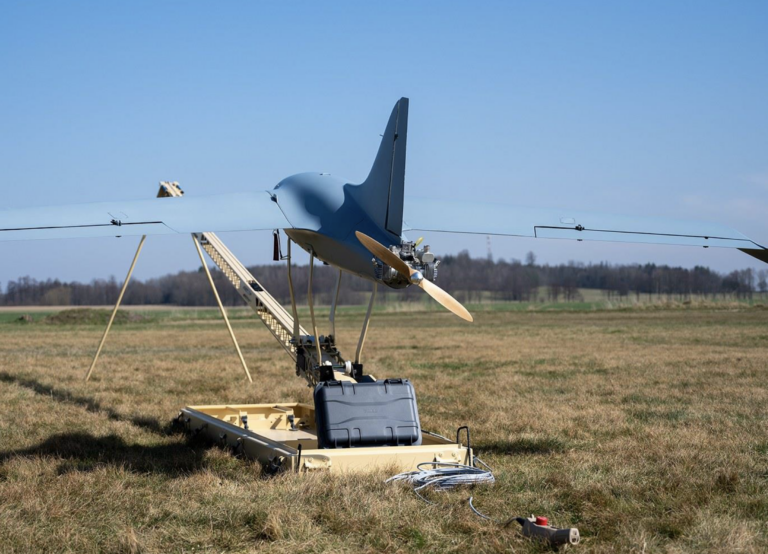
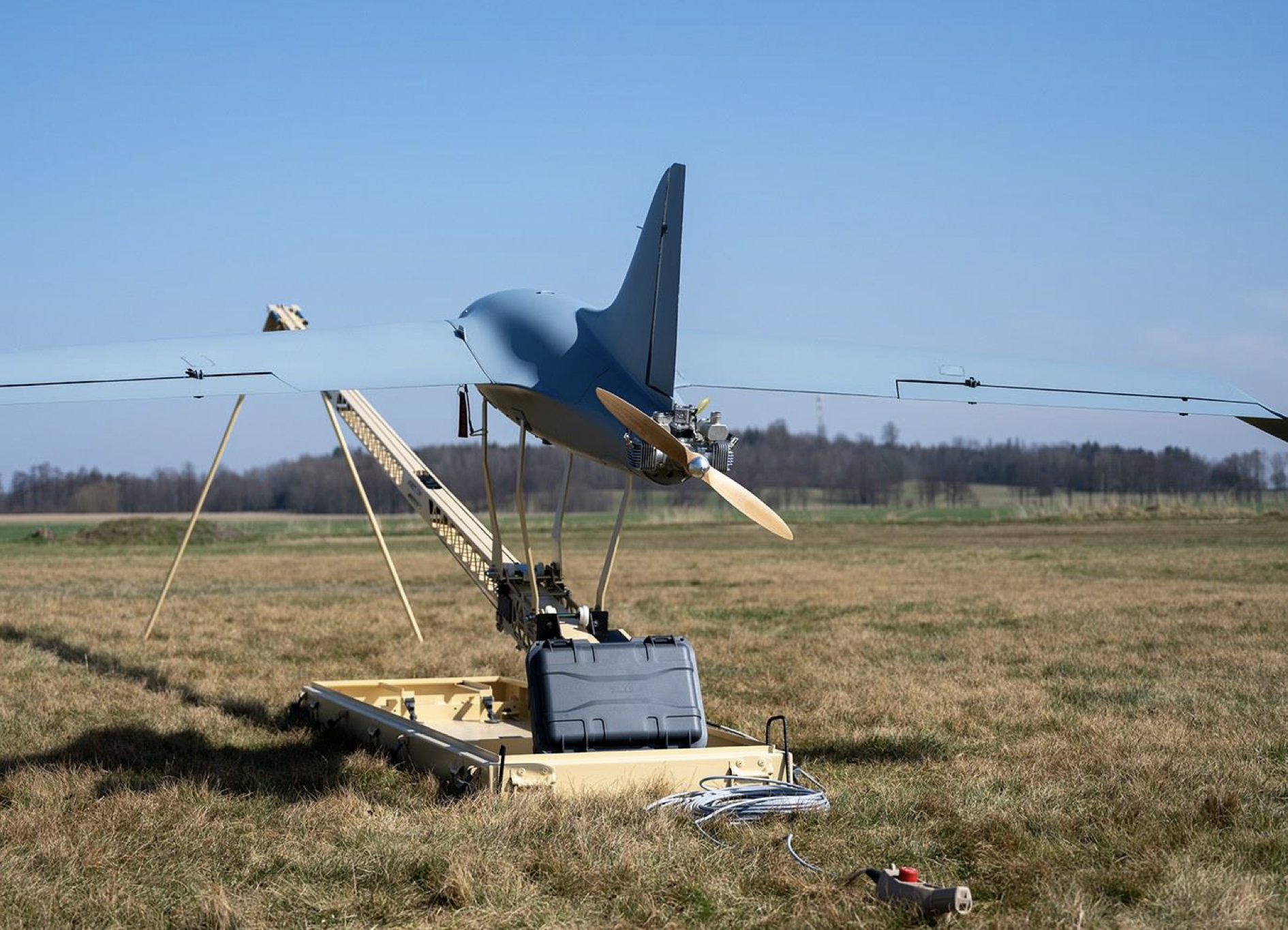
Among the systems presented was the MTS-40, a long-range unmanned platform with a stated maximum range of up to 650 kilometres.
According to LPP, the platform combines autonomous navigation with the ability to operate without reliable GNSS availability. The company also highlighted its emphasis on serial production, presenting scalability as an important element of the overall capability.
The operational relevance of such systems is closely connected to the changing economics of military operations. Long-range precision effects have traditionally been associated with comparatively expensive weapon systems, often available only in limited quantities. The increasing availability of unmanned platforms introduces alternative approaches, particularly where military requirements call for sustained operational capacity rather than the occasional employment of a small number of high-value assets.
This does not mean that inexpensive unmanned systems can replace every function performed by advanced aircraft or precision weapons. Differences in payload, survivability, speed, mission flexibility and operational reliability remain important. However, they can provide additional options within a broader force structure.
The significance of LPP’s reported deployment experience lies in the opportunity to connect technological development with feedback from actual operations. In a rapidly evolving threat environment, the ability to identify problems, adapt systems and return improved capabilities to users can be an important competitive advantage.
The deployment figures and performance claims presented at FAFC are company-reported and should be understood in that context.
NATO Innovation Challenge: Recognition of an Operational Concept
One of the most significant developments for LPP Holding in 2026 was its success in the NATO Innovation Challenge.
The competition, organised through NATO Allied Command Transformation and the NATO-Ukraine Joint Analysis, Training and Education Centre (JATEC), addressed the operational challenge of Persistent Airfield Denial.
The objective was to identify approaches capable of limiting an adversary’s ability to use military airfields over a sustained period, including in environments affected by electronic warfare and the loss of reliable satellite navigation.
More than 60 companies entered the competition, with ten finalists selected to present their concepts. LPP Holding was awarded first place.
The company’s winning approach combined autonomous long-range unmanned systems with alternative navigation technologies and an emphasis on affordability and scalability.
In her FAFC presentation, Tauberová highlighted the relationship between the challenge requirements and the capabilities claimed for LPP’s systems. These included operating beyond the minimum required range, functioning in GNSS-denied environments and offering a level of technological maturity intended to support rapid fielding.
The company stated that its concept had reached Technology Readiness Level 9 and could be made available without a lengthy additional development cycle.
These are substantial claims, particularly in a defence sector where the transition from demonstration to reliable operational capability can often take considerable time. The NATO competition result provides independent recognition of the relevance of LPP’s proposed approach, although it should not be interpreted as independent certification of every technical performance figure presented by the manufacturer.
The wider importance of the competition lies in its emphasis on operational outcomes. The assessment considered not only technological innovation, but also resilience, affordability, scalability and the potential to provide usable capabilities within an appropriate timeframe.
For European defence manufacturers, this is an increasingly relevant direction. The ability to deliver operationally useful systems quickly and at scale is becoming an important consideration alongside the technical sophistication of the individual product.
Autonomous Counter-UAS: Applying the Same Technology to Defence
Although much of the presentation addressed long-range autonomous systems, Tauberová also demonstrated how related technologies could be applied to counter-unmanned aircraft operations.
LPP presented its JWI-4000 interceptor as part of an autonomous counter-UAS concept intended to address threats such as Shahed-type unmanned aircraft.
According to the technical figures provided by the company, the JWI-4000 has a maximum speed of up to 300 kilometres per hour, an operating ceiling of 4,000 metres and a range of approximately 10 kilometres.
The system uses onboard decision-making and trajectory adjustment, with thermal guidance employed during the final phase of interception. LPP also stated that the interceptor can be integrated with existing radar and air defence infrastructure, including systems using the ASTERIX surveillance data format.
The broader significance of the concept is its potential to complement existing air defence architectures with comparatively affordable interceptors.
The widespread use of relatively inexpensive unmanned aircraft has created a growing concern over the economic sustainability of air defence. High-performance surface-to-air missile systems remain essential for engaging advanced aircraft and missile threats, but their employment against large numbers of inexpensive drones can create an unfavourable cost balance.
Autonomous interceptors represent one possible component of a more diversified response, particularly where large numbers of threats must be addressed over extended periods.
However, operational effectiveness depends on several factors beyond the interceptor’s published performance figures. Detection and tracking, target identification, command-and-control integration, rules of engagement and safe coordination with other airspace users remain essential elements of any counter-UAS system.
The approach presented by LPP therefore illustrates the potential value of combining autonomous effectors with existing defence infrastructure rather than treating them as entirely independent solutions.
It also demonstrates how technological expertise developed for one category of unmanned platform may support the development of capabilities serving a different operational purpose.
Production Capacity: When Quantity Becomes a Capability
Another important element of LPP’s presentation concerned manufacturing capacity.
The company reported an annual production capacity of approximately 3,000 MTS unmanned systems at the time of the conference, with plans to increase this to 6,000 within six months and potentially 10,000 within twelve months.
LPP also reported current production of approximately 500 drones per month across its activities.
These figures are significant because they highlight an increasingly important distinction between the ability to develop an advanced system and the ability to supply it in quantities sufficient to meet sustained operational demand.
The experience of Ukraine has demonstrated that attrition, consumption and the speed of technological change can place considerable pressure on industrial supply chains. Even an effective platform may offer limited strategic value if it cannot be manufactured, maintained or replaced at the required rate.
LPP used a comparison between the cost of an advanced missile and that of multiple autonomous effectors to illustrate the economic argument for affordable mass. The company suggested that, within a comparable budget, significantly larger numbers of autonomous systems could potentially be acquired.
Such comparisons are useful in illustrating procurement choices, although they cannot replace a detailed assessment of the different capabilities, operating costs and mission effectiveness of the systems concerned.
The underlying question nevertheless remains important: how can armed forces maintain sufficient numbers of effective systems during prolonged operations?
For European defence industry, addressing this issue requires more than manufacturing capacity alone. Access to components, workforce availability, supply-chain resilience, quality assurance and sustained procurement demand will all influence how rapidly production can be expanded.
The figures presented by LPP represent the company’s stated production position and expansion objectives as of October 2026, rather than independently verified future output.
Narwhal and Nightray: Developing the Next Generation
Looking beyond its current unmanned platforms, LPP also presented two faster systems under development: Narwhal and Nightray.
Narwhal was introduced as a cruise missile concept intended to combine higher speed and greater payload capacity with the company’s autonomous navigation technologies.
According to the presentation, the system is designed for speeds of up to 750 kilometres per hour, a range of up to 772 kilometres and a payload of up to 200 kilograms.
Nightray, meanwhile, was presented as a low-observable flying-wing platform with a stated maximum speed of approximately 500 kilometres per hour, a range of 400 kilometres and a payload capacity of up to 30 kilograms.
Both programmes reflect the company’s intention to extend its autonomy and navigation technologies into new categories of unmanned aircraft.
The introduction of faster platforms brings additional development challenges, particularly in areas such as aerodynamic design, propulsion, guidance, system integration and operational testing. Consequently, the performance figures presented for Narwhal and Nightray should be understood as manufacturer-stated characteristics of developing systems rather than independently demonstrated operational capabilities.
Their inclusion in the presentation nevertheless illustrated the company’s broader technological direction.
Rather than concentrating exclusively on a single unmanned aircraft, LPP is developing a portfolio of platforms intended to share elements of a common autonomous technology base.
This approach may allow experience gained through one programme to support the development of others, while creating opportunities for common software, navigation architecture and production processes.
For an industry in which development cycles are increasingly being challenged by operational requirements, the ability to adapt existing technologies across several platforms could offer practical advantages.
From Battlefield Feedback to Industrial Development
An interesting aspect of LPP’s presentation was the relationship between operational experience, technological development and production.
Traditional defence procurement programmes frequently involve lengthy development, testing, qualification and acquisition processes. These remain essential for complex systems, particularly where safety, reliability and interoperability requirements are demanding.
However, the experience of Ukraine has also demonstrated the importance of rapid adaptation, especially in areas where electronic warfare techniques and unmanned threats evolve over relatively short periods.
LPP presented its approach as an effort to connect battlefield feedback with development and industrial production more directly.
The company identified faster integration, expanded testing with industrial partners and the ability to field proven technologies more rapidly as important priorities for future development.
Such an approach does not eliminate the need for testing or operational validation. On the contrary, the faster technologies evolve, the more important it becomes to ensure that modifications can be assessed and introduced without compromising system reliability or the safety of their employment.
The challenge for manufacturers and military users is therefore to establish development processes capable of combining speed with appropriate technical assurance.
LPP’s experience provides an example of how a European defence technology company is attempting to address this challenge through a combination of operational feedback, software development and industrial capacity.
A Broader Question for European Defence
The importance of the technologies presented in Prague extends beyond the individual systems developed by LPP Holding.
European armed forces are facing a changing operational environment in which electronic warfare, unmanned threats and the availability of affordable precision capabilities are becoming increasingly significant.
At the same time, NATO members are under pressure to improve readiness, strengthen industrial resilience and accelerate the introduction of technologies relevant to contemporary military requirements.
Autonomous systems capable of operating in contested electromagnetic environments are likely to play a growing role in this process, although their integration will require careful consideration of operational procedures, command and control, human oversight and compatibility with existing capabilities.
The success of LPP Holding in the NATO Innovation Challenge demonstrates that innovative European companies can contribute to addressing specific operational requirements identified by the Alliance.
It also illustrates the increasingly important connection between developments in Ukraine and wider NATO capability planning.
For the European defence industry, the challenge will be to ensure that promising technologies can move beyond individual demonstrations and become reliable, sustainable capabilities available in sufficient quantities.
This requires cooperation between industry, military users, research organisations and procurement authorities, as well as the willingness to adapt established development practices where appropriate.
An Important Contribution to the FAFC Discussion
Martina Tauberová’s presentation at Future Air Force Conference 2026 offered a useful perspective on several developments shaping modern military aviation.
The ability to navigate without reliable GNSS, the employment of autonomous systems in contested airspace, the growing importance of counter-UAS capabilities and the industrial requirements of large-scale unmanned operations are no longer questions confined to future military planning.
They are already influencing the development of defence systems and the priorities of armed forces across Europe.
LPP Holding’s reported operational experience in Ukraine and its recent success in the NATO Innovation Challenge provide a relevant foundation for examining these changes, even as individual performance claims and future production objectives remain subject to the normal requirements of technical and operational verification.
The company’s presentation also demonstrated that autonomy should not be viewed as a single technological feature. Its military value depends on how effectively it is integrated with navigation, mission systems, sensors, communications and operational procedures.
For European military aviation, the wider lesson is that resilience and adaptability are becoming fundamental requirements across an expanding range of platforms.
Advanced technology remains important, but its operational value increasingly depends on whether it can function in hostile environments, be produced and sustained at the required scale, and be adapted quickly enough to remain relevant.
The message from Prague was not that satellite navigation has become obsolete, but that dependence on its uninterrupted availability is no longer a viable assumption for the future battlefield.
About the Author