The collapse of AERALIS is more than the failure of one ambitious modular jet programme. It is an early warning signal for defence SMEs caught between political ambition, delayed procurement decisions and the urgent need to rebuild Europe’s aerospace industrial base.
British military aircraft developer AERALIS Ltd has entered administration after a prolonged period of cashflow pressure, with the company linking the move to continuing delays in the United Kingdom’s Defence Investment Planand wider geopolitical factors affecting access to funding. According to UK Defence Journal, the company appointed David Buchler and Joanne Milner of Buchler Phillips as Joint Administrators on 15 May 2026.
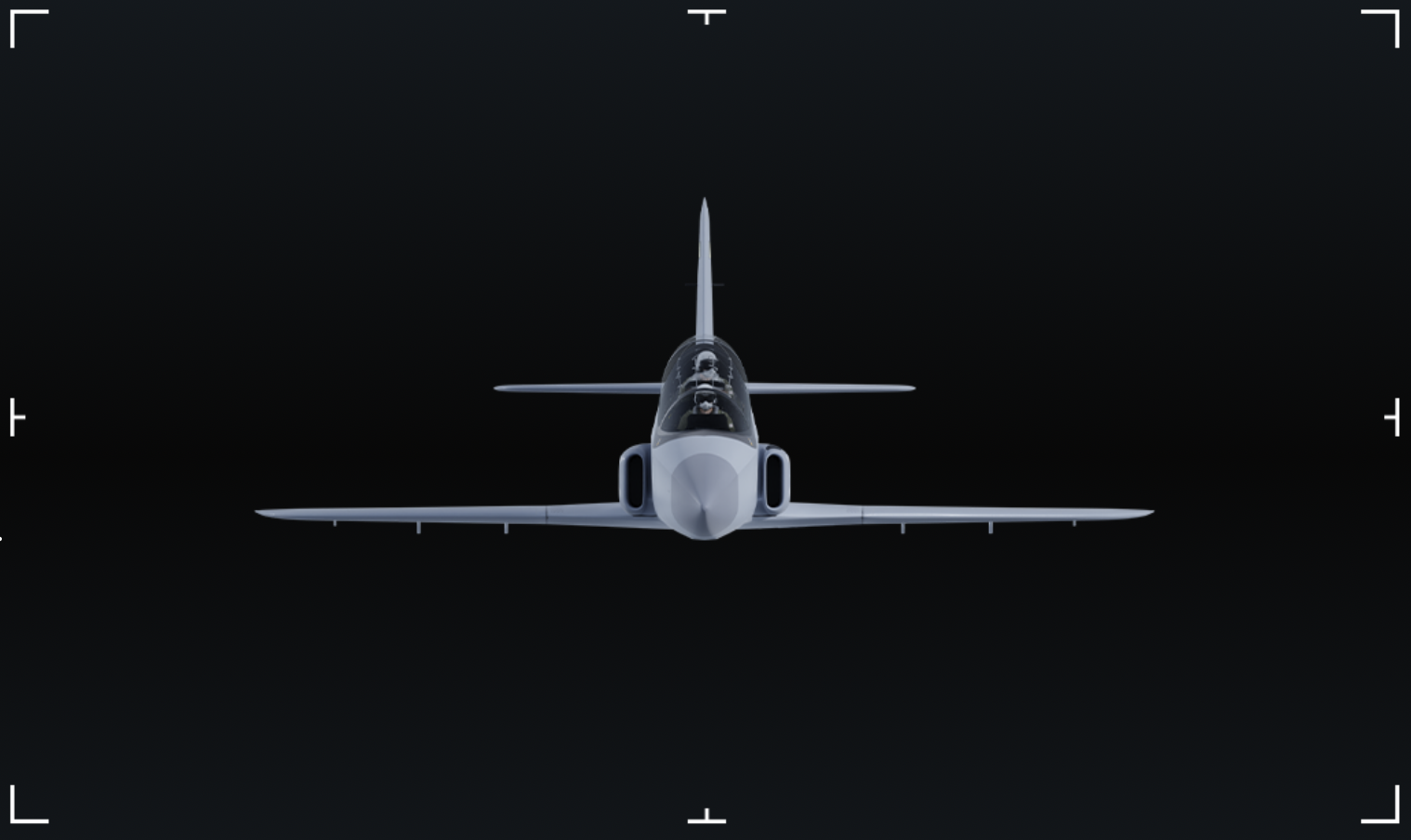
AERALIS had positioned itself as a UK-designed modular light jet aircraft family intended to support fast-jet training, operational support and aerobatic display requirements. The concept attracted particular attention because of its potential relevance to replacing the ageing BAE Systems Hawk aircraft used by the RAF, including the Red Arrows display team.
The company’s proposition was based on a modular aircraft architecture intended to reduce lifecycle cost and increase fleet flexibility. Its published partner ecosystem included companies such as Martin-Baker, Siemens Digital Industries Software, StandardAero, ITEC/Honeywell, and AtkinsRéalis, reflecting a broader ambition to build an industrial and digital engineering framework around the aircraft rather than a conventional single-platform programme.
AERALIS had also received formal UK defence attention. In 2021, the company agreed a three-year contract with the RAF Rapid Capabilities Office for research and development into a modular approach to future aircraft design and certification. A further announcement in 2022 stated that AERALIS had received additional support from the RAF Rapid Capabilities Office in connection with the wider PYRAMID open mission system architecture programme.
The administration comes less than a year after the UK’s Strategic Defence Review 2025 identified the need to replace both Hawk T1 and Hawk T2 with a “cost-effective fast jet trainer”. AERALIS publicly welcomed that commitment at the time, arguing that its modular aircraft concept matched the requirement for a sovereign, flexible and lower-cost training solution. (GOV.UK)
In July 2025, AERALIS selected Glasgow Prestwick Airport as the intended final assembly location for its UK aircraft programme, with Prestwick stating that it had been chosen after competition from 67 other UK locations. The move was presented as a potential industrial boost for Scotland and as a possible pathway to building future Red Arrows aircraft in the UK. (AERALIS)
However, the company’s move into administration underlines a central problem for defence technology firms: strategic statements do not automatically translate into funded procurement decisions. The UK Defence Investment Plan, intended to translate the Strategic Defence Review into funded priorities and programme commitments, has been repeatedly delayed. In January 2026, the Chairs of the House of Commons Defence Committee and Public Accounts Committee warned that the delay risked sending “damaging signals to adversaries” and created an unacceptable gap in parliamentary and public scrutiny of defence spending.
That concern was reinforced in March 2026 parliamentary evidence, when MOD Permanent Secretary Jeremy Pocklington described the Defence Investment Plan as the key mechanism for moving away from annual budget cycles towards a 10-year strategic plan. He told MPs the department was “working flat out” to finalise it, while also acknowledging the scale of the zero-based review of budgets, capabilities, infrastructure and personnel. (UK Parliament Committees)
For industry, the delay has practical consequences. Without clarity on funded priorities, companies cannot reliably plan investment, hiring, production scaling or supply-chain commitments. This is particularly acute for SMEs and venture-backed defence companies, which often lack the balance-sheet depth of prime contractors but are expected to deliver innovation, agility and sovereign capability.
The MOD itself has acknowledged the importance of smaller companies in the future defence industrial base. In March 2026, the UK government said SMEs were central to making defence an “engine for growth” and committed to publishing an SME action plan and direct spending target once the Defence Investment Plan is finalised. It also stated an ambition to increase total spending with SMEs by £2.5 billion to £7.5 billion by May 2028.
AERALIS therefore becomes an important case study. The company had a clear strategic narrative: sovereign UK design, modularity, export potential, digital engineering, training relevance and industrial regeneration. Yet without timely programme decisions and committed funding, even companies aligned with stated defence priorities remain exposed to financing risk.
The timing is especially significant. Reuters reported on 15 May 2026 that Prime Minister Keir Starmer was expected to approve an £18 billion increase in UK defence spending, with the government saying its defence investment plan would aim to deliver equipment and technology to frontline forces quickly while supporting economic growth.
If confirmed, such an increase may help address parts of the wider defence funding gap. But for AERALIS, the critical issue is whether new money arrives soon enough, and whether it can be translated into specific programme commitments before industrial options are lost.
The administrators have indicated that they will work with management and stakeholders to assess strategic options for the business and its assets, including potential investment and continuation of the AERALIS programme in an alternative structure.
For the European military training aircraft market, the development is notable. Air forces are reassessing training pipelines for fourth-, fifth- and sixth-generation combat air systems, while ageing trainer fleets create pressure for replacement decisions. The UK requirement to replace Hawk sits within a wider competitive field that includes established aircraft and multinational industrial offerings, from the Leonardo M-346 and KAI T-50 to Boeing-Saab’s T-7 family and other emerging solutions.
The core lesson is not simply that AERALIS failed to reach production. It is that defence innovation depends on alignment between operational need, industrial policy and procurement timing. Europe’s governments increasingly call for sovereignty, resilience and faster innovation. But if funding decisions lag behind strategic declarations, the companies expected to deliver that sovereignty may not survive long enough to compete.
For the UK, the administration of AERALIS is therefore a test of credibility. The country wants a stronger defence industrial base, faster procurement and greater sovereign capability. The fate of AERALIS shows how narrow the margin can be between national industrial ambition and industrial attrition.
About the Author