WHITEMAN AIR FORCE BASE, MISSOURI, UNITED STATES
New accounts from B-2 Spirit pilots involved in the June 2025 strikes against Iranian nuclear facilities provide a detailed picture of one of the most demanding long-range air operations in recent US military history. Beyond the capabilities of the stealth bombers themselves, the mission raises a broader question about the growing dependence of strategic airpower on aerial refuelling, supporting aircraft and operational logistics.
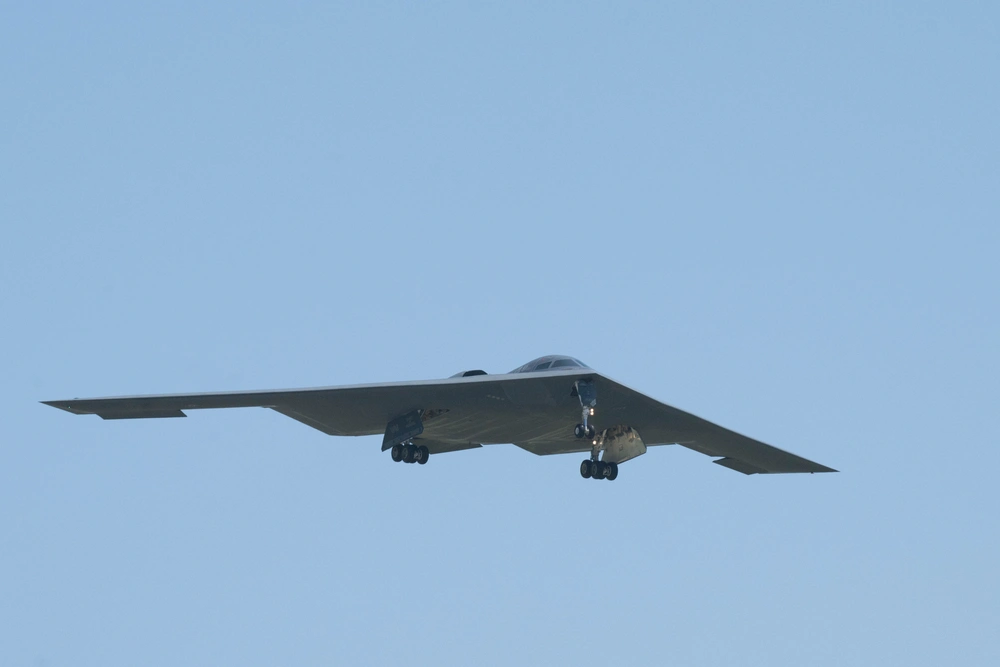
On 18 November 2026, Air & Space Forces Magazine published an extensive investigation by Chris Gordon and Tobias Naegele, based on interviews with pilots who participated in Operation Midnight Hammer. Their accounts provide new details about the preparation and execution of the mission, including last-minute changes to operational plans, the demands placed on the two-person B-2 crews and the coordination required to sustain a large strike package over intercontinental distances.
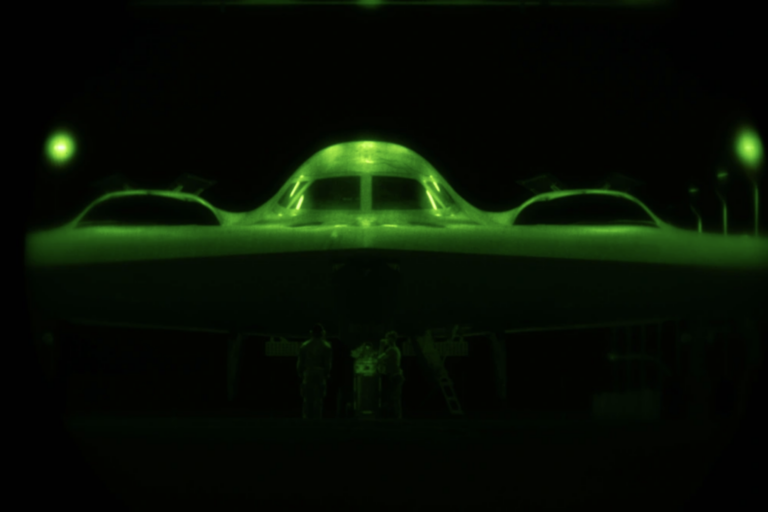
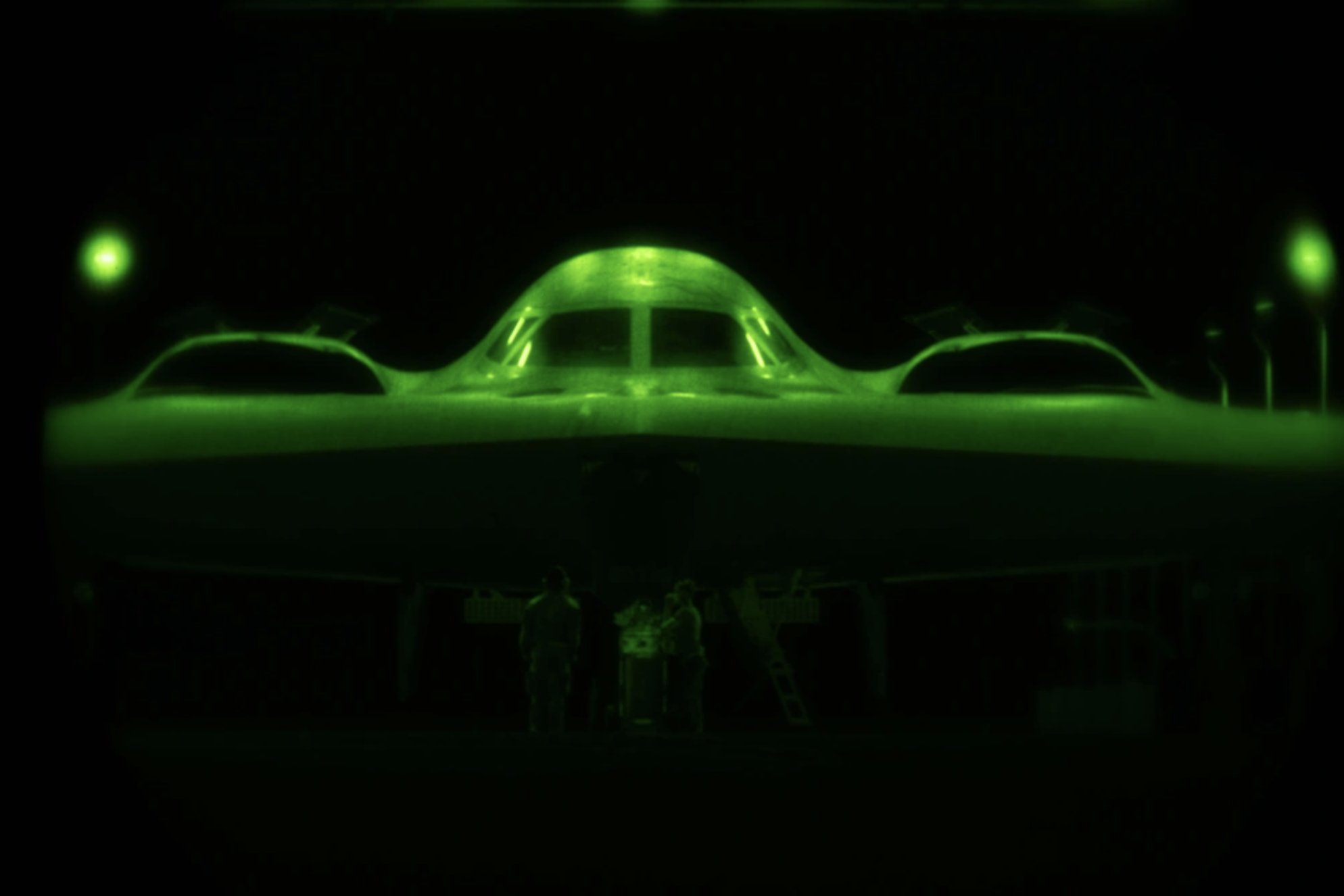
The operation took place on 21–22 June 2025, when seven B-2 Spirit bombers departed Whiteman Air Force Base in Missouri to strike Iranian nuclear facilities at Fordow and Natanz. The aircraft delivered 14 GBU-57 Massive Ordnance Penetrators, marking the weapon’s first operational employment. A US Navy submarine simultaneously launched Tomahawk cruise missiles against targets at Isfahan.
According to the Pentagon, more than 125 US aircraft participated in the operation, including fighter escorts, aerial refuelling tankers and intelligence, surveillance and reconnaissance platforms. The bomber crews completed a mission lasting approximately 37 hours, covering more than 13,000 miles without landing.
The operational dependency behind long-range strike
The B-2 was designed to penetrate sophisticated air defence networks and deliver conventional or nuclear weapons against heavily defended targets. Its combination of low observability, payload capacity and intercontinental reach remains an exceptional military capability.
However, its performance during Midnight Hammer cannot be evaluated independently of the supporting force.
The mission required repeated aerial refuelling for the bombers and their escorts, together with carefully coordinated routes, timing and contingency planning. KC-135 Stratotankers and KC-46A Pegasus aircraft enabled the bombers to operate from their home base in the United States without forward deployment.
The newly published pilot interviews reinforce an important operational consideration: tanker availability influenced the planning of the fighter escort package, including how many supporting aircraft could be sustained across the required distances.
This distinction matters. The maximum range of an individual combat aircraft does not necessarily determine the effective reach of an entire strike package. Escort fighters, supporting aircraft and their respective fuel requirements impose additional constraints. A long-range bomber may be capable of reaching a target, while the wider mission remains dependent on the availability and positioning of aerial refuelling assets.
For air forces planning future operations over extended distances, particularly in the Indo-Pacific, this relationship deserves as much attention as improvements in the combat aircraft themselves.
A tanker fleet facing its own readiness challenges
The importance of aerial refuelling becomes particularly relevant when viewed alongside a June 2026 report by the US Government Accountability Office (GAO).
The report found that the US Air Force’s KC-135 and KC-46A tanker fleet had failed to meet its aircraft availability and capability standards throughout fiscal years 2019–2025. It also identified shortcomings in how the service measures whether its tanker aircraft are actually capable of performing their primary refuelling mission.
An aircraft may be classified as mission-capable for certain transport or support tasks without necessarily being capable of conducting aerial refuelling. Consequently, conventional fleet readiness statistics may not provide commanders with a sufficiently precise picture of the refuelling capacity available for combat operations.
The GAO also identified maintenance challenges, shortages of critical components, limitations in supply chains and insufficient assessment of long-term sustainment risks.
These findings do not suggest that tanker availability compromised Operation Midnight Hammer. The mission demonstrated the ability of the US Air Force to assemble and coordinate a substantial supporting force for a specific operation.
They do, however, raise questions about the ability to sustain similarly demanding operations over longer periods or conduct several such missions simultaneously.
A successful individual mission demonstrates operational capability under the conditions in which it was conducted. It does not, by itself, establish the capacity to reproduce that performance continuously across multiple theatres.
The wider implications for future air operations
Another important aspect of Midnight Hammer concerns the operational environment in which the B-2s conducted their strikes.
The mission was preceded by Israeli operations against Iranian military targets, including elements of the country’s integrated air defence network. This changed the threat environment facing the American strike package and required US planners to adjust their preparations.
The newly published accounts also describe how Iranian efforts to reinforce parts of the Fordow facility shortly before the attack forced changes to the planned weapons employment sequence.
These details underline the extent to which even highly prepared strategic operations depend on changing intelligence, coordination between military capabilities and the ability to adapt plans at short notice.
For future long-range operations, the implications extend beyond the B-2 fleet. The introduction of new-generation combat aircraft, including the B-21 Raider, will not eliminate the requirement for aerial refuelling, command and control, intelligence support and the protection of enabling assets.
Greater aircraft range and improved survivability may reduce some operational dependencies, but they do not remove the wider logistical requirements of sustained air campaigns.
Operation Midnight Hammer demonstrated the ability of the United States to conduct a complex, intercontinental precision strike. The more consequential question for future airpower planning is how reliably that capability can be generated, supported and sustained when operational demands increase.
The newly published B-2 crew accounts provide an important perspective on the mission. Viewed alongside the GAO’s assessment of US aerial refuelling readiness, they also illustrate why the effectiveness of strategic airpower cannot be measured by bomber performance alone.
Sources
Original reporting: Chris Gordon and Tobias Naegele, Air & Space Forces Magazine, 18 November 2026, “B-2 Pilots Tell the Story of Operation Midnight Hammer.”
https://www.airandspaceforces.com/inside-operation-midnight-hammer-b-2-pilots/
Official operational information: US Department of Defense, briefing by Secretary of Defense Pete Hegseth and Chairman of the Joint Chiefs of Staff Gen. Dan Caine, 22 June 2025.
https://www.defense.gov/News/Transcripts/Transcript/Article/4222543/
Independent assessment: US Government Accountability Office, Aerial Refueling Tankers: Air Force Needs More Focused Metrics and a Risk-Based Mitigation Plan to Improve Sustainment, GAO-26-109154, 10 June 2026.
https://www.gao.gov/products/gao-26-109154
About the Author