Skip to content
Aerospace Central Europe

Aerospace Central Europe

Defence Aerospace. Beyond the Headlines.

Primary Menu
  • BEYOND THE HEADLINES
  • PROGRAMME WATCH
  • ACE INTERVIEWS
  • THE AVIATION FILES
  • NEWS
  • PARTNER CONTENT
  • ANALYSIS
Partner with ACE
  • Home
  • 2026
  • November
  • 19
  • Russian Tu-95 Bombers Visit Vietnam in Rare Long-Range Deployment Across East Asia
  • News

Russian Tu-95 Bombers Visit Vietnam in Rare Long-Range Deployment Across East Asia

Two Russian Tu-95MS strategic bombers made a rare visit to Vietnam in November 2026. Their subsequent flight near Taiwan highlights Russia's long-range aviation activities in East Asia and raises questions about future military access to Southeast Asian airfields.
Kateřina Urbanová 19.11.2026 3 minutes read
e87e14d0-6bea-4de4-8240-0ed5f5296a6f

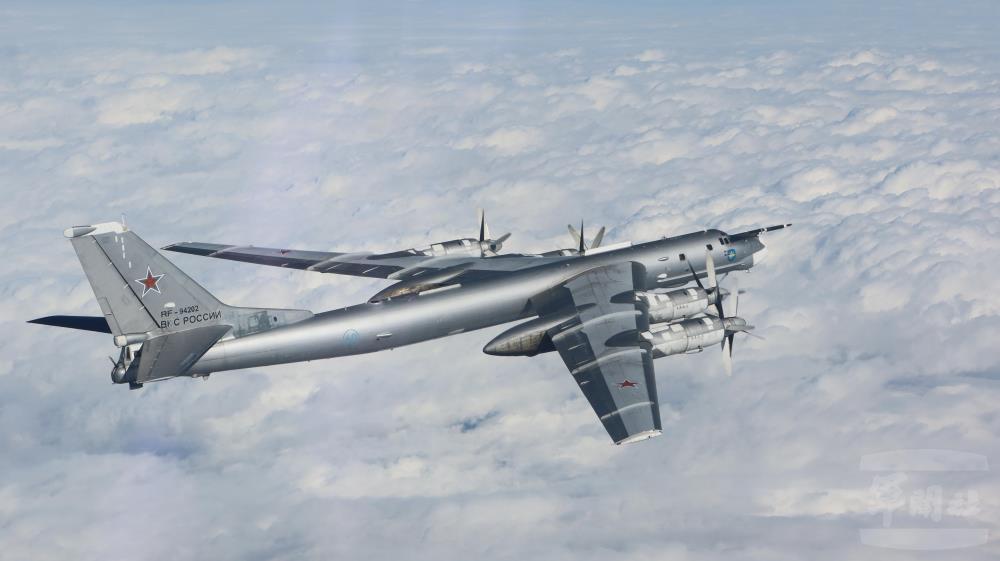
Credit: Taiwan Ministry of National Defense.

Two Russian Tu-95MS strategic bombers have conducted a rare deployment to Vietnam, flying through East Asia and prompting air defence responses from Japan and Taiwan. The operation, which began on 17 November 2026, marks one of the most significant movements of Russian long-range aviation into Southeast Asia in more than a decade.

The aircraft, operating from Russia’s Far East, landed at Da Nang International Airport in central Vietnam on 17 November, accompanied by two military support aircraft. Both bombers remained at the airport the following day, according to reporting by Reuters and open-source aviation observers.

On 19 November, Taiwan’s Ministry of National Defense reported that two Russian Tu-95 bombers had entered its Air Defence Identification Zone (ADIZ) from the south, flown along the island’s eastern approaches and departed northeast of Keelung. Taiwan released a photograph taken from an F-16 showing one of the aircraft. Its registration, RF-94202, matches a bomber previously identified at Da Nang, indicating that the aircraft were returning north after their visit to Vietnam.

The flights attracted particular attention because Russian strategic aviation has rarely operated in this part of the region since the end of the Cold War. However, entry into an ADIZ does not in itself constitute a violation of sovereign airspace.

A historical connection

Vietnam has a long history of cooperation with Soviet and later Russian military aviation. During the Cold War, the Soviet Union operated from Cam Ranh Bay, using the strategically located facility to support naval and long-range aviation activities in the Western Pacific.

The last comparable Russian strategic aviation activity associated with Vietnam was reported in 2014, when Russian tanker aircraft supported Tu-95 operations in the Pacific. Washington subsequently expressed concern about Moscow’s use of Vietnamese facilities for military flights that could increase regional tensions.

The latest visit is therefore significant, although it does not establish that Russia has regained permanent basing rights or that regular bomber deployments will follow.

Vietnam’s strategic balancing

The deployment also highlights Vietnam’s complex defence relationships. Russia remains an important supplier of military equipment and technical support to the Vietnamese armed forces, even as Hanoi seeks to diversify its international defence partnerships.

Vietnam maintains a policy of strategic non-alignment, including opposition to foreign military bases on its territory. Allowing a temporary Russian military aviation visit is not necessarily inconsistent with that policy, but the presence of strategic bombers inevitably attracts attention from other regional powers.

The timing is also notable. The deployment coincided with high-level diplomatic meetings involving Russia, China and the United States in Asia. Analysts have interpreted the operation as a demonstration of Moscow’s continued ability to conduct long-range aviation missions beyond its immediate region. Neither Moscow nor Hanoi has publicly explained the purpose of the visit.

From an operational perspective, the deployment demonstrates that Russia retains the capability to move strategic aircraft over considerable distances and use facilities outside its national territory. The political significance is less certain and depends partly on whether such visits become more frequent.

For now, the confirmed development is a short-duration deployment of Russian strategic aviation to Vietnam, followed by a northbound flight observed by Taiwan on 19 November. Its longer-term implications for Russian access to Southeast Asian airfields remain to be seen.

Photo credit: Taiwan Ministry of National Defense.
Source: Reuters (17–19 November 2026) and Taiwan Ministry of National Defense (19 November 2026)

About the Author

Kateřina Urbanová

Administrator

View All Posts

Post navigation

Previous: Operation Midnight Hammer: What the B-2 Mission Reveals About the Limits of Strategic Airpower
Next: US Indictment Reveals How a $60 Million C-130H Was Destroyed at Shannon Airport

Related Stories

Screenshot 2026-11-20 at 8.32.07
9 minutes read
  • News

Airbus Under US Scrutiny as Congress Questions Western Aerospace Cooperation with China

Kateřina Urbanová 20.11.2026 0
a-29-super-tucano_08-1
5 minutes read
  • News

Embraer Advances A-29 Super Tucano Counter-Drone Development

Kateřina Urbanová 19.11.2026 0
Mirage_2000C_in-flight_2_(cropped)
6 minutes read
  • News

Ukraine Expects 12 Western Fighters as F-16 Maintenance Challenges Intensify

Kateřina Urbanová 19.11.2026 0

You may have missed

Screenshot 2026-11-20 at 8.32.07
9 minutes read
  • News

Airbus Under US Scrutiny as Congress Questions Western Aerospace Cooperation with China

Kateřina Urbanová 20.11.2026 0
a-29-super-tucano_08-1
5 minutes read
  • News

Embraer Advances A-29 Super Tucano Counter-Drone Development

Kateřina Urbanová 19.11.2026 0
Mirage_2000C_in-flight_2_(cropped)
6 minutes read
  • News

Ukraine Expects 12 Western Fighters as F-16 Maintenance Challenges Intensify

Kateřina Urbanová 19.11.2026 0
Screenshot 2026-11-19 at 12.07.02
6 minutes read
  • BEYOND THE HEADLINES
  • News

Operation Midnight Hammer: What the B-2 Mission Reveals About the Limits of Strategic Airpower

Kateřina Urbanová 19.11.2026 0
  • Privacy & Cookie Policy
Copyright © All rights reserved. | MoreNews by AF themes.
Manage Consent
To provide the best experiences, we use technologies like cookies to store and/or access device information. Consenting to these technologies will allow us to process data such as browsing behavior or unique IDs on this site. Not consenting or withdrawing consent, may adversely affect certain features and functions.
Functional Always active
The technical storage or access is strictly necessary for the legitimate purpose of enabling the use of a specific service explicitly requested by the subscriber or user, or for the sole purpose of carrying out the transmission of a communication over an electronic communications network.
Preferences
The technical storage or access is necessary for the legitimate purpose of storing preferences that are not requested by the subscriber or user.
Statistics
The technical storage or access that is used exclusively for statistical purposes. The technical storage or access that is used exclusively for anonymous statistical purposes. Without a subpoena, voluntary compliance on the part of your Internet Service Provider, or additional records from a third party, information stored or retrieved for this purpose alone cannot usually be used to identify you.
Marketing
The technical storage or access is required to create user profiles to send advertising, or to track the user on a website or across several websites for similar marketing purposes.
  • Manage options
  • Manage services
  • Manage {vendor_count} vendors
  • Read more about these purposes
View preferences
  • {title}
  • {title}
  • {title}