The global tactical airlift market is entering a period of structural transition. For decades, it has been dominated by a single platform: the Lockheed Martin C-130 Hercules. Today, however, a combination of operational demands, industrial shifts, and geopolitical considerations is opening space for credible alternatives, most notably Embraer’s C-390 Millennium.
A program gaining momentum
The C-390 is no longer an emerging platform, it is a scaling one.
As of 2026, multiple European NATO countries have either selected or are in the process of acquiring the aircraft, including Portugal, the Netherlands, Austria, the Czech Republic, Sweden, and Slovakia.
Portugal, as the launch European customer, continues to deepen its commitment, expanding its fleet and integrating the aircraft into operational service.
This growing European footprint is strategically significant. It signals that the C-390 is no longer viewed as a niche or regional platform, but as a viable NATO-standard airlifter capable of integrating into alliance operations.
At the same time, Embraer is actively positioning the aircraft globally, including in major competitions such as India’s medium transport aircraft program, where it faces both the C-130J and Airbus A400M.
Performance vs legacy: a generational shift?
At a technical level, the C-390 represents a departure from legacy turboprop design philosophy.
Unlike the C-130J, the aircraft is jet-powered, which translates into significantly higher cruise speeds—reported to be roughly 25–30% faster—while maintaining comparable payload class.
This has operational implications that go beyond headline performance. Faster transit times can increase sortie generation, reduce exposure in contested environments, and improve responsiveness for time-sensitive missions such as medical evacuation or rapid deployment.
The platform is also designed as a multi-mission system from the outset, incorporating aerial refueling, cargo, medevac, and humanitarian roles within a single architecture.
The competition: C-130J and A400M
The competitive landscape is defined by two incumbents:
- C-130J Super Hercules: the global standard, with unmatched operational history, ecosystem depth, and logistical familiarity.
- Airbus A400M: a larger, more capable (and more expensive) platform positioned closer to strategic lift.
The C-390 sits between them—closer to the C-130 in size, but incorporating elements of a more modern design philosophy.
Its value proposition is therefore not purely performance-based. It combines:
- lower acquisition and lifecycle complexity relative to larger platforms,
- higher speed and modern systems compared to legacy aircraft,
- and increasing interoperability with NATO standards.
Industrial and geopolitical dimension
What is particularly notable is how the C-390 program is being shaped by industrial and geopolitical factors—not just operational ones.
Embraer has explicitly positioned Europe as a core market, with efforts to increase European industrial participation and even establish a stronger local presence.
This approach aligns with broader European trends:
- diversification away from single-supplier dependence,
- strengthening of intra-European industrial cooperation,
- and a more flexible interpretation of “strategic autonomy” within NATO.
At the same time, the aircraft itself incorporates significant U.S.-origin systems—reportedly over 50%—which allows it to remain interoperable with transatlantic supply chains while avoiding full dependence on a single prime contractor ecosystem.
This hybrid positioning—neither fully American nor fully European—may prove to be one of its most important strategic advantages.
Operational reality: the limits of legacy assumptions
Recent operational discussions have also highlighted a broader issue: the gap between theoretical capability and real-world constraints.
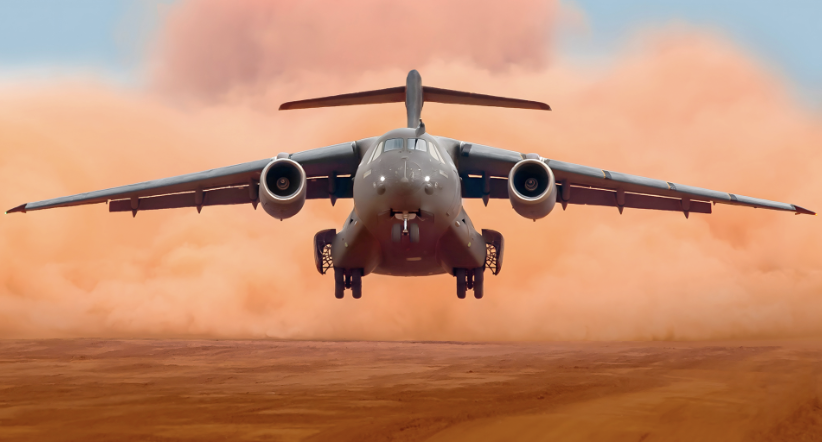
The C-130 family has long been associated with rugged performance, including operations from unprepared surfaces. However, modern variants—heavier, more complex, and often operating under stricter constraints—do not always replicate the full flexibility of earlier generations in practice.
Incidents and operational reports continue to underline that austere operations depend not only on aircraft design, but also on conditions, load, and risk tolerance. In other words, “dirt strip capability” is not a binary attribute—it is a spectrum.
This nuance is increasingly relevant as air forces reassess what they actually need: maximum theoretical flexibility, or optimized performance across the most common mission profiles.
Market outlook
The trajectory of the C-390 suggests a broader shift in procurement logic.
Rather than defaulting to legacy platforms, air forces are:
- reassessing mission requirements,
- weighing lifecycle cost and availability more heavily,
- and considering industrial participation as a core decision factor.
In this environment, the C-390 is not simply competing as an aircraft. It is competing as a model:
- faster, but not oversized
- modern, but not overly complex
- interoperable, but not locked into a single ecosystem
The tactical airlift market is no longer static.
The C-130 will remain a cornerstone platform for years to come. The A400M will continue to serve high-end requirements. But the emergence of the C-390 introduces a third vector—one that reflects changing priorities in speed, flexibility, and industrial alignment.
The real question is no longer whether the C-390 can compete.
It is whether the assumptions that sustained the dominance of legacy platforms still hold in a changing operational and geopolitical environment.
About the Author