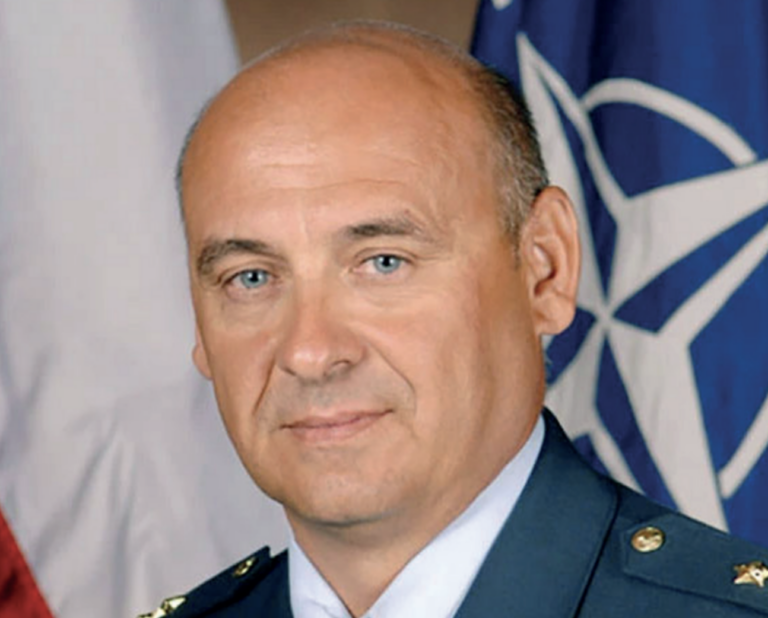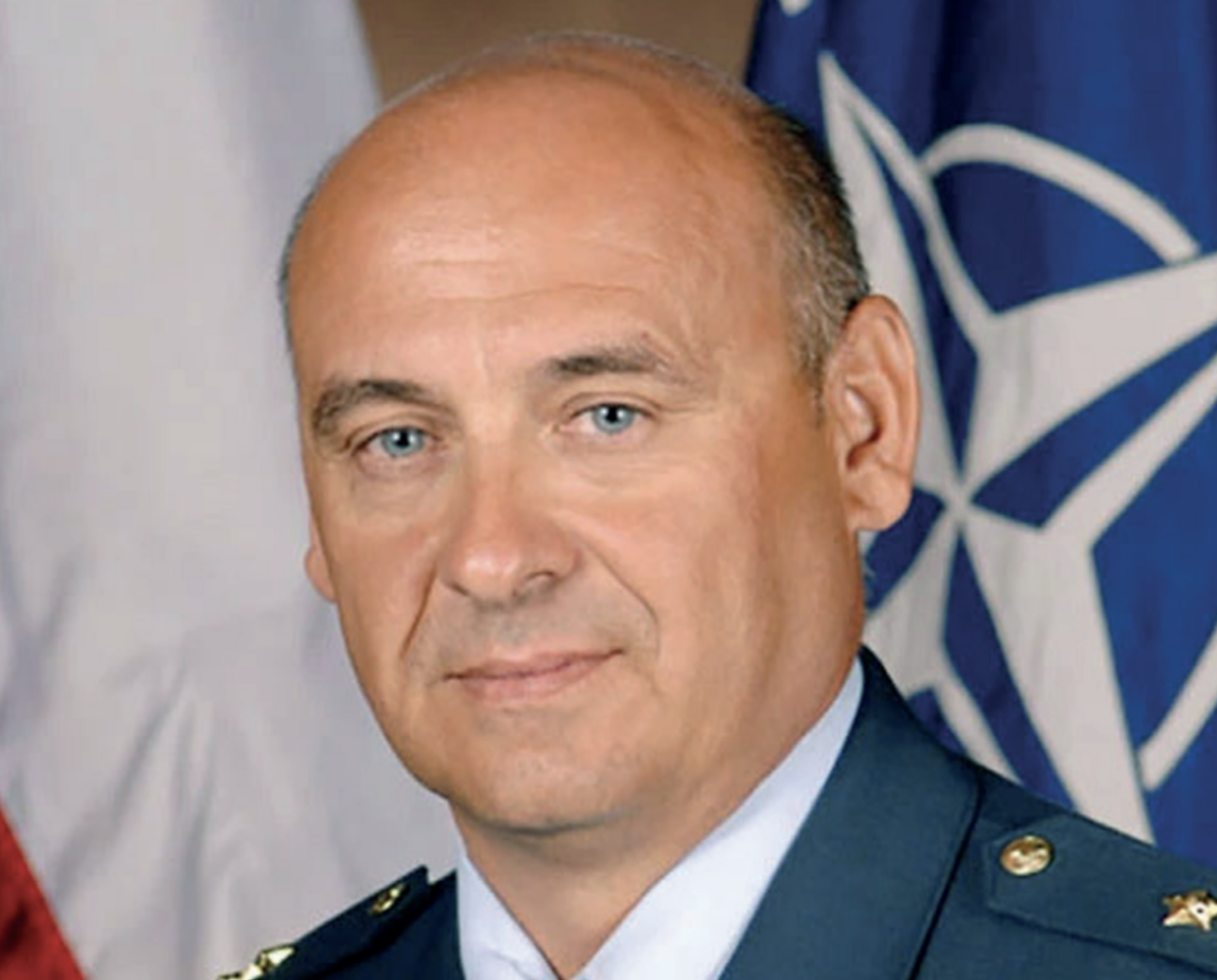
Interview with COL (Ret.) Petr Tichý, Program Director of Future Air Force Conference
Preparing a professional defence conference today is no longer simply a matter of selecting attractive topics and inviting senior speakers. It requires a clear understanding of where military capability development is heading, what questions must be asked now, and how to bring together commanders, industry, government and academia in a format that produces meaningful discussion. ACE spoke with COL (Ret.) Petr Tichý, Program Director of the Future Air Force Conference, about how conference programmes are built, how current conflicts shape the debate, and why defence remains not a political priority, but a duty of the state.
Building a Programme Is Not an Afternoon Exercise
When Petr Tichý accepted the role of programme director more than six years ago, he expected the task to be relatively straightforward. After a professional life spent in defence and security as a soldier, briefly as an academic, and later in the defence industry, he knew the environment well. Future Forces Forum, including its accompanying professional programme, is fundamentally about connecting users, ministries, armed forces, industry and academia – precisely the communities in which he had worked for decades.
Reality proved more demanding.
“For the first edition I chose command and control as the main theme,” he recalls. “At that time, decisions on the acquisition of major platforms had largely already been taken, so C4ISTAR seemed to be a logical area for the future development of the Czech Armed Forces. I believed it would appeal to almost everyone and that building an interesting programme would not be a problem. I soon discovered how wrong I was.”
According to Tichý, previous experience is an excellent foundation, but it is not enough. A meaningful programme requires continuous study, observation and learning. He began attending other conferences, analysing their structure, and studying how professional events are prepared.
“Anyone who thinks they can sit down with a blank sheet of paper and produce a strong programme in one afternoon simply because they work in defence is deeply mistaken,” he says.
From Topic Selection to Operational Planning
The process begins with continuous monitoring of the defence and security environment. This is the broadest phase, but in some ways also the simplest. The more difficult task is to choose which issues, from a wide spectrum of current debates, deserve space on the programme.
Tichý follows the historical logic of Future Forces Forum: the programme should reflect the main domains and capability areas, including land forces, air forces, cyber defence, CBRN, logistics, military medicine, and the development and integration of new technologies.
The next decision is the angle from which each theme should be addressed. As a former soldier, Tichý uses a modified DOTMLPFI-type approach, asking what resonates most strongly with users, industry and academia. He looks primarily at a three-to-five-year horizon: short enough to remain relevant to real capability development, but long enough to avoid focusing only on projects that are already contracted or about to be signed.
Shorter horizons, he notes, often mean discussing procurement decisions that are already essentially fixed. Longer horizons tend to become conceptual and belong more naturally to other expert forums.
The selection process is pragmatic. For each possible topic, Tichý assesses its attractiveness for different groups, the availability of credible speakers, the likely audience, and the expected level of participation. Only then does the programme move into practical planning: schedule, time allocation, team requirements, supporting materials, calls for papers, speaker instructions and invitation letters.
His first civilian job after the military, leading the Alliance Ground Surveillance project at RETIA under Airbus Defence and Space, proved valuable preparation. “It was a major school for me,” he says.
Even then, no plan survives first contact with reality.
“The actual preparation and organisation of each event is very similar to what I experienced in the army. No plan survives first contact with the enemy – or, in this case, with real life.”
Strategic Relevance Versus Buzzwords
The security environment is changing faster than before. Distinguishing between a genuinely strategic issue and a temporary buzzword has become one of the most difficult parts of programme preparation.
Tichý describes it as a real challenge. Future Forces Forum operates in a two-year cycle, and he does not remember a period in which so many developments changed the security reality so fundamentally in such a short time. The pace of technological development adds another layer of complexity.
The main theme should remain stable, but individual sub-questions often need to be adjusted as priorities change among armed forces, industry and other actors.
Asked how he knows whether the right topics have been selected, he answers frankly: during preparation, one can only hope the choices are right. The final judgement comes after the event – through attendance, engagement and whether participants want to return.
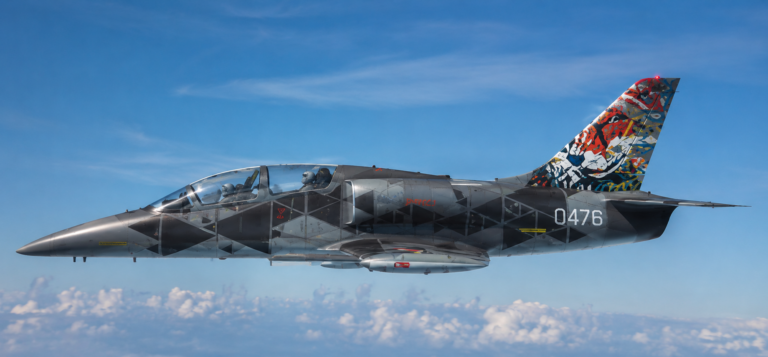
One example of continuity is the Future Air Force Conference, held annually. Over time, it has developed a stable group of regular participants and countries. Tichý stresses that this would not have been possible without the support of the Commander of the Czech Air Force and the broader “blue” community within the Czech Armed Forces.
Another example is cyber defence, an area with a long tradition within Future Forces Forum. Here, he credits the professional expertise and deep knowledge of Petr Jirásek and his team.
The Hardest Task: Balance
The most difficult part of designing a conference programme is not only finding the right topic, the right speakers or the right structure. It is balancing all of them.
A topic may be highly relevant, but the best speakers may be unavailable. A senior representative may attract attention, but not always deliver the most useful presentation. Each stakeholder – military, industry, government or academia – naturally believes their perspective is the most important.
Political context also matters, because it shapes future capability development. However, Tichý says the programme deliberately avoids over-emphasising politics. Future Forces Forum invites representatives from many countries, and from the Czech perspective he believes defence and security should rest on broad consensus.
“Defence of the state is not, in my view, a state priority. It is a state duty. Priorities may change. A duty remains.”
Relevant, But Not Too Narrow
A professional conference must serve commanders, experts, industry and public administration. At the same time, it cannot be so general that it loses value, nor so specialised that only a small group of insiders attends.
Tichý is clear: no conference can be equally interesting to everyone. Every event will naturally be more relevant to one group than another. The task is to avoid making any event so narrow that only a handful of specialists attend.
The accompanying programme must also be understood as part of a defence and security exhibition. On one side are exhibitors presenting products and solutions. On the other are users and industry discussing future requirements, possibilities and capability development.
Tichý would welcome even more structured formats, including roundtables where participants could openly discuss the future development of armed forces.
“In an ideal world, I would like the exhibition to include roundtables where users and industry could truly discuss their views on the future development of the armed forces.”
Ukraine and the Limits of Transferability
Current conflicts, especially the war in Ukraine, play an essential role in shaping today’s defence debate. For Tichý, the lessons are invaluable – but they must be interpreted carefully.
“We often hear that soldiers prepare for the last war. That is partly true, because in many cases it is the only war they have experienced. Today, however, we are watching a current war, and it has clearly shown that success on the battlefield requires flexibility and speed in introducing changes to equipment and tactics.”
He sees strong historical parallels with the early years of the Second World War, when bureaucratic and ineffective systems had to be replaced – including the people at the top of them.
In his view, many current acquisition, innovation and development processes still reflect peacetime assumptions and a predictable security environment. During his time at the General Staff between 2002 and 2005, strategic documents regularly stated that a large-scale conflict in Europe was unlikely in the next 10 to 15 years. That assessment was correct at the time, but it raises a question he says he did not ask then: from which “year zero” was that assumption being measured?
The Ukrainian Armed Forces’ ability to introduce innovative solutions during wartime is impressive, but Tichý warns against assuming that it can be transferred directly into the Czech environment. Legal, institutional and acquisition frameworks are different.
The lessons should therefore be studied, but not copied mechanically.
“Sharing experience from current conflicts is extremely useful. But very often it is not directly transferable. And a future conflict will not simply be a war of robots or unmanned systems.”
What Makes a Good Speaker
For Tichý, the ideal speaker is someone who can clearly describe a problem and then explain how they see a possible solution or approach. Senior rank and high office matter, because they attract attention and often bring strategic perspective. But they are not a guarantee of a strong presentation.
The best format combines senior keynote speakers with subject-matter experts. In the Future Air Force Conference, one of the most successful elements has been a panel composed of senior air force officials, moderated by an experienced general – Major General Bohuslav Dvořák – and focused on the future and role of air forces in the 21st century.
According to Tichý, this panel has repeatedly been among the most interesting and inspiring parts of the conference.
Content First, Format Second
Conference participants expect one thing above all: an interesting event. Tichý says the clearest feedback is not always found in questionnaires, but in the room itself.
“If people start feeling the chair is uncomfortable, the programme has probably not captured them – and they leave for coffee.”
He closely observes how the audience behaves during presentations and panels. Do people stay? Do they move? Do they take out their phones? Do they ask questions? These signals often reveal more than formal feedback forms.
For full-day conferences, Future Forces Forum therefore builds in substantial coffee breaks, giving participants time to discuss what they have heard. For multi-day events, informal evening programmes are also prepared, often connected to Czech history – for example at the National Technical Museum or the Military History Institute.
The goal is not only to present information, but to create space for professional exchange.
How Success Is Measured
A successful programme is one that brings people back. The strongest sign is when participants return in later years, suggest topics, and even offer their own presentations.
Tichý also watches audience engagement during the conference itself. If participants listen attentively, ask questions and show genuine interest, the programme is working.
He does not pretend that every event has been a success. Over the years, some have worked extremely well, others less so, and at least one, he says, was “catastrophically mishandled”.
“That is life,” he concludes. “I hope that this year’s Future Forces Forum 2026 will be among those events that participants will evaluate as both interesting and useful.”
About the Author