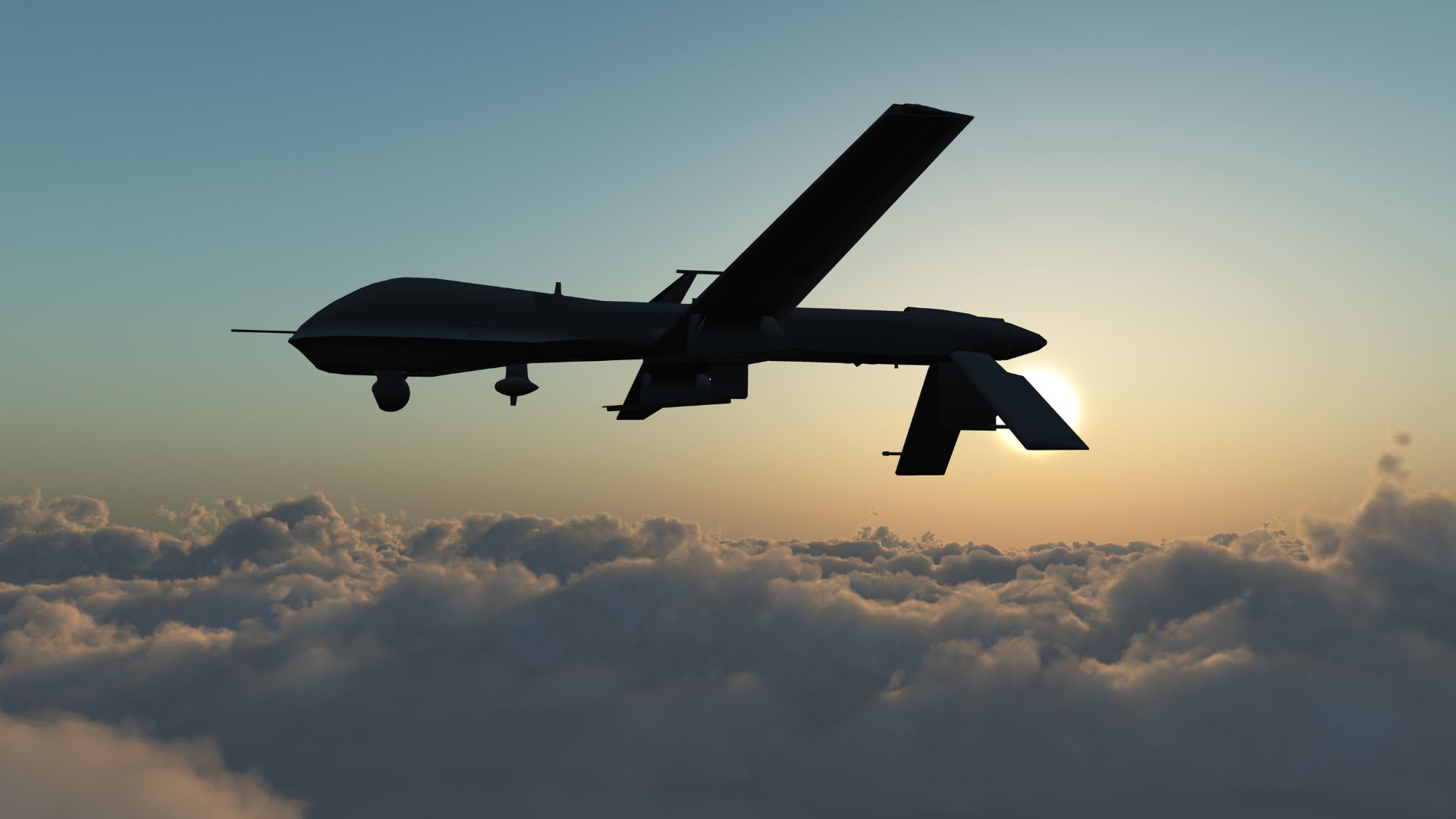
Europe is rapidly expanding its unmanned capabilities, but the most consequential change may be happening beneath the airframe. NATO requirements, Ukraine’s battlefield experience, the US Collaborative Combat Aircraft programme and new French combat-air experiments are all converging on the same problem: how to keep military systems useful when navigation, communications and direct human control cannot be guaranteed. The emerging competition is therefore increasingly about autonomy, data and software architecture — without necessarily removing humans from decisions to employ weapons.
For much of the war in Ukraine, the Western discussion about drones has concentrated on mass: how many can be produced, how cheaply they can be built and how quickly industry can replace those lost in combat.
Those questions remain central. NATO’s July 2026 “Drone Edge” initiative explicitly calls for the Alliance to expand its ability to produce, operate and counter drones at scale. NATO says Allies plan to invest more than $40 billion in counter-drone capabilities over the next five years and train five times as many drone operators by the end of 2027.
But NATO’s technical requirements are simultaneously revealing another shift. Recent competitions and test programmes no longer assume that an unmanned system will always have access to GNSS, reliable communications or continuous instructions from its operator.
That is an important distinction.
The first transformation of military aviation removed the person from the aircraft. The technological problem now being addressed is how much of the mission can continue when the connection between that aircraft and the person controlling it is degraded or lost.
What exactly is changing in NATO’s requirements?
A useful example appeared in NATO’s 19th Innovation Challenge, concluded in Warsaw on 4 September 2026. Organised by Allied Command Transformation and the NATO-Ukraine Joint Analysis, Training and Education Centre, it focused on Persistent Airfield Denial: preventing an adversary from simply repairing an airfield after an attack and resuming operations.
The technical requirement is more revealing than the name of the competition.
NATO sought systems capable of reaching targets at operationally relevant ranges, delivering mass against multiple aim points and continuing to function in GPS-denied and electronic-warfare-contested environments. The formal requirement specifically excluded solutions dependent on continuous operator input without an autonomous fallback capability. NATO allowed approaches including uncrewed aircraft, autonomous or semi-autonomous munitions, loitering systems and swarming concepts.
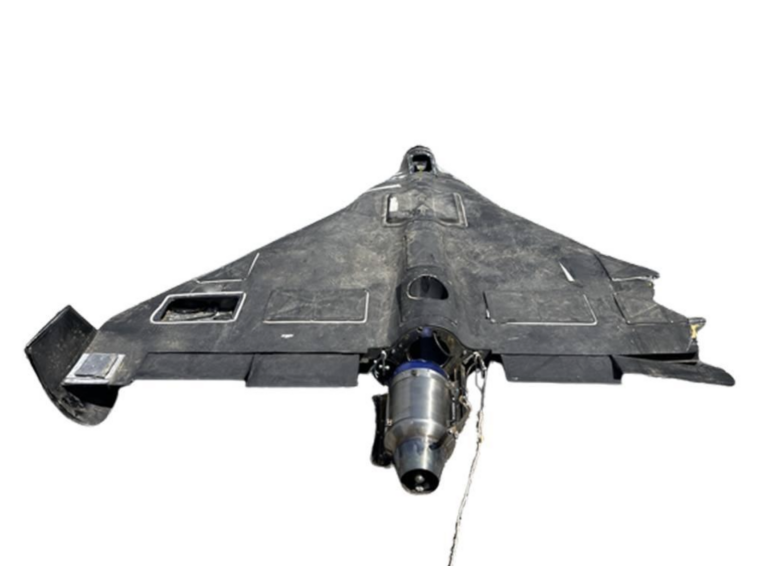
The winner was Czech company LPP Holding. NATO ACT described its proposal as an autonomous long-range uncrewed strike system combining onboard autonomy and alternative navigation for precision effects against airfield infrastructure in GPS-denied and electronically contested conditions.
LPP itself says its MTS family combines an in-house autopilot, visual navigation and optical target tracking. Its visual-navigation system merges inputs from multiple sensors to determine the aircraft’s position when GNSS is unavailable, while AI-based optical tracking is intended for terminal target tracking.
There is an important limit to what can safely be concluded from this information. These sources demonstrate autonomous navigation and mission functions; they do not establish that machines independently make unrestricted decisions about the use of lethal force.
That distinction matters throughout the autonomy debate.
Ukraine is turning degraded communications into a design requirement
The significance of the NATO competition is that GPS denial and disrupted communications were not treated as exceptional failure cases. They were built into the requirement.
NATO’s DIANA accelerator makes essentially the same point in its 2026 autonomy challenge. It states that future unmanned systems must operate in environments where communications are disrupted, GPS is unreliable and adversaries actively contest access.
This is becoming institutional rather than experimental.
NATO opened an Innovation Range for uncrewed systems in Latvia in March 2026, specifically providing an environment for testing UAS and counter-UAS technologies, including electronic-warfare solutions. It is one of five pilot innovation ranges established under NATO’s Rapid Adoption Action Plan.
The implication is concrete: EW resilience is moving from an attractive product characteristic toward something closer to a baseline operational requirement.
For an unmanned aircraft, that can require several different forms of autonomy. The aircraft may need to estimate its location without satellite navigation, interpret information locally rather than transmitting all sensor data back to a ground station, adapt a route when conditions change, or coordinate with other systems while communications bandwidth is limited.
These are different technical problems and should not be collapsed into a single label of “AI”. But together they reduce dependence on a continuous remote-control architecture.
Why is battlefield data becoming as important as the aircraft?
Autonomy introduces another requirement that conventional aircraft programmes historically faced on a very different scale: enormous quantities of representative data.
The UK Ministry of Defence provided an unusually clear illustration on 25 September 2026 when it announced that British companies would receive access to Ukraine’s Avengers AI Labs battlefield database.
According to the MOD, the dataset includes sensor information from more than six million detections involving objects including tanks, artillery, air-defence systems, infantry, Shahed-type drones and reconnaissance UAVs. Imagery was collected through daylight and thermal sensors used in Ukraine. Initially, up to 12 British companies will receive access.
The competition is not simply asking companies to train better object-recognition software. The MOD identifies four areas: autonomous target recognition, distributed decision-making, adaptive mission execution, and collaborative sensing and information fusion.
In the distributed-decision requirement, multiple autonomous systems are expected to adapt routes, priorities and behaviour without depending on a single point of control. Adaptive mission execution explicitly addresses coordination under constrained communications.
That makes the strategic importance of combat data much easier to quantify.
It is not merely historical information about what happened on the battlefield. It becomes training and evaluation material for the algorithms expected to operate on the next battlefield.
Software and the airframe are already being separated in the United States
The clearest evidence that autonomy is becoming an independent part of military-aircraft procurement comes not from a startup but from the US Air Force.
In June 2026, the USAF awarded engineering, manufacturing-development and production contracts for the first increment of its Collaborative Combat Aircraft programme. General Atomics received the FQ-42 programme and Anduril the FQ-44.
But the Air Force deliberately did something else at the same time: it procured the mission-autonomy software separately from the aircraft.
Six companies — Anduril, General Atomics, Lockheed Martin, Northrop Grumman, RTX Collins Aerospace and Shield AI — were placed into a mission-autonomy software competition. Anduril, Collins and Shield AI received initial production options, with further competition planned before selection of a primary Increment 1 mission-autonomy provider by summer 2027.
This is not an interpretation of where procurement might eventually go. The Air Force itself describes the concept as decoupling hardware from software and treats mission autonomy as a separately competed product.
The technical enabler is the government-owned Autonomy Government Reference Architecture, or A-GRA. In February 2026, the USAF announced that A-GRA was already being integrated across the General Atomics and Anduril aircraft with autonomy software supplied by different vendors. The objective is to make mission software portable between physical platforms and avoid locking the government into one aircraft/software combination.
The scale is significant. The USAF says it intends to procure more than 150 combat-capable CCAs by the end of the decade, with a longer-term objective of approximately 1,000 aircraft.
The important industrial point is therefore not that software will replace the aircraft. It will not. The point is that the US Air Force is creating two competitive markets where historically there might have been one: one for the flying platform and one for the autonomy operating inside it.
France is reaching a remarkably similar conclusion
Europe now has an especially important comparison.
France launched HypAIRion in July 2026, bringing together the French Air and Space Force, the Direction générale de l’armement and the ministerial defence-AI agency AMIAD. The project is intended to provide an experimental framework for introducing AI, mission autonomy and collaborative combat aircraft into French combat aviation.
Two Mirage 2000s at Mont-de-Marsan are being converted into AI flight-test platforms. France plans a first full-scale experiment involving combat aircraft operating alongside collaborative combat drones in 2028. The work will subsequently inform the Rafale F5 standard, whose first version is expected around 2033.
What makes HypAIRion especially relevant is the architecture.
French officials say the state wants an open, modular reference architecture under government control, rather than depending entirely on proprietary architectures belonging to individual industrial suppliers. AMIAD is responsible for sovereign AI technologies supporting areas including command and control and mission autonomy.
The parallel with the US A-GRA approach should not be overstated — these are different programmes with different institutions and operational requirements. But they address a similar acquisition problem: how a military can continuously introduce new algorithms and applications without having to redesign the aircraft or remain permanently dependent on the original supplier of every subsystem.
The French Ministry of Armed Forces has also identified operational data, distributed architecture and AI security as three central challenges for HypAIRion.
That is precisely where autonomy ceases to be a single aircraft feature and becomes part of the wider force architecture.
The Gripen experiments show how quickly software can enter a real fighter
Europe already has a useful flying example.
On 28 May 2025, Saab and Helsing conducted the first flight integrating Helsing’s Centaur AI agent into a Gripen E. Three flights were completed in the initial campaign.
According to Saab — an important independent confirmation beyond Helsing’s own announcements — the Gripen E handed aircraft control to Centaur, which autonomously performed manoeuvres in a beyond-visual-range air-combat environment. On the third flight, conducted on 3 June, Centaur operated against an actual Gripen D. The test team changed starting distances, speeds and geometries and also disabled command-and-control data to evaluate robustness.
The AI agent did not independently fire a weapon. Saab says Centaur cued the human pilot to fire.
That distinction again illustrates why the word “autonomous” needs precision. Flight control, tactical manoeuvring, navigation, sensor interpretation and weapon-release authority are separate functions that can have different levels of machine autonomy.
The programme was funded by Sweden’s Defence Materiel Administration, FMV, as part of Sweden’s future fighter-system studies.
The experiment nevertheless demonstrates something industrially important: an AI combat agent was not confined to a simulator or dedicated experimental aircraft. It was integrated into an in-production European fighter and exercised in actual flight against another fighter.
Why Helsing is an interesting industrial case — and where the evidence ends
Helsing is therefore relevant to this trend, but it is useful to separate demonstrated capability from company roadmap.
At the lower end of the air-power spectrum, its HX-2 is an electrically powered X-wing loitering munition with a manufacturer-stated range of up to 100 km. Helsing says onboard AI allows it to retain functions in GNSS-denied and electronically contested conditions, and its Altra recce-strike software is intended to coordinate multiple HX-2 systems under human supervision.
The system’s presence in Ukraine is independently established. Deutsche Welle accompanied a Ukrainian unit operating HX-2 near the front in 2026 and reported that thousands of Helsing systems were being supplied with German government funding. DW also documented that the HX-2 version intended for the Bundeswehr differs in important technical details from the system being used in Ukraine.
Claims about precise EW immunity, target-recognition performance or combat success should, however, continue to be attributed to Helsing unless independently verified. That distinction is especially important because HX-2 performance has been the subject of conflicting reporting, while Helsing has publicly disputed negative assessments.
Higher in the air-power spectrum, Helsing is developing the CA-1 Europa, an uncrewed combat aircraft in the three-to-five-tonne class. In February 2026, HENSOLDT joined the programme, bringing radar, optronics, self-protection and electronic-warfare systems. HENSOLDT’s MDOcore is intended to provide data fusion and mission coordination, while Helsing’s Centaur provides the AI component. The aircraft remains a development programme rather than an operational capability.
The same architecture-driven approach extends into space. In May 2026, Helsing and OHB established the KIRK joint venture, working with HENSOLDT and Kongsberg on a European space-based tactical surveillance, reconnaissance and target-acquisition system. OHB says the project is intended to use onboard and offboard processing, multi-sensor fusion and AI-assisted target recognition to reduce the time between collection of information and operational use.
Those programmes do not prove that one company has solved the autonomy problem. They do show why companies originating in software and AI increasingly find themselves competing across domains traditionally occupied by aerospace and defence primes.
This is not simply a Helsing strategy
The broader European policy environment matters because otherwise it would be easy to interpret these developments as the strategy of a few defence-tech startups.
European institutions are moving in a similar direction.
A European Commission workshop on distributed and decentralised intelligence for drone swarms in February 2026 brought together around 60 experts from defence, industry and research. Its conclusions focused on onboard AI, collaborative autonomous operations and software-defined drone architectures. One recurring concept was effectively an open software layer capable of separating drone hardware from its applications.
The Commission subsequently launched a €115 million AGILE pilot programme intended to move technologies including AI, quantum systems and drones from development toward operational use more quickly. It explicitly cites lessons from Ukraine and the need to shorten innovation cycles from years toward months or weeks.
In July, the Commission also proposed European Defence Projects of Common Interest covering five areas, including drones and counter-drone systems, space, air and missile defence and the Eastern Flank, with €325 million allocated under the European Defence Industry Programme to help establish the projects.
None of these initiatives guarantees that Europe will produce a common autonomy architecture. They demonstrate something narrower but important: autonomy, AI, interoperability and rapid software adaptation have moved into formal European defence policy and funding structures.
Counter-drone warfare is creating the same software problem
The autonomy question is not confined to strike drones or collaborative combat aircraft.
NATO’s planned investment of more than $40 billion in counter-drone capabilities reflects a different side of the same technological problem: large numbers of relatively inexpensive airborne objects can create a target-processing and engagement challenge before the question of which interceptor to fire even arises.
The European Commission’s 2026 Drone and Counter-Drone Security Action Plan consequently includes development of European AI-powered command-and-control systems, accelerated industrialisation of cost-efficient drone and counter-drone technologies, and establishment of an EU Drone Alliance with Ukraine.
European Defence Fund activity provides a concrete example. The ALTISS programme is developing autonomous swarm operations in which one operator can supervise multiple aircraft while AI-assisted mission planning and dynamic task allocation reduce the need for continuous individual control. Onboard processing is also intended to combine communications intelligence with optical and infrared sensing.
The common denominator is therefore not a particular drone design. It is the requirement to process more information and coordinate more platforms than a traditional one-operator/one-aircraft model can realistically support.
Autonomy does not mean eliminating human responsibility
The rise of autonomy also makes terminology and governance increasingly important.
NATO’s policy does not equate autonomous military systems with machines independently deciding when lethal force should be used. Its Autonomy Implementation Plan explicitly links AI-enabled autonomous systems to NATO’s Principles of Responsible Use, which include lawfulness, responsibility and accountability, explainability, reliability and governability.
The latest operational programmes show the same distinction.
During the Gripen/Centaur experiment, Centaur controlled the aircraft and executed tactical manoeuvres, while the human pilot retained the firing decision.
The US Air Force likewise emphasised human oversight when its FQ-44 Collaborative Combat Aircraft conducted an AIM-120 live-fire test in July 2026.
France has been equally explicit. Officials involved with HypAIRion say AI may assist planning, tactical decisions and management of enormous amounts of information, but the decision to employ a weapon remains human.
For a serious discussion of military autonomy, that separation is essential. An aircraft can autonomously fly, navigate, process sensor data or coordinate a route without having independent authority to select and attack targets.
So where is the industrial competition actually moving?
Taken together, these programmes support a narrower — but stronger — conclusion than the claim that “software is replacing hardware.”
It is not.
Airframes, propulsion, sensors, electronic warfare systems and weapons remain indispensable. High-performance military aviation will continue to depend on extremely demanding physical engineering.
What is changing is the architecture around those components.
The USAF has already created a separate competitive market for mission autonomy and requires that software conform to a government-owned reference architecture. France wants an open architecture under state control. The UK is treating millions of battlefield sensor detections as an input into future autonomous systems. NATO competitions now demand useful operation without continuous control in GPS-denied and EW-contested environments. And European companies are building programmes that deliberately connect AI, sensors, unmanned platforms and space-based reconnaissance.
The evidence therefore supports a more precise proposition:
Autonomy is becoming a distinct layer of military capability — one that governments increasingly want to update, compete and control separately from the physical platform.
That has potentially profound consequences for aerospace procurement.
If mission software can be replaced or upgraded independently from the aircraft, the company that manufactures the airframe does not automatically control every future capability inserted into it. Conversely, an AI company does not need to manufacture every sensor, engine or aircraft structure in order to occupy an important position in the combat system.
The US CCA programme is already institutionalising exactly that separation.
What should Europe watch next?
The most useful indicators will not be another series of glossy autonomous-aircraft concepts. They will be procurement decisions.
The key questions are whether European governments begin specifying open autonomy architectures in the same way as the United States; whether operational datasets are shared systematically across governments and industry; whether AI software can move between different platforms; how quickly new algorithms can pass military testing and certification; and which parts of those architectures governments insist on controlling themselves.
France has explicitly chosen sovereign, state-controlled architecture as an objective. The US Air Force has chosen government-owned A-GRA. NATO is building testing and verification infrastructure. Britain is creating controlled industry access to battlefield data. The European Commission is funding software-defined and autonomous-system development.
Those are measurable developments, not forecasts.
They suggest that the next phase of Europe’s unmanned-aircraft expansion will not be judged only by production numbers.
It will also be judged by whether the aircraft can still navigate when GNSS disappears, whether useful mission functions survive when data links degrade, whether one human can supervise multiple systems, whether software can be upgraded faster than the threat evolves, and whether Europe retains control of the architecture on which those capabilities depend.
That is why the emerging autonomy race matters.
It is not a competition to remove humans from warfare.
It is a competition to determine how much useful military capability remains when the network, navigation signal or direct human control can no longer be taken for granted.
What’s next
The evidence points to three developments worth watching:
- Architecture: whether Europe adopts more government-owned, open autonomy standards similar in principle to the USAF’s A-GRA and France’s HypAIRion approach.
- Operational data: whether Ukraine’s Avengers AI Labs model develops into wider NATO mechanisms for training and validating defence AI on real battlefield datasets.
- Procurement: whether autonomy software increasingly becomes a separately competed capability rather than an inseparable part of an individual aircraft or drone contract.
For Europe’s aerospace industry, those questions may prove at least as consequential as the number of unmanned aircraft it can manufacture.
Edited with the assistance of AI. All factual claims were cross-checked against primary government, NATO, military or manufacturer sources where available; manufacturer performance claims are identified as such.
Primary sources: NATO Allied Command Transformation; NATO DIANA; NATO official AI and autonomy policy documents; UK Ministry of Defence; French Ministry of the Armed Forces; US Air Force; European Commission; Saab; OHB; LPP Holding; HENSOLDT and Helsing.
About the Author