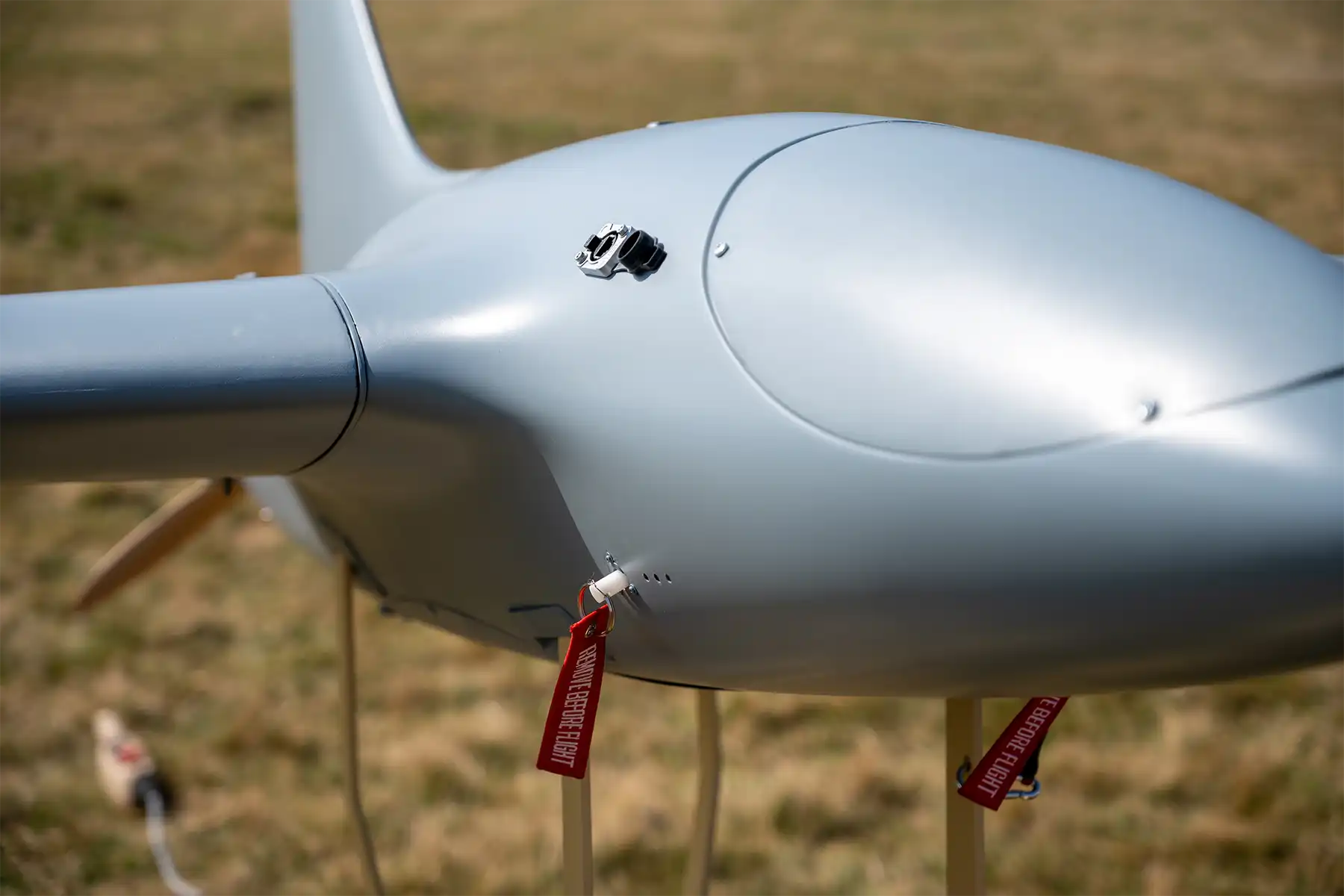
Autonomous-Drone-System-MTS-16
Ukraine’s battlefield is changing the requirements for long-range unmanned strike. Navigation without GPS, reduced dependence on communications and increasingly autonomous mission execution are becoming critical — and a Czech-developed system offers an interesting glimpse of where this evolution is heading.
Modern drone warfare has created a paradox. Armed forces want inexpensive unmanned systems in large numbers, but the electromagnetic environment in which those systems have to operate is becoming increasingly hostile.
GPS can be jammed or spoofed. Data links can be disrupted. Operators can lose contact with their aircraft.
The logical response is increasingly clear: the aircraft has to become less dependent on both.
A Czech example from Ukraine
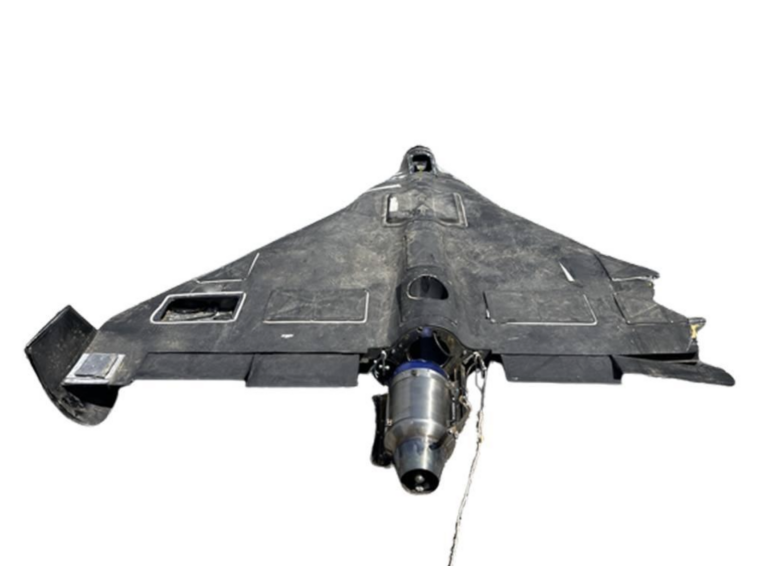
One interesting example comes from Czech defence company LPP Holding and its MTS-40 unmanned system.
According to reporting by Business Insider, Ukraine has been employing the system for approximately 18 months for long-range missions, including strikes against targets inside Russia.
The MTS-40 combines relatively low cost with a navigation architecture designed to function in an electronically contested environment. Optical navigation and AI-supported processing allow the aircraft to continue its mission when satellite navigation or external communications become unavailable.
Its reported range exceeds 180 miles, while the unit price is around $90,000.
Those numbers matter.
They illustrate one of the fundamental economic questions emerging from Ukraine: how much capability can be placed into a system that remains inexpensive enough to be produced and employed in quantity?
NATO is watching the same problem
The concept has also attracted NATO attention.
LPP’s solution won a NATO Innovation Challenge focused on inexpensive, electronic-warfare-resistant strike systems capable of attacking targets such as airfields in significant numbers.
That requirement says something important about the direction in which unmanned warfare is moving.
The challenge is no longer simply building a drone capable of flying several hundred kilometres.
The harder problem is ensuring that it can still find its way — and potentially its target — when the electromagnetic environment around it has been deliberately degraded.
From remotely piloted to increasingly autonomous
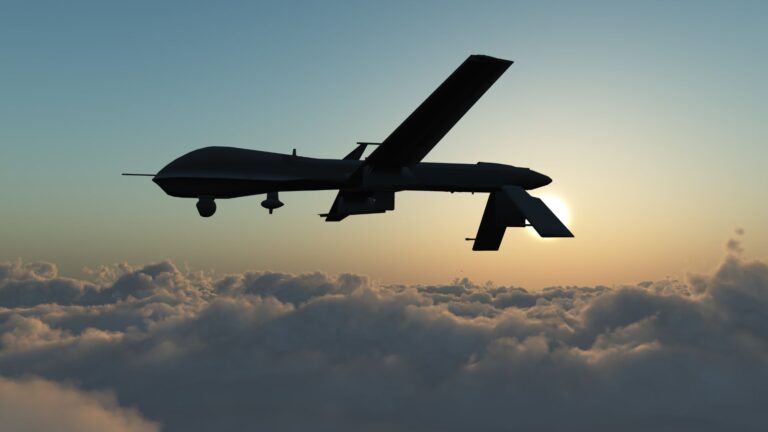
For much of the drone era, unmanned aircraft have essentially remained remotely controlled machines.
Ukraine is accelerating the transition toward something different.
Navigation, target recognition, mission planning and coordination are gradually moving onto the aircraft itself.
This does not necessarily mean removing humans from decisions over the use of force. It means reducing the number of functions that require continuous human input or connectivity.
That distinction becomes increasingly important in a high-intensity conflict.
A remotely controlled aircraft depends on a communications architecture.
An autonomous aircraft depends primarily on its own sensors, computing power and software.
The second can be considerably harder to disrupt.
The platform may no longer be the most important part
This also changes the defence-industrial competition.
Airframes can often be manufactured relatively quickly and inexpensively. Motors, batteries and many sensors are increasingly commercial technologies.
The harder intellectual property may therefore migrate elsewhere: navigation algorithms, sensor fusion, mission software, computer vision and autonomous decision-making.
In other words, the competitive advantage may increasingly sit inside the aircraft rather than in its shape.
Ukraine is providing an unusually harsh testing environment for that proposition.
Systems that depend too heavily on satellite navigation or constant connectivity can quickly become ineffective as countermeasures evolve.
Systems capable of adapting and continuing their missions have a much better chance of remaining relevant.
What’s next
The MTS-40 is only one example of a much wider transformation taking place across the defence industry.
Europe, the United States and Ukraine are all investing heavily in autonomous navigation, collaborative systems and weapons capable of operating in communications-denied environments.
The lesson emerging from Ukraine is becoming increasingly difficult to ignore:
The next generation of deep-strike weapons may not be defined primarily by speed, range or even the airframe. Their decisive advantage could be the ability to understand where they are, what is happening around them and how to continue the mission when nobody can tell them what to do.
Key takeaways
- Electronic warfare is accelerating the shift from remotely controlled drones toward increasingly autonomous systems.
- Czech-developed MTS-40 provides a real-world example of navigation designed for GPS- and communications-denied environments.
- The strategic value of future unmanned systems may increasingly reside in their software and autonomy layer rather than the airframe itself.
Edited with the assistance of AI.
Source: Business Insider, reporting on LPP Holding MTS-40 and NATO Innovation Challenge, October 2026.
About the Author