BETWEEN AIR DEFENCE, SPACE AND RESILIENCE:
HOW AUSTRIA IS RESTRUCTURING ITS AIR FORCES
“War Has Returned to Europe” – Austria’s Air Forces in Transition
February 2022 and Russia’s unjustified attack on Ukraine fundamentally changed Europe’s security environment. War has returned to Europe, and this has not only influenced political decision-making, but above all has profoundly altered the population’s sense of security – including, and especially, in Austria.
Russia’s attack on Ukraine has fundamentally changed Europe’s security reality. Austria, too, is facing a strategic realignment of its armed forces, with clear priorities in air defence, international cooperation and technological resilience.
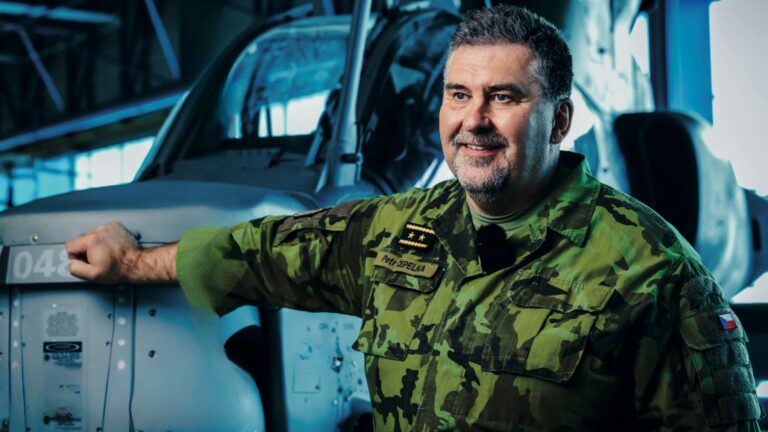
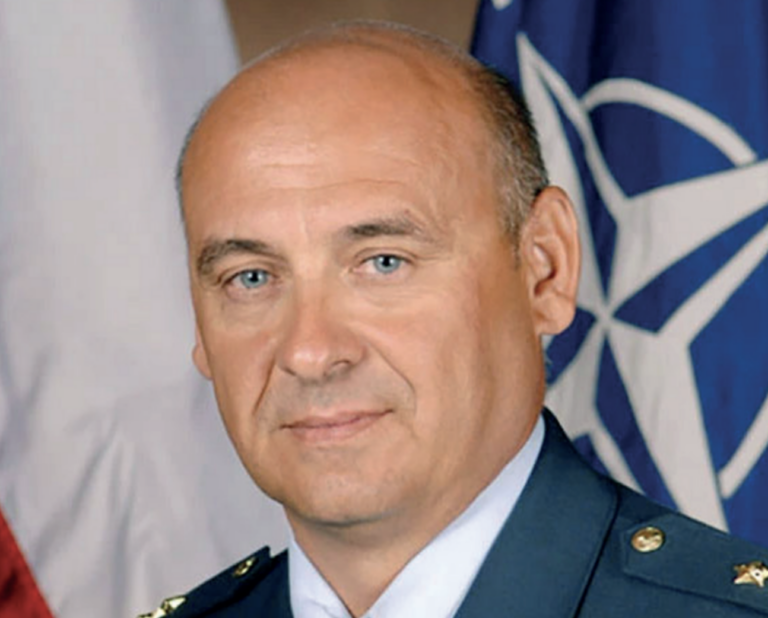
In this interview, Major General Gerfried Promberger, Commander of the Austrian Air Forces and Air Chief of the Austrian Armed Forces, explains how the security environment has changed since 2022, why the DACH region forms the nucleus of regional cooperation, what role space and simulation will play in the future, and which capabilities are indispensable for a future combat aircraft.
How has the security environment in Europe changed in recent years – and what does that mean concretely for Austria’s Air Forces?
February 2022 and Russia’s unjustified attack on Ukraine fundamentally changed Europe’s security environment.
War has returned to Europe, and this has not only influenced political decision-making, but above all has profoundly altered the population’s sense of security – including, and especially, in Austria.
This changed perception of security was the trigger within the Ministry of Defence for a comprehensive follow-on assessment.
As a result, the Austrian Armed Forces Development Plan was created, accompanied by the “Mission Forward” proclaimed by Federal Minister of Defence Klaudia Tanner.
The aim of these measures is to restructure the Armed Forces as a whole and, in particular, the Air Forces, and to rebuild or newly generate capabilities through substantial investment.
For the Air Forces, this has meant clear prioritisation.
A central capability is air defence, which today has a completely different significance than just a few years ago.
This includes both ground-based systems and active air defence by fighter aircraft, complemented by modern radar systems and appropriate transport capacities.
At the same time, we are consistently pursuing the approach of bringing capabilities that were outsourced in the past back into the Armed Forces.
This security-policy development has also made it possible to conduct strategic discussions that were previously politically hardly conceivable.
These include early engagement with the future design of active air defence and, consequently, with the question of replacing existing systems.
Overall, it is clear that the changed security environment has led to a profound structural realignment that will sustainably shape the Austrian Air Forces.
“War has returned to Europe – and this has fundamentally changed our security thinking.”
Which three modernisation priorities of your air force system up to 2030 would you name as the most important?
The first and most important priority is the full establishment of an integrated air and missile defence.
This is an absolute top-priority issue and includes both ground-based air defence and active air defence by fighter aircraft.
In the ground-based air defence, this encompasses different ranges – from short-range capabilities to medium-range systems – with the clear goal of integrating all existing and future components into a coherent overall system and sustainably ensuring the protection of critical infrastructure and protected assets.
The second priority is air reconnaissance and air transport.
Everything that contributes to reliable situational awareness is gaining importance.
In this area, older systems are being phased out consistently, and we are pursuing a clear two-fleet strategy for jets, helicopters and air transport, with the aim of increasing availability, endurance and efficiency over the long term.
The third priority is the development of a new capability in the space domain.
This concerns space situational awareness and a recognized space picture – in other words, knowing which systems are in orbit (e.g. low Earth orbit) and for what purpose.
We are building this domain step by step and integrating it as a permanent element of the overall force structure.
Above all three priority areas, however, there is a common overarching factor: personnel.
Recruitment, training and exercises are decisive for ensuring that these modernisation projects can be implemented effectively and sustainably.
What role does regional cooperation in the DACH region play for you personally – and where do you see the greatest added value?
This is highly multidimensional, and it is honestly a pleasure to answer this question.
For me, the DACH region – Germany, Austria and Switzerland – is the nucleus of regional cooperation.
At Airpower 24 in Zeltweg, I held discussions with the respective air force chiefs about the idea of trilateral cooperation.
This was subsequently formalised with the signing of a joint vision on 17 January 2025.
The objective is not only to coordinate training activities more closely, but also to move towards shared airspace use, including cross-border training and operations.
It is important to note that we have had an established air situation data exchange for many years – since 2006 with Germany and since 2007 with Switzerland.
Beyond that, we are aiming for seamless cooperation in responding to aerial targets or threats, whether military or civilian aircraft or drones, with the goal of maintaining engagement until responsibility is handed over to neighbouring forces after border crossing.
Additional benefits include the joint use of training areas in the air and on the ground, as well as cooperation in the space domain.
At the same time, we think regionally beyond DACH and cooperate regularly with partners such as the Czech Republic, Croatia, Slovakia, Hungary, Slovenia and Italy.
The greatest added value of this cooperation lies in standardisation, efficiency, coordinated procedures and, ultimately, increased airspace security through seamless cross-border operation.
“The DACH region is the nucleus of regional cooperation for us – but not its end point.”
How do you manage the challenge of balancing cutting-edge technology, limited resources and personnel requirements?
For me, the key lies clearly with personnel.
Highly advanced weapon systems only function with highly qualified and motivated women and men, both military and civilian.
That is why every major procurement is approached holistically.
For each system, we establish a dedicated project organisation, working along several parallel development lines, e.g. personnel development, operational security, training, IT & cyber, infrastructure, technology and logistics, maintenance and operations.
Only in this way can the complexity of modern weapon systems be managed.
Simulation is a central lever.
We no longer procure aircraft without corresponding simulators, and our goal is to conduct well over 70 percent of training using simulators in the long term.
This increases independence from external factors such as weather, reduces noise and operating costs, reduces CO2 emissions, and allows real flight hours to be used more efficiently for operational preparation.
At the same time, responsible use of public funds is essential.
We are talking about the Austrian taxpayers’ money.
It is not about “toys for the girls and boys”, but about building capabilities efficiently through a clear planning and procurement process focused on defined capability requirements and value for money.
How does the next generation of threats – drones, long-range weapons and cyber – change thinking and training?
The next generation of threats fundamentally changes our thinking.
We already operate in a hybrid warfare characterised by continuous cyberattacks, disinformation, sabotage and repeated airspace violations.
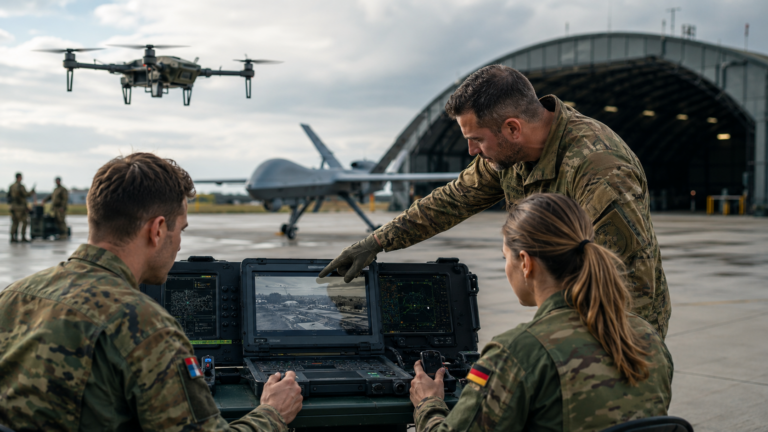
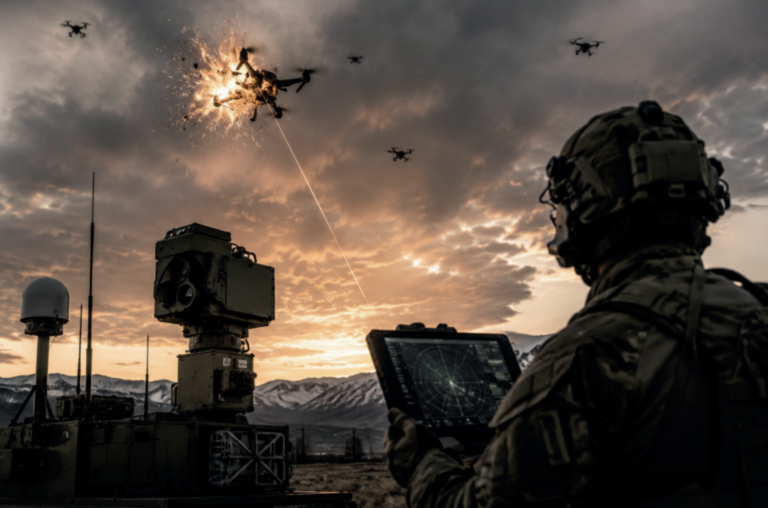
Drones play a central role, having evolved into significant multipliers of both capabilities and threats.
At the same time, innovation cycles are becoming ever shorter, forcing us to make training and preparation far more flexible and adaptive.
Logistics is another decisive factor.
Ammunition, fuel, energy supply and telecommunications are critical assets.
If these are not secured, neither command and control nor effective national defence can be maintained.
This is why resilience has gained massive importance.
We take precautions to remain operational even in the event of failures of civilian infrastructure, and these considerations are directly reflected in training, planning and exercises across the entire Air Force.
Looking ten years ahead: which capability or transformation should be associated with your term of office?
Looking ahead, my term of office should be associated with a profound transformation of the Austrian Air Forces into a new generation – organisationally and in terms of capabilities.
This means a modern and balanced capability spectrum, including effective air and missile defence, modern fighter aircraft, new transport capacities, new training aircraft, a renewed helicopter fleet, modern radar systems and additional competencies such as electronic warfare.
Space will become a fixed and established domain, including the operation of Austria’s own satellites, serving both military and whole-of-government purposes.
Which aspect of this transformation delivers the greatest operational gain?
From my perspective, the greatest operational gain is clearly air and missile defence.
Without the ability to ensure air superiority, all ground-based operations and manoeuvres are ultimately ineffective.
Protecting airspace, the population and critical infrastructure is the fundamental prerequisite for all further military operations.
“Without air defence and air superiority, all ground-based operations and manoeuvres are ultimately ineffective.”
Which capabilities are indispensable for a future successor to the Eurofighter?
Supersonic capability is essential given Austria’s early warning and reaction time.
Future fighter aircraft must also be able to operate in teams with unmanned systems, employ long-range air-to-air weapons and conduct air-to-air refuelling.
Concepts such as Agile Combat Employment (ACE) are equally important, including the use of alternative airports/airfields and dispersed infrastructure for military operations.
Advanced simulation will be a key enabler for the training transitions from the M-346FA and may even allow dispensing a two-seat version of the new fighter aircraft.
How does neutrality influence your priorities today?
Neutrality constitutes a clear political and legal mandate and defines the framework within which we operate.
At the same time, it does not prevent international cooperation.
Austria works closely with numerous partners in training and capability development.
As a member of the European Union, Austria recognises the solidarity dimension of Article 42(7) of the EU Treaty.
My task as Commander of the Air Forces is to prepare for scenarios and provide the political leadership with credible options.
This is what guides our priorities in air and missile defence and international cooperation.
Interview: Katerina Urbanova
Photo credit: Austrian Armed Forces
About the Author