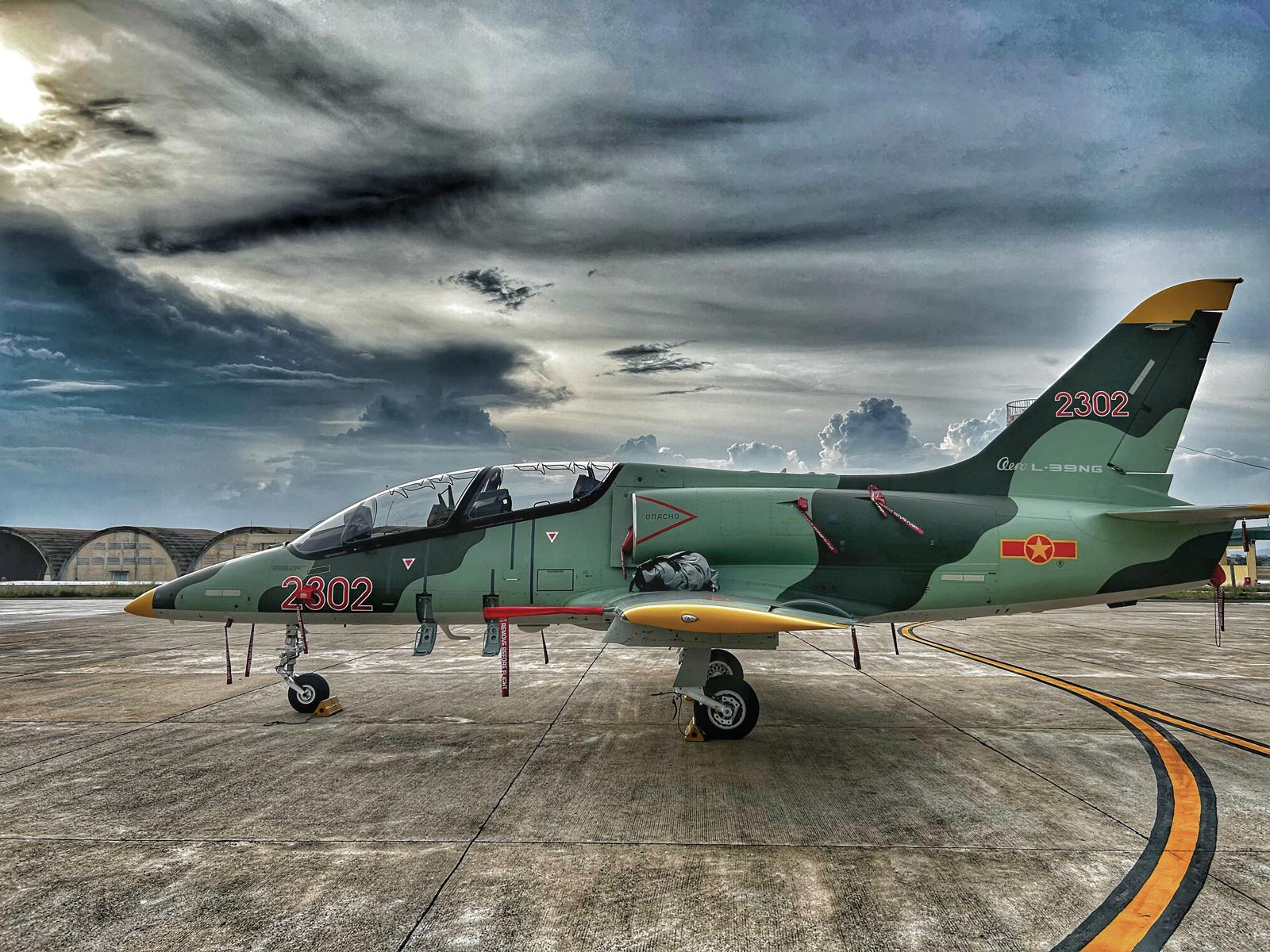
Vietnam has conducted its first live-fire exercise with the L-39NG, using the Czech-built trainer for bombing and unguided rocket attacks against ground targets. Beyond the milestone itself, the exercise provides a useful indication of how Vietnam is integrating the aircraft into a training system that also includes the Yak-130.
Vietnamese Air Force instructor pilots and trainees have conducted the country’s first live-fire bombing and rocket exercise using the L-39NG.
The exercise took place on 29 September at National Military Training Center No. 2 and involved both L-39NG and Yak-130 aircraft operated within the Vietnamese Air Force training system.
According to the People’s Army Newspaper, the official newspaper of the Vietnam People’s Army, pilots and trainees from the 910th and 940th Air Regiments conducted bombing, unguided rocket attacks and both simple and more complex manoeuvres against ground targets.
The Vietnamese military described the event specifically as the first time the L-39NG had been used in a live-fire exercise involving both bombs and rockets.
That distinction is important. The event should not be interpreted as a first combat deployment or as evidence of a change in the aircraft’s primary role in Vietnam. Rather, it represents another step in bringing a relatively new training aircraft into routine operational use.
Six L-39NG attack sorties
Additional reporting from Gia Lai provides more detail on the scale of the exercise.
A total of 17 firing and bombing sorties were conducted. Six involved the L-39NG and were intended to test the aircraft’s weapon systems and evaluate results from pilot conversion training. The remaining 11 ground-attack sorties were flown by Yak-130 aircraft.
Eight sorties were also flown by students from the 49th training course conducting live-fire and bombing training for the first time ahead of graduation.
Vietnamese military reporting said the participating crews attacked their assigned targets according to the planned procedures and that the exercise was completed without accidents involving personnel or equipment.
Official reporting also stated that targets were destroyed during the first attack.
Such statements should naturally be viewed in the context of reporting by Vietnam’s military authorities rather than as independently verified performance data. More significant from a training perspective is the stated purpose of the exercise: evaluating operation of the aircraft’s weapon systems and developing procedures for future training and weapons employment on the type.
L-39NG enters a broader Vietnamese training system
The exercise is particularly interesting because the L-39NG did not operate in isolation.
Vietnam is simultaneously using the Russian-designed Yak-130 advanced jet trainer, creating a training fleet that combines two modern jet-training platforms with different origins and capabilities.
The Yak-130 is a larger twin-engine aircraft with a more substantial combat payload capability, while the L-39NG is a lighter single-engine platform primarily intended for training.
The presence of both aircraft in the same exercise illustrates the layered structure Vietnam is developing for advanced pilot training and weapons instruction.
It also suggests that the L-39NG’s weapons capability is being incorporated into the training syllabus rather than being treated merely as a theoretical secondary capability.
For student pilots, live weapons employment introduces elements that cannot be fully replicated during basic flying training: attack profiles, weapons-system management, target acquisition, release parameters and recovery manoeuvres.
The exercise therefore provides a more useful measure of the aircraft’s integration into Vietnamese service than a ceremonial delivery or acceptance flight.
Vietnam was the first L-39NG customer
Vietnam ordered 12 L-39NG aircraft under a contract concluded with Czech aerospace and defence company Omnipol in 2021.
The agreement made Vietnam the first customer for the new generation of the L-39 family.
The first six aircraft completed their Site Acceptance Tests in Vietnam in August 2024. During the acceptance process, the aircraft were reassembled in-country, their systems were checked and factory pilots conducted test flights.
Aero Vodochody and Omnipol stated at the time that the aircraft would primarily serve as a training platform for Vietnamese fighter pilots.
The Vietnamese order has particular significance for the Czech aerospace industry because it represented the first operational introduction of the L-39NG with an international customer.
Aero says approximately 400 suppliers participate in the L-39NG programme, around 65% of them based in the Czech Republic.
From delivery to operational integration
For aircraft programmes, delivery is only the beginning of introduction into service.
Operators must subsequently establish maintenance systems, train instructors and technicians, develop syllabi, qualify pilots and progressively introduce more demanding training tasks.
Vietnam had already taken another step in that process earlier this month.
On 14 September, the Air Force Officer School transferred L-39NG and Yak-130 aircraft to Phu Cat Air Base in preparation for the 2026 live-fire exercise. Vietnamese state television described the deployment as an evaluation of the units’ preparations before the exercise.
The 29 September live-fire event therefore forms part of a broader progression rather than an isolated demonstration.
The Vietnamese military says experience gathered during the exercise will be used to refine procedures for training, flying and weapons employment with the L-39NG.
That is arguably the most relevant aspect of the event.
For the manufacturer, firing rockets and dropping bombs demonstrates an advertised capability of the aircraft. For the operator, however, the more meaningful milestone is establishing the procedures, instructors and training structure required to use that capability repeatedly and safely.
A useful operational milestone
Six L-39NG ground-attack sorties during a controlled training event do not establish the aircraft as an operational light-attack platform, nor do they provide enough information to assess its effectiveness in that role.
Vietnam’s Yak-130 fleet remains considerably more capable in terms of weapons payload and potential combat employment.
The significance of the exercise lies elsewhere.
Vietnam has moved beyond receiving and accepting the L-39NG and is now incorporating weapons employment into the training syllabus of its first operational fleet.
For Aero Vodochody and the wider Czech aerospace supply chain, that provides evidence that the first export customer is progressing with operational integration of the aircraft.
For Vietnam, it represents another step in modernising a pilot-training system that has historically relied heavily on Soviet and Russian-designed aircraft.
And for the L-39NG programme itself, the development is best viewed not as proof of a new combat capability, but as something more routine – and ultimately more important for a training aircraft:
the gradual transition from a delivered aircraft to an aircraft being used across a broader range of training tasks by its first customer.
Sources
Vietnam People’s Army Newspaper, 29 September 2026 – live-fire and bombing exercise.
Báo Gia Lai, 29 September 2026 – sortie numbers and exercise details.
Lao Động, 29 September 2026 – independent Vietnamese reporting on the first L-39NG live-fire exercise.
Aero Vodochody, 16 August 2024 – acceptance and handover of the first six L-39NG aircraft.
Omnipol, 16 August 2024 – delivery of the first six aircraft to Vietnam.
Czech Embassy in Hanoi – background on Vietnam’s 12-aircraft L-39NG procurement.
Vietnam Television / Air Force Officer School, 14 September 2026 – deployment ahead of the live-fire exercise.
Editorial note: This article was researched and edited with AI assistance. Key factual claims were checked against official Vietnamese military reporting, Aero Vodochody, Omnipol and other publicly available sources.
About the Author